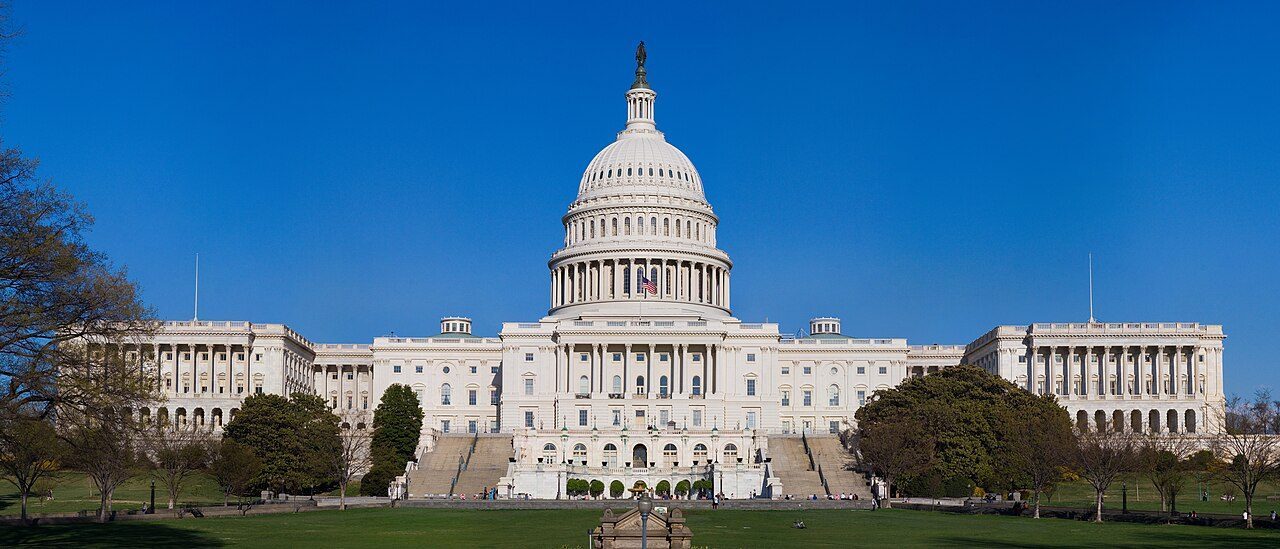
~1,500 January 6 defendants pardoned
The clemency order voided the largest criminal prosecution in DOJ history, which ranged from trespass to seditious conspiracy.
Key facts
- ~1,500 pardons on inauguration day
- 97+ pardoned individuals arrested, charged or convicted in separate cases since Jan. 6 (12 allegedly offended after their pardon)
- One pardoned participant received life sentence for child sex abuse in 2026
Summary
On his first day in office, Trump signed Proclamation 10887 granting full, unconditional pardons to roughly 1,500 individuals charged in connection with the January 6, 2021 Capitol attack -- nearly everyone federally prosecuted -- and commuting the sentences of 14 named individuals (including Oath Keepers leaders Stewart Rhodes and Kelly Meggs).
What happened
The proclamation directed immediate release of those imprisoned and instructed the Attorney General to dismiss all pending indictments with prejudice. In February 2025, DOJ expanded the pardons to cover related gun and drug charges. The action voided the largest criminal prosecution in DOJ history, covering offenses ranging from misdemeanor trespass to seditious conspiracy.
Impact on the United States
Erased federal convictions for participants in a violent attack on Congress during a democratic transfer of power. Sent a message to the U.S. legal system that political violence in service of a sitting president may go unpunished. Imposed costs on taxpayers: House Oversight Democrats said the pardons relieved convicted rioters of court-ordered restitution for Capitol damage, of which only about 15% of nearly $3 million had been repaid.
Documented effects
- As of June 2026, at least 97 of the pardoned individuals had been arrested for, charged with, or convicted of crimes separate from January 6 since the attack -- including 14 sex-crime/CSAM charges, 28 gun offenses, 20 DUI/intoxication charges, and 41 violent crimes; at least 12 allegedly committed new offenses after their pardon (including child molestation, deadly conduct, burglary, and threats)[1][4]
- Andrew Paul Johnson, a pardoned Jan. 6 participant, was sentenced to life in prison in 2026 for child sex abuse, having been arrested months after his pardon[5]
- DOJ expanded pardons in February 2025 to cover separate gun and drug charges that stemmed from Jan. 6 investigation searches but were not directly connected to the Capitol breach[2]
- A $1.776 billion DOJ 'anti-weaponization' fund, created in May 2026 to resolve Trump's lawsuit against the IRS and which the judge noted might let January 6 rioters seek compensation, was blocked by U.S. District Judge Leonie Brinkema on May 29, 2026 before any money was paid; acting Attorney General Todd Blanche said on June 5 that DOJ was 'not moving forward' with it, though DOJ could still pay claims through the Judgment Fund.[6][7]
- By August 2026, January 6 defendants had filed at least a dozen compensation lawsuits, each seeking at least $1 million; none had been resolved, and it was unclear whether DOJ had approved any non-public administrative claims. Ashli Babbitt's family had earlier received just under $5 million to settle its lawsuit over her death.[8][7]
Projected cost to Americans
Cumulative cost if current policy holds: direct federal cost plus the broader economic burden. A conservative, lower-bound estimate (low confidence).
- So far
- $7M
- By 2035
- $7M
- By 2040
- $7M
How this is calculated: Largely a resolved/one-time episode: the restitution gap is fixed and the Babbitt settlement was agreed in principle, so 10yr = 15yr = the booked $7.48M. The earlier forward add-on (~$9M over 10yr, ~$12M by 2040) for possible further compensation claims had no source and is removed; any future payouts to pardoned rioters should be booked when published. Layer 2 held at 0 (impunity/rule-of-law signal is non-monetary).
Why this is rated significant
Erased roughly 1,500 federal Jan. 6 cases, including seditious conspiracy convictions, a significant rule-of-law action, though direct harm to most Americans is indirect.
Corrections & updates [7]
Every change to a fact on this page after publication is logged here, newest first.
- UpdatedEffects
Updated: a $1.776 billion Justice Department "anti-weaponization" fund created to resolve Trump's lawsuit against the IRS, which a judge noted could let January 6 rioters seek compensation, was blocked by a federal judge on May 29, 2026 before any money was paid, and acting Attorney General Todd Blanche said on June 5 that DOJ was "not moving forward" with it. By August 2026, January 6 defendants had filed at least a dozen compensation lawsuits seeking at least $1 million each; none had been resolved.[6][7][8]
- CorrectedSource
Two sources were labeled as major news (Tier 2): CREW, a watchdog and advocacy group, and Lawfare, a specialist legal-analysis publication. Both are relabeled Tier 3. The entry's Tier 1/2 support comes from the White House proclamation and NPR.[2][3]
- ClarifiedKey facts
NPR reports DOJ extended the pardons to gun and drug charges that stemmed from Jan. 6 investigation searches, arguing they were sufficiently related; they were not directly connected to the Capitol breach, but DOJ did not treat them as unrelated.[2]
- Previously
- DOJ expanded pardons in February 2025 to cover separate gun and drug charges unrelated to Jan. 6
- Now
- DOJ expanded pardons in February 2025 to cover separate gun and drug charges that stemmed from Jan. 6 investigation searches but were not directly connected to the Capitol breach
- CorrectedSummary
House Oversight Democrats said the pardons relieved rioters of court-ordered restitution for Capitol damage (only about 15% of nearly $3 million had been repaid); they did not address civil suits. The entry now cites their statement directly.[9]
+ Show previous and current text- Hide previous and current text
- Previously
- Erased federal convictions for participants in a violent attack on Congress during a democratic transfer of power. Sent a message to the U.S. legal system that political violence in service of a sitting president may go unpunished. Imposed costs on taxpayers: House Oversight Democrats noted the pardons shifted financial burdens (restitution, civil suits) away from defendants.
- Now
- Erased federal convictions for participants in a violent attack on Congress during a democratic transfer of power. Sent a message to the U.S. legal system that political violence in service of a sitting president may go unpunished. Imposed costs on taxpayers: House Oversight Democrats said the pardons relieved convicted rioters of court-ordered restitution for Capitol damage, of which only about 15% of nearly $3 million had been repaid.
- ClarifiedSeverity rationale
The severity rationale characterized the pardons as 'a signal of impunity'; it now describes the action without that characterization. Severity unchanged.
- Previously
- Erased roughly 1,500 federal Jan. 6 cases, a significant rule-of-law signal of impunity, though direct harm to most Americans is indirect.
- Now
- Erased roughly 1,500 federal Jan. 6 cases, including seditious conspiracy convictions, a significant rule-of-law action, though direct harm to most Americans is indirect.
- CorrectedDisplay copy
The summary line said 'full pardons' erased seditious conspiracy convictions; per the record and the proclamation, 14 people including Oath Keepers leaders Stewart Rhodes and Kelly Meggs received commutations rather than pardons. The line now describes the clemency order as a whole, as the record does. The key fact said the 97+ were 'later' arrested or charged and that 12 'reoffended'; per the record, the 97 count covers cases since the Jan. 6 attack (not only after the pardons), and the 12 allegedly committed new offenses after their pardon. The summary said the pardons included 'those convicted of seditious conspiracy'; the record states that 14 people, including Oath Keepers leaders Stewart Rhodes and Kelly Meggs, had sentences commuted rather than pardoned, and the summary now says so.[3][1][4]
- CorrectedCost estimate
Removed an unsourced ~$8.5M in 'political settlements', which also counted the $5M Babbitt settlement twice, and an unsourced forward add-on. The entry now books only the sourced costs: about $2.48M of unpaid Capitol-damage restitution (House Oversight Democrats, citing CBS News: $437,000, or 15%, of the restitution owed had been repaid) and the nearly $5M Babbitt settlement.
- Previously
- net $16.1M so far; 10yr $25M; 15yr $28M
- Now
- net $7.48M so far; 10yr $7.48M; 15yr $7.48M
Sources [9]
- T3CREW - At least 40 pardoned insurrectionists face other criminal charges-with 12 offending since Trump's pardon · Jun 3, 2026 ↗
- T2NPR - Justice Department broadens Jan. 6 pardons to cover gun, drug-related charges · Feb 20, 2025 ↗
- T1White House - Granting Pardons And Commutation Of Sentences... · Jan 20, 2025 ↗
- T3Lawfare - The Jan. 6 Pardons: How Many Clemency Recipients Have Faced Other Charges? · Jun 4, 2026 ↗
- T2NPR - A Jan. 6 rioter pardoned by Trump was sentenced to life in prison for child sex abuse · Mar 5, 2026 ↗
- T2PBS News - Judge temporarily blocks payouts from Trump's $1.8B 'anti-weaponization' settlement fund · May 29, 2026 ↗
- T2NBC News - DOJ could still pay Jan. 6 rioters even without 'anti-weaponization' fund · Jun 5, 2026 ↗
- T2Bloomberg News (via Jefferson City News-Tribune) - Jan. 6 defendants ramp up claims for million-dollar US payouts · Aug 9, 2026 ↗
- T3House Oversight Committee Democrats - President Trump's Pardons Stick Taxpayers With the Bill for January 6 Attack; Oversight Democrats Want to Know How Much · Mar 24, 2025 ↗
Image: Noclip, Public Domain (Wikimedia Commons)