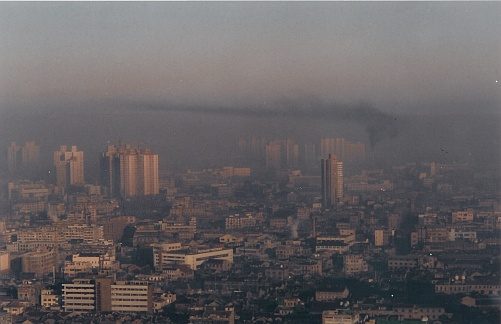
EPA abandons stronger PM2.5 soot standard
EPA asked a court to strike the tighter PM2.5 limit its own 2024 analysis credited with preventing up to 4,500 deaths in 2032; the court refused.
Key facts
- EPA's 2024 analysis: up to 4,500 premature deaths prevented in 2032
- D.C. Circuit denied EPA's request and upheld the standard, June 26, 2026
- 152M Americans live where air gets failing grades (ALA 2026)
Summary
In November 2025, the Trump EPA asked the US Court of Appeals for the DC Circuit to vacate the Biden administration's 2024 PM2.5 standard, which had tightened the annual average fine particulate matter limit from 12 to 9 micrograms per cubic meter. On June 26, 2026, the court denied EPA's motion and upheld the standard.
What happened
The Biden EPA finalized the lower PM2.5 annual standard (9 µg/m³) in February 2024, citing its own modeling that the tighter standard would prevent up to 4,500 premature deaths, 2,000 additional hospital visits, and 800,000 asthma symptom events annually by 2032. In November 2025, the Trump EPA filed in the DC Circuit to have that rule vacated - effectively asking a court to strike down a rule its own agency had published.
Impact on the United States
The American Lung Association's 2026 State of the Air report found 152.3 million Americans (44%) live in places with failing grades for ozone or particle pollution; the tighter 9 µg/m³ standard would have required more counties to meet stricter clean-up requirements. EPA's request would have removed that requirement; the D.C. Circuit denied it on June 26, 2026, leaving the 9 µg/m³ standard in place.
Documented effects
- EPA's own pre-rollback modeling projected the 9 µg/m³ standard would prevent up to 4,500 premature deaths, 800,000 asthma cases, and 290,000 lost workdays per year by 2032. Abandoning the standard forgoes those benefits.[1][3]
- EPA filed a motion in the D.C. Circuit on November 24, 2025 asking the court to vacate the 2024 standard[2]
- The D.C. Circuit denied EPA's motion for vacatur and the petitions for review on June 26, 2026, holding that the Administrator reasonably explained how the scientific evidence supported the 2024 revision[5]
Why this is rated severe
EPA sought to vacate a soot standard its own 2024 analysis projected would prevent up to 4,500 premature deaths and 800,000 asthma symptom cases in 2032; the D.C. Circuit denied the request on June 26, 2026.
on June 26, 2026 the D.C. Circuit denied EPA's motion to vacate the 2024 standard and upheld it
Corrections & updates [5]
Every change to a fact on this page after publication is logged here, newest first.
- CorrectedDate
EPA filed its request to the D.C. Circuit on November 24, 2025 (per Eos), not at the start of November. The EDF release is dated November 25, 2025 and is from EDF alone. The Eos article is dated November 26, 2025. Eos is a science-society news outlet (Tier 3), so EPA's own 2024 announcement is added as the primary source for the benefit figures, including the 290,000 lost workdays that the EDF release does not mention.[1][2][3]
- CorrectedFigure
The 156 million figure is not in any cited source and was described as areas that 'fail current air quality standards'. The comparable figure is from the American Lung Association's State of the Air grades, which are not federal standards. Its 2026 report finds 152.3 million Americans (44%) live in places with failing grades for ozone or particle pollution.[4]
- CorrectedSummary
Removed the claim that EPA announced it would stop calculating the monetary value of lives saved by pollution rules; none of the cited sources supports it. EPA's motion to vacate the standard was filed in the D.C. Circuit on November 24, 2025 (Eos).[2]
- UpdatedStatus
Updated: on June 26, 2026 the U.S. Court of Appeals for the D.C. Circuit denied EPA's motion to vacate the 2024 PM2.5 standard and denied the industry and state petitions for review, upholding the 9 micrograms per cubic meter standard (Kentucky v. EPA, No. 24-1050).[5]
- CorrectedCost estimate
Removed the $11.6B figure that was booked as harm already done. The attempt to kill the 2024 soot standard failed: the D.C. Circuit upheld the standard on June 26, 2026, and EPA had projected its health benefits for 2032 in any case. The 1,000-deaths input was also not in EPA's material. Nothing is booked unless EPA succeeds in weakening the standard later.
- Previously
- $11.6B so far; $3B / $5B federal 10yr/15yr; $140B broader 10yr
- Now
- $0 so far; $0 federal; $0 broader (standard upheld)
Sources [5]
- T3Environmental Defense Fund - Trump's EPA Abandons Defense of National Soot Standard That Saves Lives · Nov 25, 2025 ↗
- T3Eos (AGU) - EPA to Abandon Stricter PM2.5 Air Pollution Limits · Nov 26, 2025 ↗
- T1US EPA - EPA finalizes stronger standards for harmful soot pollution, significantly increasing health and clean air protections for families, workers, and communities · Feb 7, 2024 ↗
- T3American Lung Association - Key Findings | State of the Air · Apr 22, 2026 ↗
- T1U.S. Court of Appeals for the D.C. Circuit - Commonwealth of Kentucky v. EPA, No. 24-1050 (opinion) · Jun 26, 2026 ↗
Image: DL5MDA, CC BY-SA 3.0 (Wikimedia Commons)