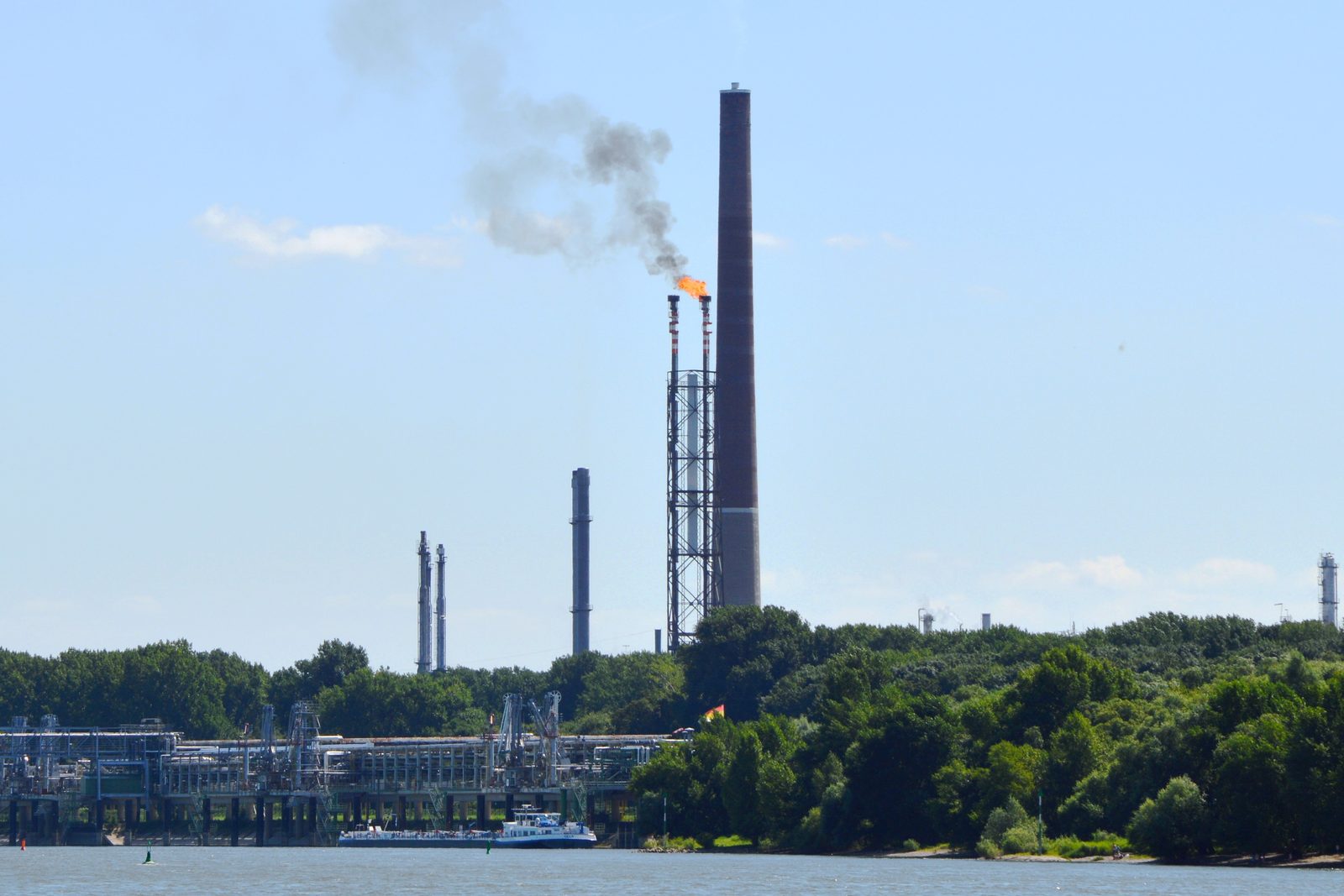
Methane compliance deadlines delayed 18 months
EPA extended compliance deadlines, forgoing 3.8 million tons of methane reductions.
Key facts
- 3.8M tons of methane unreduced per EPA's own analysis
- Apr 2026: flaring window extended from 24 to 72 hours
- Final rule published Dec 3, 2025
Summary
The Trump EPA issued an interim final rule in July 2025 delaying compliance deadlines for the 2024 Methane and Volatile Organic Compound Standards for the oil and gas industry by 18 months. A final rule formalizing the delay was announced in November 2025 and published in the Federal Register on December 3, 2025.
What happened
On March 12, 2025, the EPA announced it would reconsider the 2024 oil and gas methane standards. In July 2025, EPA published an interim final rule extending compliance deadlines on control devices, equipment leaks, storage vessels, process controllers, and vent covers by 18 months. A final rule announced in November 2025 and published December 3, 2025 locked in those extensions. According to EPA's fact sheet on the interim final rule, the delay means forgone reductions of 3.8 million tons, 960,000 tons of VOCs, and 36,000 tons of toxic air pollutants between 2028 and 2038.
Impact on the United States
Communities near oil and gas operations are exposed to elevated methane (a potent climate forcer), smog-forming VOCs, and carcinogenic air toxics for an additional 18 months beyond what was legally required. Methane is 80 times more potent than CO2 over 20 years.
Documented effects
- EPA's fact sheet on the July 2025 interim final rule estimated 3.8 million tons of methane reductions will not occur as a result of the delay between 2028-2038, along with 960,000 tons of VOCs and 36,000 tons of toxic air pollutants.[6][1]
- In April 2026 EPA finalized changes to the 2024 methane rule itself, extending the window for emergency flaring at new oil wells from 24 to 72 hours, and said it was developing a further proposal to amend the rule.[2][5]
Projected cost to Americans
Cumulative cost if current policy holds: direct federal cost plus the broader economic burden. A conservative, lower-bound estimate (medium confidence).
- So far
- $0
- By 2035
- $5.50B
- By 2040
- $5.50B
How this is calculated: Built on EPA's own numbers. EPA's Economic Impact Analysis for the July 2025 interim final rule (Table 3) [S8] shows that delaying the existing-source emission guidelines (EG OOOOc) removes one year of reductions: under the 2024 rule, 3,800,000 short tons of methane, 960,000 short tons of VOCs and 36,000 short tons of HAP would have been cut in 2028; under the interim rule 2028 has no reductions and every year from 2029 to 2038 is unchanged. These are the figures in EPA's fact sheet [S9]. The 1,300,000 short tons in the Federal Register [S3] is a net over EPA's 2028-2039 window that subtracts the interim rule's 2039 reductions (2,500,000 tons; the 2024-rule stream in EPA's table stops at 2038), a year outside this 10-year window, so the like-for-like loss through FY2035 is the 3.8M tons in 2028. EPA also estimates lost natural-gas value of $170M (3%) / $280M (7%) and compliance-cost savings to industry of $750M (3%) / $1.4B (7%), present values over 2028-2039 [S3][S8]; the December 2025 final rule reaffirmed the extensions [S6], and EPA said it could not quantify the Super Emitter Program delay [S6]. Layer 1 (direct federal) = 0: the prior ~$200M/yr foregone-federal-royalty figure was unsourced and has been removed (the lost gas value is spread across all lands and mostly private). Layer 2 = climate damage only: 3.8M short tons = ~3.45M metric tons, all in 2028 (inside the 2028-FY2035 window); at EPA's 2023 central social cost of methane of $1,600 per metric ton (2020 emissions year, 2% rate, 2020 dollars; 2028 emissions carry a higher value, so a floor) [S4] = $5.52B, booked as $5.5B (rounded down). VOC/air-toxics health effects are not monetized (EPA did not monetize them for this rule [S8]). The April 2026 reconsideration (emergency-flaring window 24 to 72 hours) had its emission effects left unquantified by EPA [S7] and is not booked. Caveat: the social cost of methane measures global damages.
Why this is rated significant
Delaying methane controls 18 months prolongs toxic and climate emissions near oil-and-gas communities, a significant but time-limited rollback.
Corrections & updates [7]
Every change to a fact on this page after publication is logged here, newest first.
- CorrectedDate
EPA's March 12, 2025 announcement said it would reconsider the 2024 oil and gas methane standards; it was not an announcement that EPA would stop enforcing them. The final deadline-extension rule was announced in November 2025 and published in the Federal Register on December 3, 2025.[3][4]
- CorrectedFigure
The $4.2 billion wasted-gas figure (and 22 million households) attributed to EDF does not appear in the cited The Hill article or the cited EDF release, and could not be verified; it also rested on a 'non-enforcement' premise that EPA's March 2025 announcement does not support. It was removed. The Hill article reports a later step: in April 2026 EPA finalized changes extending the emergency flaring window for new oil wells from 24 to 72 hours.[2][5]
- CorrectedSource
The Hill article's actual headline is 'EPA takes early step in methane rule rollback' (Rachel Frazin, April 6, 2026). The EDF release is dated November 26, 2025.[1][2]
- ClarifiedSource
Added EPA's own July 2025 fact sheet on the interim final rule as the source for the forgone reductions (3.8 million tons of methane, 960,000 tons of VOCs and 36,000 tons of toxic air pollutants over 2028-2038), which the entry had cited only through an Environmental Defense Fund statement quoting it.[6]
- CorrectedDisplay copy
The summary said EPA's analysis projected unreduced pollution 'near oil-and-gas communities'; the EPA fact sheet gives national tonnage figures, not a location. The summary now states EPA's figures.[6]
+ Show previous and current text- Hide previous and current text
- Previously
- EPA issued an interim final rule extending methane compliance deadlines by 18 months for oil and gas operations. EPA's own analysis projected millions of tons of unreduced greenhouse gas and toxic air pollutants near oil-and-gas communities.
- Now
- EPA issued an interim final rule extending methane compliance deadlines by 18 months for oil and gas operations. EPA's own fact sheet estimated the delay forgoes 3.8 million tons of methane reductions, plus 960,000 tons of VOCs and 36,000 tons of toxic air pollutants, between 2028 and 2038.
- CorrectedCost estimate
Rebuilt on EPA's own figures. The old $4.2B cost was an environmental group's estimate of wasted gas that is not in the cited pages (and is private waste), the $2.4B savings did not appear in EPA's rule, and the emissions figures were not EPA's. EPA estimates the delay adds 1.3 million short tons of methane over 2028-2039; valuing the share through FY2035 at EPA's $1,600-a-ton social cost of methane gives about $1.2B. Nothing is booked as realized, because the extra emissions start in 2028.
- Previously
- $1.8B so far ($4.2B cost - $2.4B savings); $3.5B / $4.5B federal 10yr/15yr; $8B broader 10yr
- Now
- $0 so far; $0 federal; $1.2B broader 10yr
- CorrectedCost estimate
Broader cost raised from $1.2 billion to $5.5 billion. EPA's own economic analysis shows the delay forgoes 3.8 million short tons of methane reductions in 2028; the 1.3 million tons in the Federal Register nets in reductions in 2039, outside the 10-year window. Valued at EPA's social cost of methane ($1,600 per metric ton).
- Previously
- broader $1.2B
- Now
- broader $5.5B
Sources [6]
- T3Environmental Defense Fund - Trump EPA Delays Methane Pollution Protections from Oil and Gas Industry Despite Health Risks, Energy Waste, Widespread Opposition · Nov 26, 2025 ↗
- T2The Hill - EPA takes early step in methane rule rollback · Apr 6, 2026 ↗
- T1Federal Register - Extension of Deadlines in Standards of Performance for New, Reconstructed, and Modified Sources and Emissions Guidelines for Existing Sources: Oil and Natural Gas Sector Climate Review Final Rule (interim final rule) · Jul 31, 2025 ↗
- T1Federal Register - Oil and Natural Gas Sector Climate Review: Extension of Deadlines in Standards of Performance for New, Reconstructed, and Modified Sources and Emissions Guidelines for Existing Sources · Dec 3, 2025 ↗
- T1Federal Register - Reconsideration of Standards of Performance for New, Reconstructed, and Modified Sources and Emissions Guidelines for Existing Sources: Oil and Natural Gas Sector Climate Review · Apr 9, 2026 ↗
- T1US Environmental Protection Agency - EPA Extends Several Deadlines in Clean Air Act Rule for Oil and Natural Gas Operations (fact sheet) · Jul 28, 2025 ↗
Image: Spielvogel, CC BY-SA 4.0 (Wikimedia Commons)