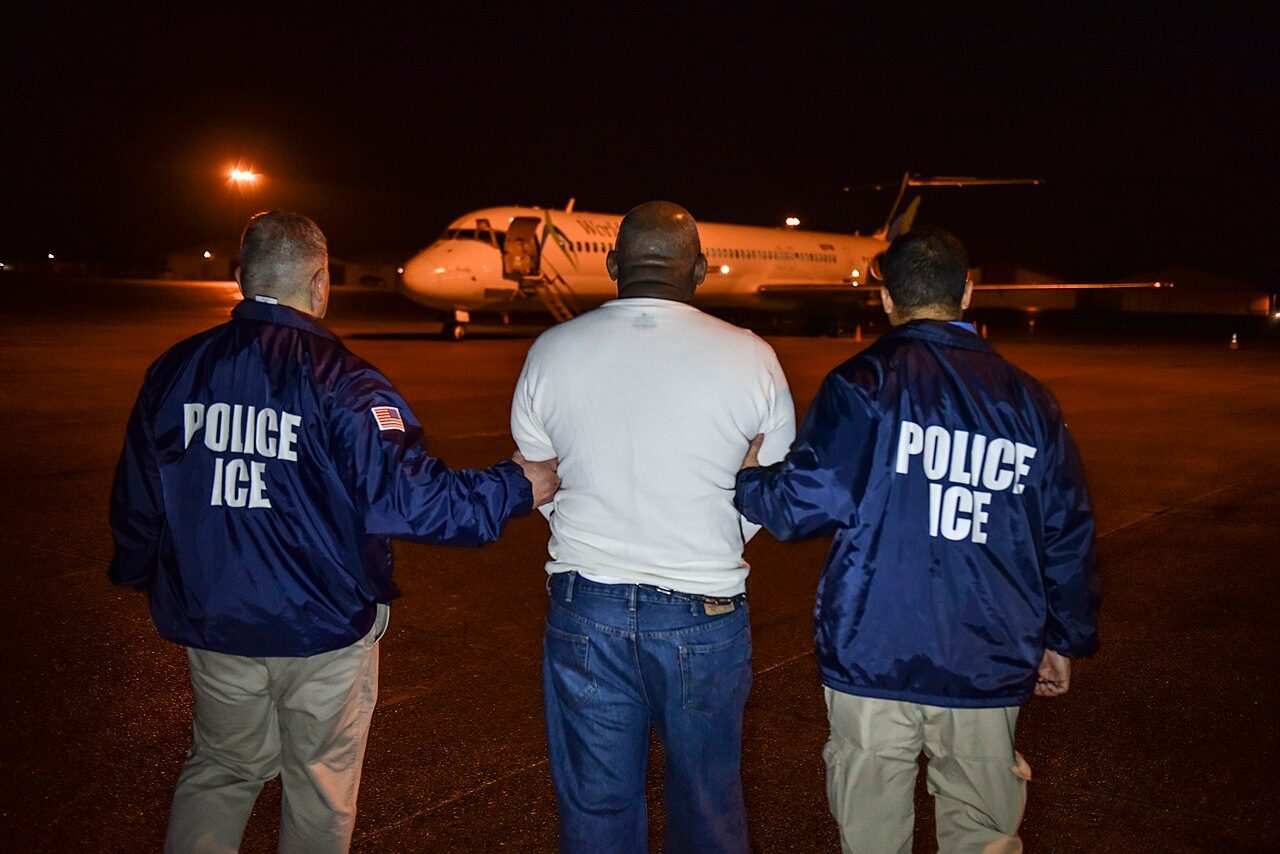
Migrants sent to unrelated nations
After the Supreme Court lifted notice rules, the US deported migrants to South Sudan, Eswatini, and Ghana.
Key facts
- SCOTUS lifted notice June 23
- 8 men to South Sudan
- Solitary in Eswatini
Summary
After the Supreme Court lifted advance-notice requirements on June 23, 2025, the US deported migrants to third countries not their own. Eight men were sent to South Sudan, others to Eswatini and Ghana, under deals with African states.
What happened
After the Supreme Court lifted advance-notice requirements on June 23, 2025, the US began deporting migrants to third countries to which they had no ties. Eight men, citizens of Cuba, Laos, Mexico, Myanmar, Vietnam and South Sudan, were sent to South Sudan. Others were sent to Eswatini, where they were held in solitary confinement, and to Ghana, under deals with African governments.
Impact on the United States
The removals send people, including some whom US judges had protected from deportation to their home countries, to countries where they have no ties; men sent to Eswatini were held in solitary confinement. Rights groups have questioned the choice of countries criticized for repressive governments, and immigration lawyers say third-country removals are used to indirectly force asylum-seekers back to their home countries.
Documented effects
- Eight men deported to South Sudan, citizens of Cuba, Laos, Mexico, Myanmar, Vietnam and South Sudan[5]
- Men deported to Eswatini held in solitary confinement[5]
- A federal court set aside the third-country removal policy; the First Circuit largely affirmed on Sept. 18, 2026 and lifted its stay on Sept. 23, and the government said the order forced it to cancel a removal flight to three countries while it sought a Supreme Court stay.[3][4]
- At least 60 people were deported to Ghana from September 2025 under an agreement between the two governments, including people whom US judges had protected from deportation to their home countries.[6]
- Liberia received its first 20 deportees on August 20, 2026 under a deal to take 1,200 people from the US, including African nationals and nationals of countries in the Americas and the Caribbean.[7]
- By the First Circuit's September 18, 2026 ruling, more than 25,000 migrants had been sent to third countries, about 80% of them to Mexico.[8]
Why this is rated significant
Severity 3 reflects serious harm to affected individuals and US standing, narrower in scale than mass-status actions.
policy set aside by D. Mass. Feb. 25, 2026; First Circuit largely affirmed Sept. 18 and lifted its stay Sept. 23, 2026; administration's Supreme Court stay application 26A406 pending
Corrections & updates [5]
Every change to a fact on this page after publication is logged here, newest first.
- UpdatedStatus
Status changed after publication. On Feb. 25, 2026 the federal district court in Massachusetts (D.V.D. v. DHS) set aside the third-country removal policy and required notice and a chance to raise fear-based claims. The First Circuit stayed that judgment on March 16, 2026, largely affirmed it on Sept. 18, 2026, and dissolved its stay on Sept. 23, 2026, which put the judgment back into effect. The administration asked the Supreme Court for a stay on Sept. 24, 2026 (No. 26A406). That request is pending.[3][4]
- Previously
- in-effect
- Now
- blocked-by-court (policy set aside by D. Mass. Feb. 25, 2026; First Circuit largely affirmed Sept. 18 and lifted its stay Sept. 23, 2026; administration's Supreme Court stay application 26A406 pending)
- CorrectedSource
The claim that men sent to Eswatini were held in solitary confinement was credited to a Sept. 25, 2025 PBS article (misdated Sept. 12), which does not say this. It is now credited to PBS/AP's July 18, 2025 report that the five men were held in solitary confinement. The Ghana removals, mentioned in the summary without a source, are now sourced to PBS/AP: at least 60 people were deported to Ghana under an agreement between the two governments starting in September 2025.[5][6]
- UpdatedKey facts
Updated: Liberia received its first 20 deportees on August 20, 2026 under a deal to take 1,200 people, and by September 2026 more than 25,000 migrants had been sent to third countries, about 80% of them to Mexico.[7][8]
- CorrectedSource
Corrected sourcing: the deportation of eight men to South Sudan was supported only by a statement from the International Refugee Assistance Project, an advocacy group, which is no longer cited. The Associated Press, via PBS NewsHour, reports the eight men are citizens of Cuba, Laos, Mexico, Myanmar, Vietnam and South Sudan; the entry now says that instead of 'only one of whom was South Sudanese'. Statements that the receiving countries are 'dangerous' and that the removals damage US legal and moral standing, which no cited source makes, were replaced with what the sources report.[5][6]
- CorrectedDisplay copy
The summary closed with 'The removals raise due-process and non-refoulement concerns', which the record does not state; it now gives the attributed concern that is in the record.
+ Show previous and current text- Hide previous and current text
- Previously
- Following the June 23, 2025 Supreme Court order removing advance-notice requirements, the US deported migrants to third countries where they had no ties. Eight men went to South Sudan, others to Eswatini's solitary confinement and to Ghana. The removals raise due-process and non-refoulement concerns.
- Now
- Following the June 23, 2025 Supreme Court order removing advance-notice requirements, the US deported migrants to third countries where they had no ties. Eight men went to South Sudan, others to Eswatini's solitary confinement and to Ghana. Immigration lawyers say third-country removals are used to indirectly force asylum-seekers back to their home countries.
Sources [7]
- T2PBS NewsHour - Judge fails to appear for court hearing in Eswatini over 4 men deported from the U.S. · Sep 25, 2025 ↗
- T1Supreme Court of the United States - Docket No. 26A406: Department of Homeland Security, et al., Applicants v. D.V.D., et al. · Sep 24, 2026 ↗
- T1U.S. Solicitor General (Supreme Court filing) - Application for a Stay, DHS v. D.V.D. (No. 26A406) · Sep 24, 2026 ↗
- T2PBS NewsHour (AP) - Men deported by U.S. to Eswatini in Africa will be held in solitary confinement for undetermined time · Jul 18, 2025 ↗
- T2PBS NewsHour (AP) - Rights lawyers sue Ghana over third-country deportation deal with Trump administration · Jun 30, 2026 ↗
- T2PBS NewsHour (Associated Press) - U.S. sends 20 deportees to Liberia, part of 1,200 migrants the country will receive under new deal · Aug 20, 2026 ↗
- T2CBS News - Appeals court rejects Trump's third-country deportation policy · Sep 18, 2026 ↗
Image: usicegov, Public domain (Wikimedia Commons)