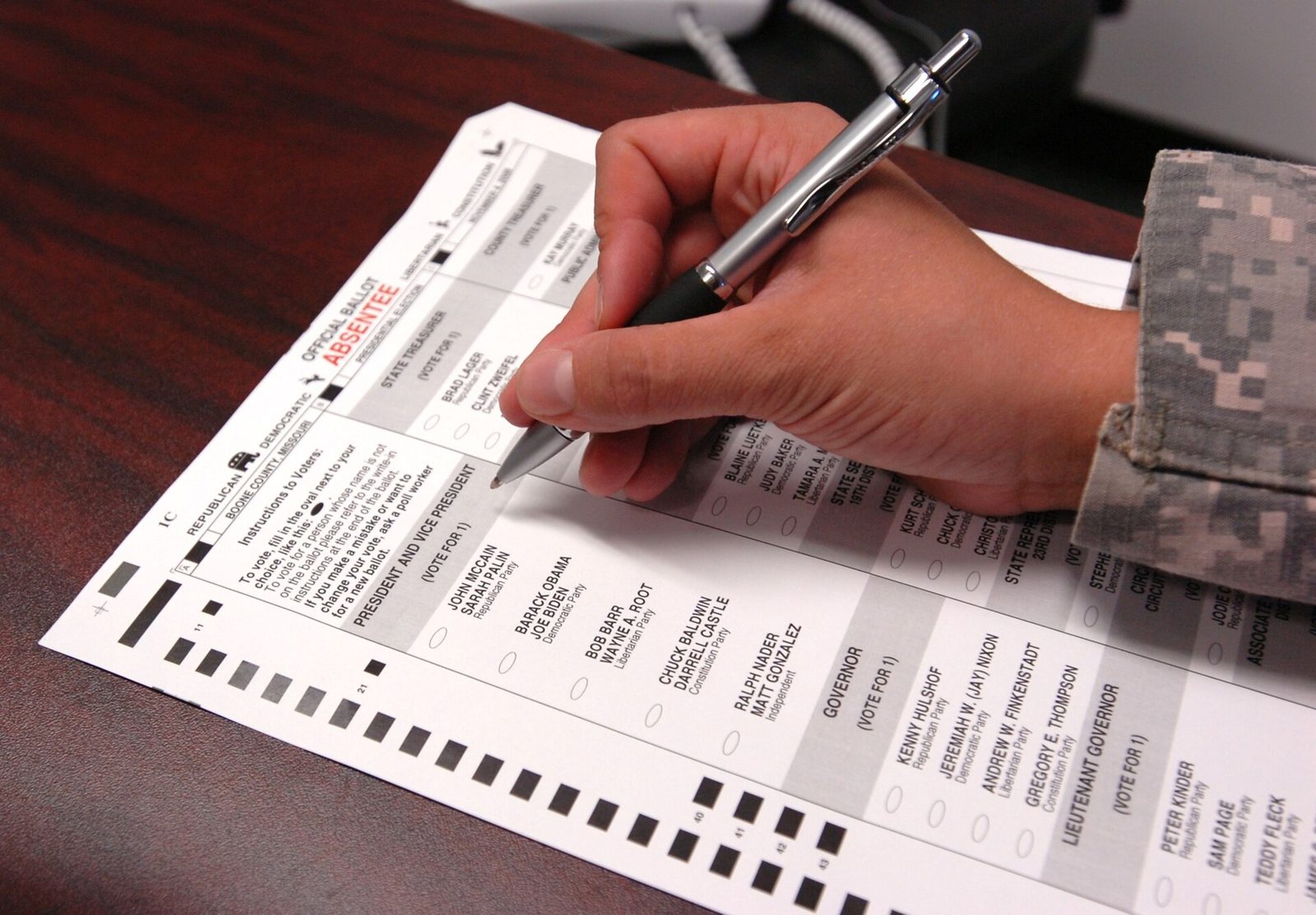
An order to control who gets a mail ballot
EO 14399 orders federal citizen lists for every state and limits USPS ballot delivery; the Supreme Court let the lists proceed while parts of the Postal Service rule stay blocked.
Key facts
- Signed March 31, 2026
- Supreme Court lifted a 23-state injunction 6-3 on Aug 24, 2026
- Parts of the USPS ballot rule still blocked for 23 states and DC
Summary
On March 31, 2026, President Trump signed Executive Order 14399, 'Ensuring Citizenship Verification and Integrity in Federal Elections,' directing DHS and the Social Security Administration to compile 'State Citizenship Lists' of adult citizens for each state, directing the Postal Service to transmit ballots only to people on state mail-in participation lists, and directing the Attorney General to prioritize prosecution of election officials who issue ballots to ineligible voters.
What happened
The order requires DHS, drawing on citizenship records, SSA data and the SAVE program, to send each state's election officials a list of citizens who will be 18 or older, updated no fewer than 60 days before each regularly scheduled federal election; directs the Postal Service to propose rules requiring 'Official Election Mail' ballot envelopes with a unique Intelligent Mail barcode and barring it from transmitting mail-in or absentee ballots for anyone not enrolled on a state-specific list; and directs withholding of federal funds from noncompliant states and localities where authorized. The order states that the right to vote in federal elections 'is reserved exclusively for citizens of the United States.' In June, U.S. District Judge Indira Talwani blocked key provisions in a suit by 23 states led by California plus the District of Columbia; on August 24, 2026 the Supreme Court, 6-3, lifted that injunction, allowing the DHS citizenship-list directive, the prosecution directive and the USPS rule to proceed, while stating that its disposition 'does not mean that any measure taken by the Government to implement the order will necessarily be lawful.' Talwani had separately issued an August 11 injunction, in a suit by groups led by the League of Women Voters, extending the block to all states. On August 27 she issued a new order, later replaced by a preliminary injunction, barring the administration from requiring the plaintiff states and DC to comply with several provisions of the Postal Service rule, such as ballot-envelope design requirements and submission of voter data into a USPS portal; on September 14, 2026 the Supreme Court declined to lift it, saying the government 'is unlikely to succeed on the merits of its challenge,' with Justices Alito and Thomas dissenting. The administration did not meet the September 4 date for delivering the citizenship lists.
Impact on the United States
Seeks federal control over mail-ballot delivery, which election-law expert Rick Hasen noted the Constitution assigns to the states and Congress, and directs the creation of federal citizenship lists that the Brennan Center warns rely on 'incomplete and inaccurate' government data, risking challenges to eligible voters, while directing prosecutors toward local election officials during a midterm cycle.
Documented effects
- Order directs DHS to send every state a list of citizens aged 18 and over at least 60 days before each federal election and bars USPS from transmitting mail-in or absentee ballots for anyone not enrolled on a state-specific list[1][2]
- Nearly a third of all voters cast mail ballots in the 2024 general election, the population the mail provisions would affect[2]
- Supreme Court, 6-3, lifts a June injunction won by 23 states and DC, letting the citizenship-list, prosecution-priority and USPS-rule provisions proceed[3][4][5]
- Supreme Court declines to lift a preliminary injunction that blocks parts of the Postal Service mail-ballot rule, including envelope-design and voter-data-portal requirements, for 23 states and DC; Justices Alito and Thomas dissent[6]
- Administration does not meet the September 4 deadline to deliver state citizenship lists; DOJ lawyers tell the court it will instead give 48 hours' notice before launching the state citizenship portal, and it still aims to produce the lists before the midterms[7]
Why this is rated severe
A presidential order asserting federal control over who may receive a mail ballot and directing DHS to build state lists of citizens from federal data that critics say is incomplete and inaccurate, ahead of a national election in which nearly a third of 2024 voters cast mail ballots; the list-building and prosecution provisions were cleared to proceed by the Supreme Court, while parts of the Postal Service rule remain blocked.
Supreme Court on Aug 24, 2026 let the citizenship-list, prosecution-priority and USPS-rulemaking provisions proceed; on Sept 14, 2026 it declined to lift a preliminary injunction blocking parts of the USPS mail-ballot rule for 23 states and DC
Sources [7]
- T1The White House - Ensuring Citizenship Verification and Integrity in Federal Elections · Mar 31, 2026 ↗
- T2NPR - Trump signs a new executive order on voting. Experts say he lacks the authority · Mar 31, 2026 ↗
- T2NBC News - Supreme Court hands preliminary win to Trump on mail-in ballots executive order · Aug 24, 2026 ↗
- T3SCOTUSblog - Supreme Court allows Trump administration to move forward with order imposing restrictions on mail-in voting · Aug 24, 2026 ↗
- T3Votebeat - Supreme Court lifts 1 of 2 blocks on Trump's mail-voting executive order · Aug 24, 2026 ↗
- T3SCOTUSblog - Supreme Court denies Trump administration's request to implement parts of rule on mail-in voting · Sep 14, 2026 ↗
- T2NPR - The Trump administration still aims to make state citizenship lists ahead of midterms · Sep 3, 2026 ↗
Image: Spc. Carlynn Knaak, U.S. Army, Public domain (Wikimedia Commons)