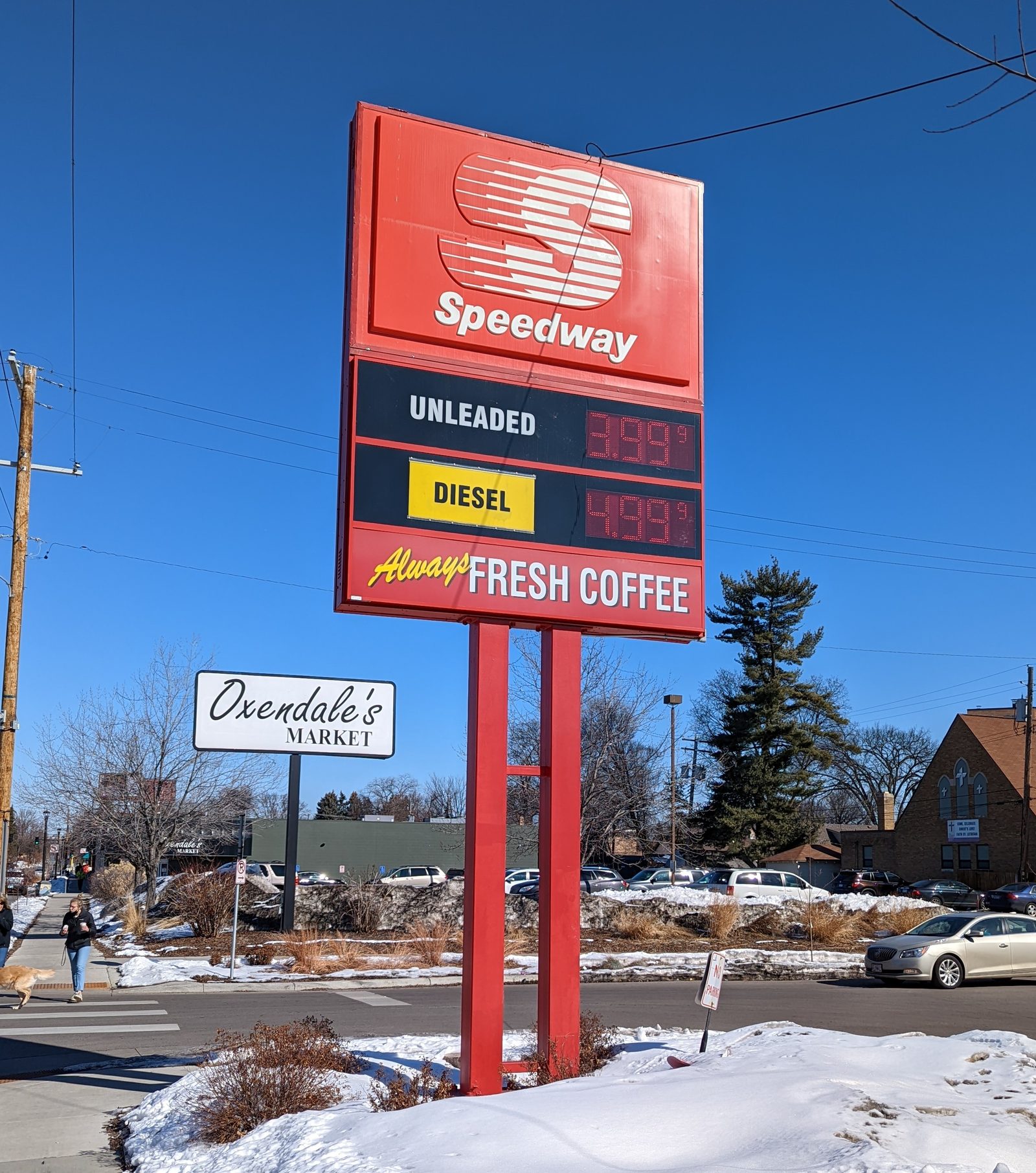
Iran-war oil shock has cost US drivers $100B+
Gas hit $4.56 in May, eased after the June ceasefire, then climbed back to $4.48 in September. Americans have paid over $100B extra for gasoline and diesel.
Key facts
- Gas $2.98 -> $4.56/gal (+53%), a 4-year high, Feb-May 2026
- Over $100B extra on gasoline and diesel, Feb 28 - Sept 7, 2026 (Brown Univ.)
- Gas $4.48 on Sept 24, a record for the season; diesel topped $6.50
Summary
The 2026 Iran war's closure of the Strait of Hormuz sent US gasoline from $2.98/gallon (Feb 26) to a four-year high of $4.56 (May 21), a 53% jump. Prices eased after the June ceasefire, then climbed again when it collapsed in July, reaching $4.48 on Sept 24, 2026, the highest ever for that time of year. Brown University's Climate Solutions Lab estimates Americans paid over $100 billion extra for gasoline and diesel from Feb 28 to Sept 7, 2026; Moody's Mark Zandi puts the added cost at about $115 billion including jet fuel.
What happened
Iran closed the Strait of Hormuz after the US and Israel attacked Iran on February 28, 2026. AAA's US national average for regular gasoline rose from $2.98/gallon on February 26 to $3.98 by March 26 - a $1 jump in a single month - and peaked at $4.56 on May 21, the highest in four years, before falling to $4.24 by June 4 with crude below $100 a barrel; a US-Iran memorandum of understanding signed June 17 reopened the Strait. The average price increment over the pre-war baseline across the war was about $1.12/gallon; applied to roughly 375 million gallons of daily US gasoline consumption over ~110 days, that is about $46 billion in extra money out of drivers' pockets. CBO expects the war to leave inflation about 0.5 percentage points higher than previously estimated into early 2027. After the ceasefire collapsed on July 8, prices rose again: $4.09 on July 30, above $4 every day in August, and $4.48 on Sept 24.
Impact on the United States
Every American who bought fuel paid more: Brown University estimates Americans spent over $100 billion extra on gasoline and diesel from Feb 28 to Sept 7, 2026, over $750 per household, and Moody's Mark Zandi puts the added energy cost at about $115 billion, about $860 per household, including jet fuel. Diesel, central to trucking and shipping, set daily records above $6.50 a gallon in September, and CBO expects the war to leave inflation about 0.5 percentage points higher into early 2027. The burden falls hardest on lower- and middle-income households, according to Zandi, and on rural households that drive more. This is a cost to American consumers, not a federal outlay.
Global ripple effects
The spike was a direct consequence of the 2026 US-Iran war and the Strait of Hormuz closure (see iran-war-hormuz-2026); prices eased after the June 2026 ceasefire and MOU reopened the Strait (see iran-ceasefire-mou-2026), then rose again after the ceasefire collapsed in July (see iran-ceasefire-collapse-2026).
Documented effects
- National average gas: $2.98/gal (Feb 26) -> $3.98 (Mar 26) -> $4.56 peak (May 21, +53%) -> $4.24 (Jun 4)[1][2][5][6]
- ~$1.12/gal average increment x ~375M gal/day x ~110 days = ~$46B in extra spending at the pump[1][3]
- J.P. Morgan (April 2026): the gasoline price increase, if it persisted for the rest of the year, would amount to around a $100B hit to consumers' purchasing power[4]
- Prices eased to $4.24 by June 4, 2026, but the national average stayed above $4 every day in August (a record for the month) and was $4.14 on September 3, 2026 amid continued Strait of Hormuz volatility[6][7][8]
- After the July 8 ceasefire collapse the national average rose again, to $4.09 on July 30, nearly $1 above a year earlier[14]
- Brown University: Americans paid over $100B extra for gasoline and diesel from Feb 28 to Sept 7, 2026, over $750 per household; Moody's Mark Zandi: about $115B including jet fuel, about $860 per household[9][10]
- CBO: the war will leave inflation about 0.5 percentage points higher than previously estimated into the first quarter of 2027[13]
- The national average reached $4.48 on Sept 24, 2026, the highest ever for that time of year and more than $1 above a year earlier ($3.16); diesel set daily records above $6.50[11][12]
Projected cost to Americans
Cumulative cost if current policy holds: direct federal cost plus the broader economic burden. A conservative, lower-bound estimate (medium confidence).
- So far
- $100.00B
- By 2035
- $115.00B
- By 2040
- $115.00B
How this is calculated: The existing block treated this as a resolved shock ending with the June 18 reopening of Hormuz. That no longer holds: the ceasefire collapsed July 8 and AAA's national average was $4.48 on Sept. 24, "the highest the national average has ever been for this time of year," versus $3.16 a year earlier [S1]. Booked (net_cost_usd) uses Brown University Climate Solutions Lab's estimate that Americans spent "over $100 billion" extra on gasoline and diesel from Feb. 28 to Sept. 7, 2026 (Labor Day), against a no-war price counterfactual built from AAA, EIA and Census data, or "over $750" per household [S2]. Layer 1 = 0: a consumer cost, not a federal outlay. Layer 2 = $115B: Moody's Mark Zandi's estimate of "$115 billion in additional costs" (about $860 per household), which adds jet fuel to gasoline and diesel [S3]. Prices were still rising at the end of September, so both figures are floors; the drafter's extra ~$35B "allowance" was unsourced and is not booked. CBO separately projects the war will leave inflation about 0.5 percentage points higher into Q1 2027 [S4]; noted, not added, to avoid overlap.
Why this is rated severe
A direct, measurable cost to US consumers: the Strait of Hormuz disruption drove the national average gas price up 53% to a four-year high by May, prices climbed again after the July ceasefire collapse, and Brown University estimates Americans paid over $100 billion extra for gasoline and diesel from Feb 28 to Sept 7, 2026.
prices peaked at $4.56/gal on May 21, 2026 and eased in June, then rose again after the July 8 ceasefire collapse; the national average was $4.48 on Sept 24, 2026, the highest ever for that time of year
Corrections & updates [8]
Every change to a fact on this page after publication is logged here, newest first.
- UpdatedCost estimate
Gasoline prices rose again after the ceasefire collapsed (about $4.48 a gallon on Sept. 24, 2026), so the extra fuel cost to Americans kept growing. The figure now uses Brown University's tracker of extra gasoline and diesel spending from Feb. 28 to Sept. 7, 2026. The broader 10-year cost now uses Moody's estimate (Mark Zandi).
- Previously
- $46B so far; $100B broader 10-year cost
- Now
- $100B so far; $115B broader 10-year cost
- CorrectedFigure
The entry described a ~$100 billion total consumer hit that included diesel, jet fuel and freight-driven inflation. The cited CBS News report (April 7, 2026) says something narrower: J.P. Morgan estimated that the gasoline price increase, if it persisted for the rest of the year, would amount to around a $100 billion hit to consumers' purchasing power. The figure is a conditional gasoline-only projection and is now described that way.[4]
- CorrectedFigure
The entry called the $2.98/gallon February 26 price a four-year low and the rise to $4.56 a 54% jump. AAA/Kelley Blue Book data put late-December 2025 prices around $2.76, so $2.98 was not a four-year low. $2.98 to $4.56 is a 53% increase.[2][5][6]
- UpdatedStatus
Prices did not return to pre-war levels. AAA reports the national average stayed above $4 a gallon every day in August 2026, a record for the month, and stood at $4.14 on September 3, 2026, with crude oil elevated because of continued volatility in the Strait of Hormuz. The entry previously described the spike as reversed and eased after a June 18 reopening of the Strait, a date the cited sources do not cover.[6][7][8]
- UpdatedSummary
Updated: the entry still described the price shock as ending with the war in June and put the cost at about $46 billion over ~110 days. After the ceasefire collapsed on July 8 prices rose again, reaching $4.48 on Sept. 24, 2026, the highest the national average has ever been for that time of year (AAA). Brown University estimates Americans paid over $100 billion extra for gasoline and diesel from Feb. 28 to Sept. 7, 2026, and Moody's Mark Zandi about $115 billion including jet fuel. The end date is removed and the headline, summary and impact now reflect the continuing shock; the earlier $46 billion calculation is kept as the estimate for the first phase of the war.[9][10][11][12][13][14]
- CorrectedSource
AAA and Kelley Blue Book were labeled Tier 2 (major news or wire). AAA publishes the national gas-price data itself and Kelley Blue Book is automotive trade press, so they are relabeled Tier 3 (specialist sources). The figures they support are unchanged; the entry's Tier 1/2 support comes from EIA, CBS News, NPR, PBS/AP and Fox Business.[3][4]
- CorrectedSummary
No cited source supported four details, so they are removed or replaced: the Strait of Hormuz carrying "about a quarter of the world's seaborne oil"; crude climbing "toward $110-132 a barrel"; the Strait reopening "June 18"; and the Dallas Fed attributing inflation to the war. NPR reports Iran closed the Strait after the US and Israel attacked Iran on Feb. 28. ABC News reports the US-Iran memorandum of understanding signed June 17 reopened the Strait. AAA put crude below $100 a barrel on June 4. The inflation effect is now attributed to CBO, which the entry already cites.[6][13][15][16]
- ClarifiedSeverity rationale
The severity rationale called the cost 'regressive' and said it hit 'every American household' without attribution; it now states the documented price rise and the attributed Brown University estimate. Severity unchanged.
+ Show previous and current text- Hide previous and current text
- Previously
- A direct, measurable, regressive hit to every American household: the Strait of Hormuz disruption drove the national average gas price up 53% to a four-year high by May, prices climbed again after the July ceasefire collapse, and Americans paid over $100 billion extra for gasoline and diesel from Feb 28 to Sept 7, 2026.
- Now
- A direct, measurable cost to US consumers: the Strait of Hormuz disruption drove the national average gas price up 53% to a four-year high by May, prices climbed again after the July ceasefire collapse, and Brown University estimates Americans paid over $100 billion extra for gasoline and diesel from Feb 28 to Sept 7, 2026.
Sources [16]
- T3AAA - National Gas Average Jumps One Dollar in One Month · Mar 26, 2026 ↗
- T3Kelley Blue Book (AAA data) - AAA: National Average Gas Prices Spiked In March 2026 · Apr 2, 2026 ↗
- T1U.S. Energy Information Administration - How much gasoline does the United States consume? · Jan 1, 2026 ↗
- T2CBS News - Gas prices could soon breach $5 a gallon if Strait of Hormuz remains shut, J.P. Morgan analysts say · Apr 7, 2026 ↗
- T3AAA - Memorial Day Weekend Gas Prices Reach Four-Year Highs · May 21, 2026 ↗
- T3AAA - National Gas Average Drops Nearly 20 Cents in One Week · Jun 4, 2026 ↗
- T3AAA - Gas Prices Remain High as August Will Likely Set New Record · Aug 27, 2026 ↗
- T3AAA - Labor Day on Track to Set Record at the Pump · Sep 3, 2026 ↗
- T3Brown University Climate Solutions Lab - Research Brief: The U.S. Energy Costs of the Iran War · Sep 8, 2026 ↗
- T2Fox Business - Iran war costs US households $860 more in higher energy prices, economist says · Sep 10, 2026 ↗
- T3AAA - National Average Climbs Nearly 5 Cents Since Last Week · Sep 24, 2026 ↗
- T2NPR - In one of their last votes before November, Senate GOP blocks effort to end Iran war · Sep 24, 2026 ↗
- T2PBS News / Associated Press - Iran war has cost the U.S. more than $38 billion so far, budget office says · Sep 16, 2026 ↗
- T3AAA - Little Change to National Average, Pump Prices Remain High · Jul 30, 2026 ↗
- T2NPR - Trump calls Iranian plan to reopen Strait of Hormuz not 'acceptable' · Sep 26, 2026 ↗
- T2ABC News - How the US-Iran ceasefire and MOU broke down -- a timeline · Jul 9, 2026 ↗
Image: Michael Hicks, CC BY 2.0 (Speedway Gas Prices (51936331396) (cropped).jpg)