Weather Service enters disaster season understaffed
About 600 of ~4,200 Weather Service positions were lost by spring 2025, ahead of hurricane and tornado seasons.
Key facts
- ~800 NOAA employees fired Feb 27, 2025
- ~600 NWS positions lost by spring 2025
- NOAA down ~2,000 of ~12,000 staff by mid-March 2025
Summary
NOAA began firing probationary employees on February 27, 2025 - about 800, according to CNN - as part of the Trump administration's workforce reductions. By spring 2025 the National Weather Service had lost roughly 600 of its approximately 4,200 staff through layoffs, buyouts and retirements, entering the tornado and hurricane seasons understaffed.
What happened
NOAA began firing probationary employees on February 27, 2025; some were given less than two hours to leave, and the terminations included National Weather Service staff (NPR). By mid-March NOAA was down about 2,000 of roughly 12,000 employees since January and was preparing more than 1,000 further layoffs (ABC News). By May, after 250 NWS probationary employees were fired or took buyouts and 300 veteran staffers left, five former NWS directors warned the agency was down more than 10% of its staffing. NOAA's FY2026 budget proposal included a 17% workforce reduction.
Impact on the United States
Five former NOAA administrators warned that cutting NOAA's workforce would make it harder to receive weather forecasts, and experts warned of less accurate forecasts. After the July 4, 2025 Texas floods, Democratic lawmakers called for an investigation into NWS vacancies; FactCheck.org reported that experts said the local offices were sufficiently staffed and issued timely warnings, while noting key coordination positions were vacant.
Documented effects
- The National Weather Service lost roughly 600 of about 4,200 positions through layoffs, buyouts and retirements by spring 2025, according to the NWS Employees Organization.[4]
- NOAA was down about 2,000 of roughly 12,000 employees since January 2025 and was preparing more than 1,000 additional layoffs as of mid-March 2025.[2]
Why this is rated severe
The Weather Service lost about 600 of ~4,200 staff heading into disaster seasons, and experts warned of less accurate forecasts; experts did not attribute the 2025 Texas flood deaths to the cuts.
Corrections & updates [5]
Every change to a fact on this page after publication is logged here, newest first.
- CorrectedSummary
The summary, subtitle, key facts and body gave figures that neither cited source (NPR, ABC News) contains: "more than 560" NOAA/NWS positions eliminated, "40% of national weather forecast offices" understaffed, and balloon launches suspended at three stations. NPR reported that NOAA began firing probationary staff on February 27, 2025, without a confirmed count. CNN reported about 800 NOAA employees. FactCheck.org, quoting the NWS employees' union, reported that the Weather Service lost roughly 600 of about 4,200 positions by spring 2025 through layoffs, buyouts and retirements. ABC News reported NOAA was down about 2,000 of roughly 12,000 staff since January, with more than 1,000 further layoffs planned. The text now uses these sourced figures.[1][2][3][4]
- CorrectedWhat happened
Several statements in "what happened," the effects, the US-impact text and the severity rationale appear in neither cited source (NPR, ABC News). They are: 550+ terminations by late February; balloon-launch suspensions at Kotzebue, Omaha, Rapid City, Albany and Gray; late launches before a March Great Plains outbreak; 40% of forecast offices with vacancies; and a May 2025 tornado outbreak linked to the Louisville office. They are replaced with sourced details. FactCheck.org reports that after the July 2025 Texas floods, experts said the local offices were sufficiently staffed and issued timely warnings, and that the cuts did not cause the high death toll.[1][2][4]
- CorrectedSource
The ABC News article "NOAA braces for mass layoffs, fueling concerns about lifesaving weather services" is dated March 12, 2025, not February 1, 2025.[2]
- ClarifiedSeverity rationale
The severity note said the cuts degraded nationwide weather-warning capacity, stated as fact. The cited sources report staffing losses and experts' warnings of less accurate forecasts; the note now says that.[1][4]
+ Show previous and current text- Hide previous and current text
- Previously
- The Weather Service lost about 600 of ~4,200 staff heading into disaster seasons, degrading nationwide weather-warning capacity; experts did not attribute the 2025 Texas flood deaths to the cuts.
- Now
- The Weather Service lost about 600 of ~4,200 staff heading into disaster seasons, and experts warned of less accurate forecasts; experts did not attribute the 2025 Texas flood deaths to the cuts.
- CorrectedCost estimate
Removed all figures. The $3.2B came from blaming 15% of the Texas flood damage on weather-service staffing cuts, but experts told FactCheck.org the cuts did not cause the flood deaths and the warnings were timely. The 10-year projections were built on assumptions, not on any estimate of what the cuts cost, and the salary savings were also unsourced.
- Previously
- $3.2B so far ($3.5B cost - $0.3B savings); $12B / $18B federal 10yr/15yr; $25B broader 10yr
- Now
- $0 on all horizons
Sources [4]
- T2NPR - Trump administration layoffs hit NOAA, agency that forecasts weather, hurricanes · Feb 27, 2025 ↗
- T2ABC News - NOAA braces for mass layoffs, fueling concerns about lifesaving weather services · Mar 12, 2025 ↗
- T2CNN - Trump officials fire 800 employees at weather forecasting and oceans agency · Feb 27, 2025 ↗
- T3FactCheck.org - Staffing Cuts at NWS and the Tragic Flooding in Texas · Jul 10, 2025 ↗
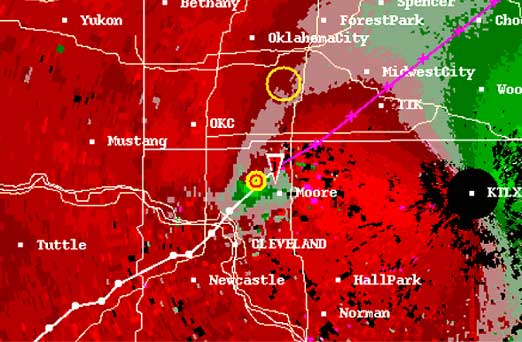
Image: National Severe Storms Laboratory / NOAA, Public Domain (Wikimedia Commons)