Proof-of-citizenship voting requirement blocked
An executive order imposing documentary citizenship requirements on federal voter registration was permanently enjoined.
Key facts
- 19 states sued
- Section 2(a) permanently blocked Oct 2025
- Additional provisions permanently blocked Jan 2026
Summary
On March 25, 2025, Trump signed an executive order requiring documentary proof of U.S. citizenship on federal voter registration forms and directing the Attorney General to act against states that count mail ballots received after Election Day. Courts blocked key provisions as unconstitutional; nineteen states sued; a permanent injunction against the citizenship-proof requirement was issued in October 2025 with additional provisions blocked in January 2026.
What happened
The order (EO 14248, "Preserving and Protecting the Integrity of American Elections") directed the Election Assistance Commission to add proof-of-citizenship requirements to federal registration forms, directed the Attorney General to act against states that count absentee or mail-in ballots received after Election Day, and conditioned federal election funds on state compliance. Voting rights groups and Democratic Party organizations immediately sued. On April 24, 2025, U.S. District Judge Colleen Kollar-Kotelly preliminarily blocked two provisions (Sections 2(a) and 2(d)); 19 state attorneys general filed a separate suit calling it "an unconstitutional attempt to seize control of elections." A federal court permanently blocked the citizenship-proof provision (Section 2(a)) in October 2025. The same court permanently blocked two more provisions (Sections 2(d) and 3(d)) on January 30, 2026.
Impact on the United States
The order, if sustained, would disenfranchise U.S. citizens who lack ready access to documentary proof of citizenship (passports, birth certificates) - disproportionately affecting low-income, elderly, and minority voters. The use of executive power to restructure election law - a matter reserved to Congress and states by the Constitution - threatened the constitutional framework of elections.
Documented effects
- 19 states filed suit alleging the order was an unconstitutional federal seizure of state election authority[1]
- Federal court permanently blocked Section 2(a) (citizenship-proof for voter registration) in October 2025[2]
- Additional permanent injunctions against further provisions issued January 2026[2][6]
Projected cost to Americans
Cumulative cost if current policy holds: direct federal cost plus the broader economic burden. A conservative, lower-bound estimate (low confidence).
- So far
- $5M
- By 2035
- $8M
- By 2040
- $9M
How this is calculated: The order was permanently enjoined at multiple provisions (Oct 2025, Jan 2026), so the main forward federal cost is residual DOJ appellate-defense overhead winding down over the next 1-3 years above the booked ~$5M, reaching ~$8M through FY2035 and ~$9M through 2040. Method: small residual-litigation tail on a substantially-resolved matter, no compounding. Layer 2 (election-administration disruption) could carry a positive figure in principle, but no defensible federal-side dollar figure is cited, so it is held at 0; state-AG litigation costs fall on state taxpayers and are excluded from this federal Layer-1 figure.
Why this is rated limited
Sought to restructure voter registration but key provisions were permanently enjoined, so realized disenfranchisement was prevented.
Corrections & updates [3]
Every change to a fact on this page after publication is logged here, newest first.
- CorrectedSummary
EO 14248 contains no directive to the Postal Service. Its mail-ballot provision directs the Attorney General to act against states that count absentee or mail ballots received after Election Day, and conditions Election Assistance Commission funding on an Election Day receipt deadline. A Postal Service rulemaking appears in a later order, EO 14399 of March 31, 2026, not this one. Per NPR, the first lawsuits were brought by voting rights groups and Democratic Party groups; no cited source names the NAACP.[5][1]
- CorrectedSource
The January 2026 permanent injunction described in the cited Elias Law Group release came from the same court (Judge Colleen Kollar-Kotelly, D.D.C.) that blocked Section 2(a) in October 2025, not from another court. It covered Sections 2(d) and 3(d) and was issued on January 30, 2026. The release's date was also corrected, and the court's order was added as a primary source.[2][6]
- CorrectedSource
The statement that a federal judge blocked two provisions of the order in April 2025 had no source. The court's April 24, 2025 order is added: Judge Colleen Kollar-Kotelly preliminarily enjoined Sections 2(a) and 2(d). The display text also said the court blocked the order 'as an unconstitutional federal seizure of state election authority,' which is how the states described it in their lawsuit, not the court's wording; it now says what the court did.[7]
Sources [7]
- T2NPR - 19 states sue over Trump's voting executive order, arguing it's unconstitutional · Apr 3, 2025 ↗
- T3Elias Law Group - Federal Court Permanently Blocks Additional Provisions of President Trump's Executive Order on Elections · Jan 30, 2026 ↗
- T2Washington Post - Trump signs executive order requiring proof of citizenship in federal elections · Mar 25, 2025 ↗
- T1American Presidency Project (UCSB) - Executive Order 14248 - Preserving and Protecting the Integrity of American Elections · Mar 25, 2025 ↗
- T1Federal Register - Executive Order 14248 - Preserving and Protecting the Integrity of American Elections (full text) · Mar 28, 2025 ↗
- T1U.S. District Court for the District of Columbia - LULAC v. Executive Office of the President, No. 25-cv-0946 (CKK), Order (Jan. 30, 2026) · Jan 30, 2026 ↗
- T1U.S. District Court for the District of Columbia - LULAC v. Executive Office of the President, No. 25-cv-0946 (CKK), Order granting preliminary injunction (Apr. 24, 2025) · Apr 24, 2025 ↗
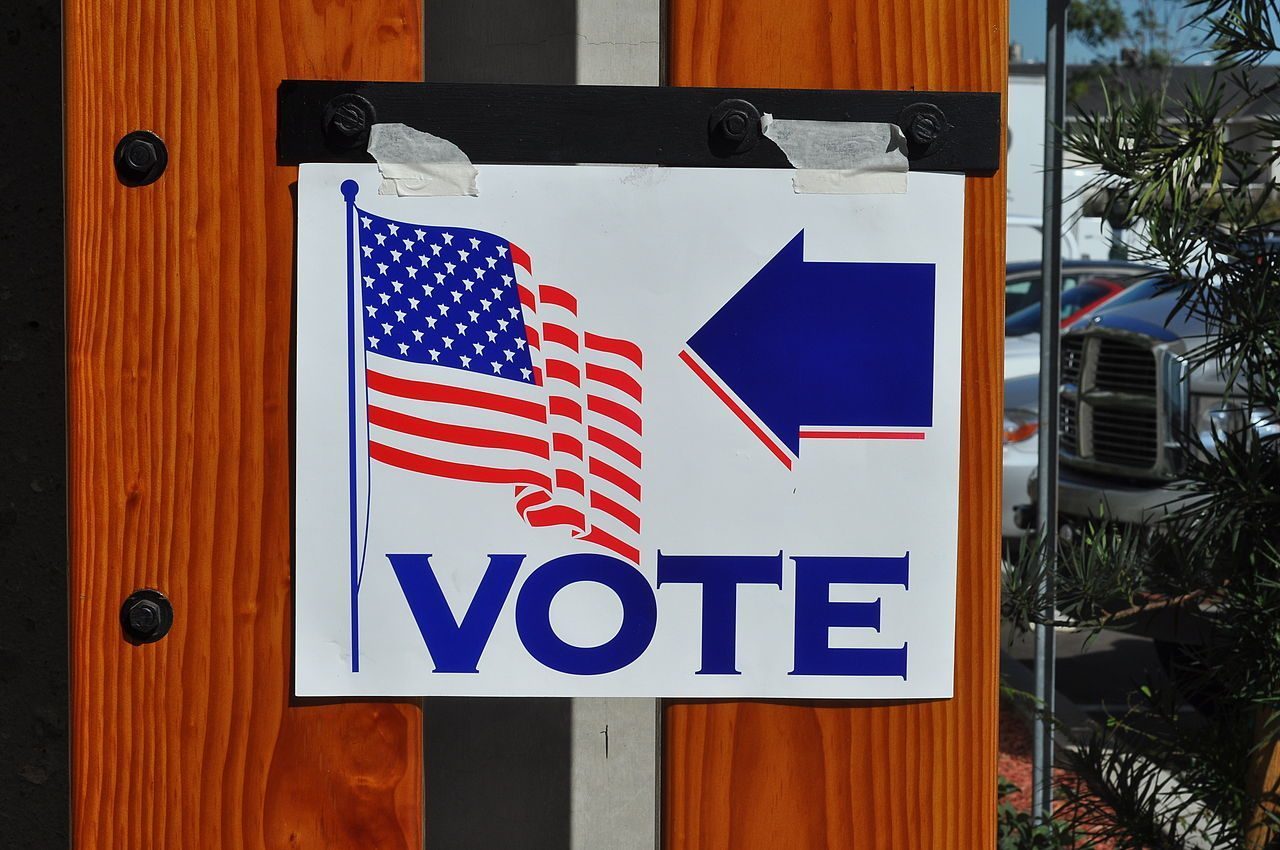
Image: Tom Arthur, CC BY-SA 2.0 (Wikimedia Commons)