25% tariff on all imported autos
Analysts projected new-vehicle price increases of $2,000 to $12,000; GM estimated at least $4B in 2025 tariff costs.
Key facts
- GM: at least $4B in 2025 tariff costs
- Center for Automotive Research: $107.7B in added costs for US automakers
- Stellantis temporarily laid off 900 US workers
Summary
President Trump signed a proclamation on March 26, 2025, imposing a 25% tariff on all imported passenger vehicles, light trucks, and key automobile parts (engines, transmissions, powertrain and electrical components) under Section 232 of the Trade Expansion Act of 1962. The auto tariff took effect April 3, 2025, and parts tariffs began May 3, 2025.
What happened
The White House fact sheet said American-owned plants made 97% of U.S. auto production in 1985, estimated that only about 25% of the content of vehicles Americans bought in 2024 was made in America, and cited a $93.5 billion auto parts trade deficit in 2024. USMCA-compliant vehicles receive the tariff only on their non-U.S. content. Goldman Sachs assumed new-vehicle net prices would rise roughly $2,000 to $4,000 over six to 12 months. Anderson Economic Group estimated consumer prices would rise $2,000-$12,000 per vehicle depending on model.
Impact on the United States
American car buyers face higher new-vehicle prices. U.S. auto assembly plants relying on imported parts face higher input costs. Automakers with foreign-built models have absorbed billions in added costs, some of which are passed to consumers.
Global ripple effects
Canada imposed 25% counter-tariffs, effective April 9, 2025, on non-CUSMA-compliant vehicles imported from the United States and on the non-Canadian, non-Mexican content of CUSMA-compliant vehicles; Stellantis paused production at some Canadian and Mexican plants, temporarily laying off 900 workers at U.S. factories.
Documented effects
- General Motors estimated the tariffs would cost it at least $4 billion in 2025; Toyota said tariffs would cost it $1.3 billion in April and May 2025 alone.[3]
- The Center for Automotive Research estimated the auto and parts tariffs would raise costs for automakers in the U.S. by $107.7 billion, including $41.9 billion for GM, Ford and Stellantis; Boston Consulting Group estimated $110 billion to $160 billion a year in added industry costs.[4]
- Stellantis paused production at some of its assembly plants in Mexico and Canada and said 900 workers would be temporarily laid off at several of its factories in Michigan and Indiana.[2]
Projected cost to Americans
Cumulative cost if current policy holds: direct federal cost plus the broader economic burden. A conservative, lower-bound estimate (medium confidence).
- So far
- $39.00B
- By 2035
- $264.00B
- By 2040
- $264.00B
How this is calculated: DURABLE Section 232 auto/parts tariff that survived the IEEPA strike-down. Tariff revenue is not a federal saving and not a federal cost, so Layer 1 is 0 for 10yr and 15yr; the burden is carried in Layer 2. (The earlier text described a Layer-1 "net gain shown negative", which contradicted the 0 values and has been removed.) Layer 2 (~$264B) uses the same method as the other durable tariff blocks: Tax Foundation's DYNAMIC 10-year net revenue for Section 232 autos, trucks and buses, $264.4B for 2026-2035 [S1, Table 5], rounded down, as a conservative floor (gross direct duties before offsets: $508.7B [S1]). It replaces an unsourced ~$25B-a-year extrapolation (was $250B). Tax Foundation's long-run GDP effect for this tranche (-0.1%, -84,000 FTE jobs) is not added, to avoid double counting. Tax Foundation's line also includes the later heavy-truck and bus tariffs.
Why this is rated severe
25% auto and parts tariffs were projected to raise new-vehicle prices by $2,000 to $12,000 and cost automakers billions (GM estimated at least $4 billion in 2025), a severe in-effect cost to American buyers and workers.
Corrections & updates [7]
Every change to a fact on this page after publication is logged here, newest first.
- CorrectedFigure
The entry said Goldman Sachs warned prices could rise "by up to $15,000". CNBC (April 12, 2025) reports Goldman Sachs assumed new-vehicle net prices would rise roughly $2,000 to $4,000; the $2,000-$12,000 range is Anderson Economic Group's (CBS News). GM's estimate as reported by CBS News was "at least $4 billion" for 2025.[4][3]
- ClarifiedSource
Corrected the NPR source title to the published headline.[2]
- CorrectedEffects
Two effects lacked support: Toyota's "roughly $9.5 billion" full-year tariff guidance (the cited CBS article, from May 2025, reports only the $1.3 billion April-May figure), and a Moody's estimate of a $30 billion hit to automakers' profits (cited to the White House fact sheet, which does not contain it). The Toyota figure is removed and the Moody's effect is replaced with estimates CNBC reports from the Center for Automotive Research and Boston Consulting Group. The Stellantis layoffs were described as at "parts plants"; NPR reports 900 temporary layoffs at several Stellantis factories in Michigan and Indiana.[2][3][4]
- CorrectedForeign linkback
The linkback cited "retaliatory threats from the EU, Canada, Mexico, and Japan" without a source. Canada's Department of Finance documents actual counter-tariffs from April 9, 2025 on non-CUSMA-compliant U.S. vehicles and on the non-Canadian, non-Mexican content of compliant vehicles; the unsourced EU, Mexico and Japan references are removed. The Stellantis detail is aligned with NPR (900 temporary layoffs at Michigan and Indiana factories).[5][2]
+ Show previous and current text- Hide previous and current text
- Previously
- Retaliatory threats from the EU, Canada, Mexico, and Japan on U.S.-made vehicles and parts; Stellantis paused production at Canadian and Mexican plants, idling ~900 U.S. workers at supporting facilities.
- Now
- Canada imposed 25% counter-tariffs, effective April 9, 2025, on non-CUSMA-compliant vehicles imported from the United States and on the non-Canadian, non-Mexican content of CUSMA-compliant vehicles; Stellantis paused production at some Canadian and Mexican plants, temporarily laying off 900 workers at U.S. factories.
- CorrectedWhat happened
The entry said the proclamation cited a decline in U.S. domestic auto content "from 97% in 1985 to ~25% in 2024". The White House fact sheet gives two different measures: American-owned plants made 97% of U.S. auto production in 1985, and it estimates only about 25% of the content of vehicles Americans bought in 2024 was made in America. The display text also said parts tariffs started April 3; they started May 3, 2025.[1][2]
- CorrectedSeverity rationale
The rationale said the tariffs 'raised new-vehicle prices by thousands.' The entry's sources give projected increases, not measured ones; the text now says so. Severity unchanged.[3][4]
+ Show previous and current text- Hide previous and current text
- Previously
- 25% auto and parts tariffs raised new-vehicle prices by thousands and disrupted supply chains, a severe in-effect cost to many American buyers and workers.
- Now
- 25% auto and parts tariffs were projected to raise new-vehicle prices by $2,000 to $12,000 and cost automakers billions (GM estimated at least $4 billion in 2025), a severe in-effect cost to American buyers and workers.
- CorrectedCost estimate
The $30B booked figure was not in the cited article, and the 10-year consumer burden was an unsourced extrapolation. Both now use Tax Foundation's 10-year dynamic revenue estimate for the Section 232 auto, truck and bus tariffs ($264.4B), the same method used for the other durable tariffs; the booked amount is that yearly average pro-rated over the 544 days in effect.
- Previously
- $30B booked; $250B broader 10-yr
- Now
- $39B booked; $264B broader 10-yr
Sources [5]
- T1The White House - Fact Sheet: President Donald J. Trump Adjusts Imports of Automobiles and Automobile Parts into the United States · Mar 26, 2025 ↗
- T2NPR - How automakers are moving in response to the tariffs · Apr 5, 2025 ↗
- T2CBS News - Toyota says tariffs cost it $1.3 billion in just 2 months · May 8, 2025 ↗
- T2CNBC - Trump's ongoing 25% auto tariffs expected to cut sales by millions, cost $100 billion · Apr 12, 2025 ↗
- T1Department of Finance Canada - Canada's response to U.S. tariffs · Jun 19, 2026 ↗
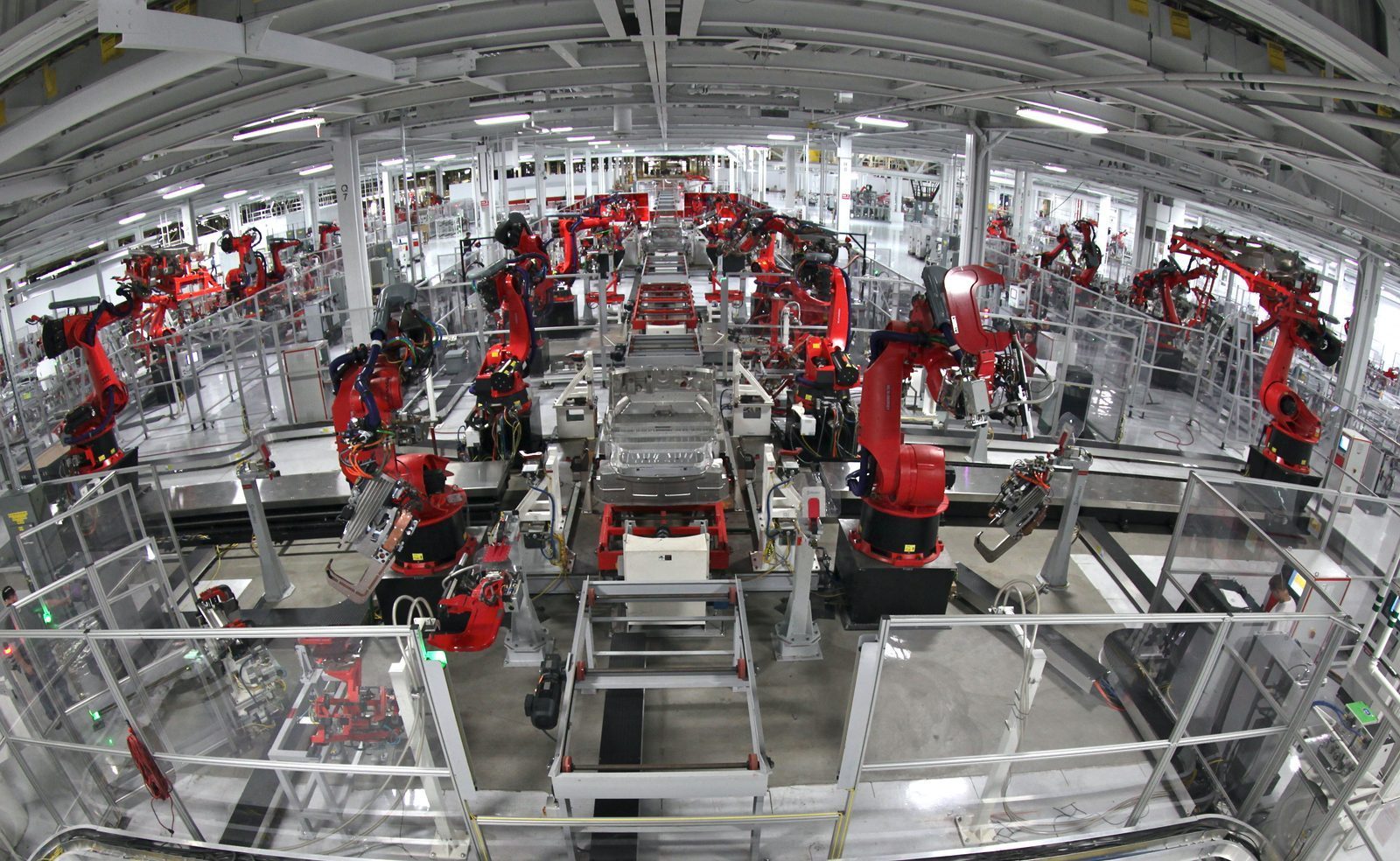
Image: Steve Jurvetson, CC BY 2.0 (Wikimedia Commons)