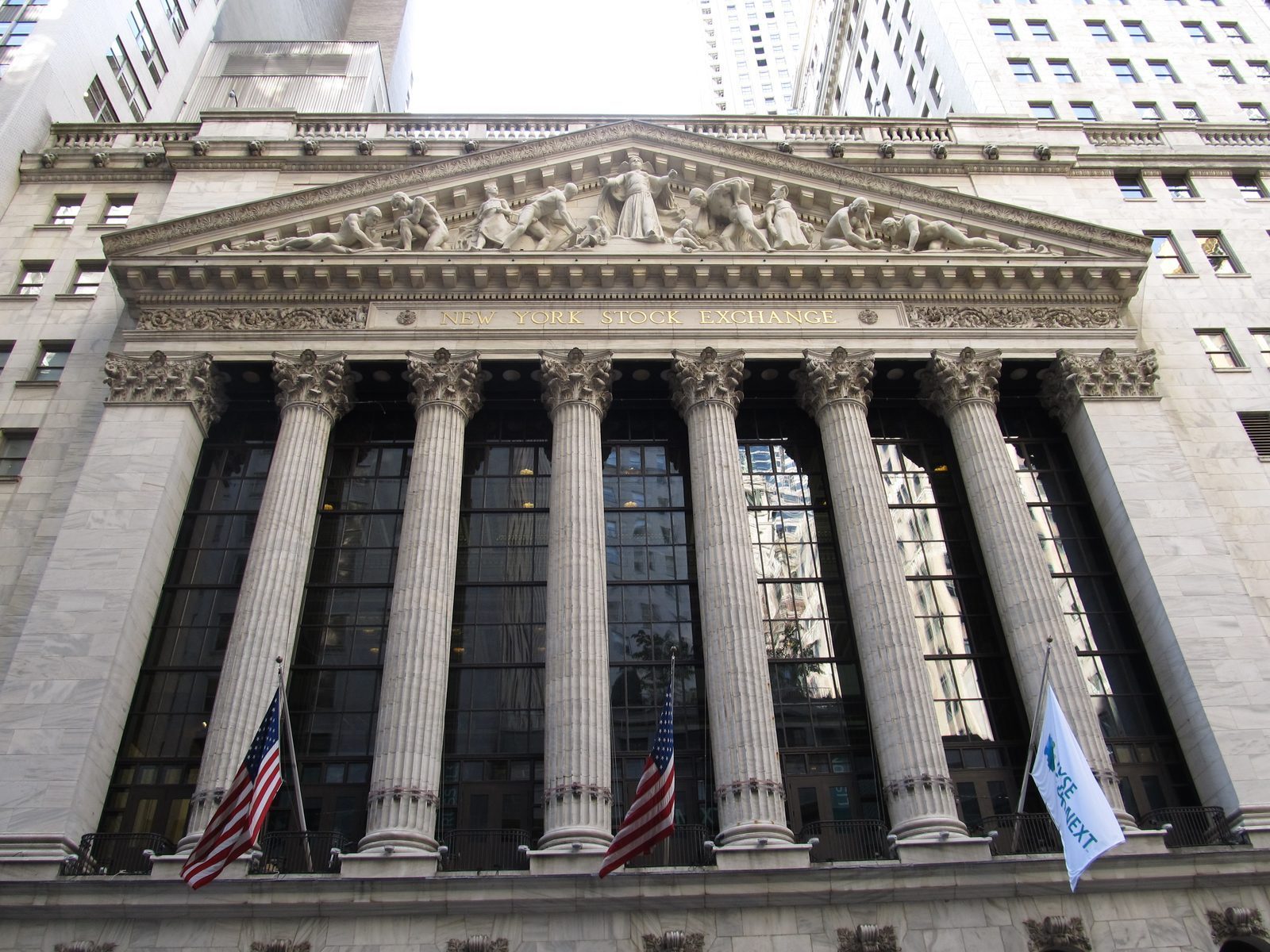
Liberation Day tariffs trigger $6T+ selloff
Tariffs on nearly every trading partner set off a market selloff that brought the S&P 500 near bear-market territory.
Key facts
- US equity markets lost more than $6T in value April 3-4
- S&P 500 fell 19% from Feb 19 high by April 8
- Yale Budget Lab: $2,400 per-household loss from all 2025 tariffs
Summary
President Trump signed Executive Order 14257 on April 2, 2025, imposing a 10% baseline tariff on imports from all countries (effective April 5) and higher country-specific "reciprocal" tariffs of 11-50% on 57 trading partners (effective April 9). The legal basis was IEEPA, declaring the U.S. trade deficit a national emergency.
What happened
The baseline 10% tariff on all countries took effect April 5. Country-specific tariffs began April 9, but within hours Trump announced a 90-day pause for all countries except China (which saw its rate escalate to 125%, then 145%). The U.S. Court of International Trade ruled the tariffs illegal on May 28, 2025; the Federal Circuit affirmed in August 2025; and the Supreme Court struck them down 6-3 on February 20, 2026.
Impact on the United States
U.S. importers, retailers, and consumers faced immediate cost uncertainty and price increases. The effective U.S. tariff rate reached 7.7%, the highest since 1947. Q1 2025 GDP contracted at an annualized -0.6% rate (BEA's September 2025 revised estimate, from -0.5%), driven largely by an import surge ahead of the tariffs.
Global ripple effects
The EU, China, Canada, and other trading partners announced retaliatory measures, reducing export revenues for U.S. farmers and manufacturers. The EU paused its retaliation for 90 days in parallel with Trump's pause.
Documented effects
- U.S. equity markets lost more than $6 trillion in market value over April 3-4, 2025 - the S&P 500 fell 4.8% on April 3 and ~6% on April 4. Retirement accounts with equity exposure suffered proportional losses.[1]
- By April 8, 2025, the S&P 500 had fallen 19% from its February 19 record high, approaching bear-market territory.[6]
- The 10-year Treasury yield rose from 3.84% (April 4) to 4.32% (April 11), raising federal borrowing costs. White House National Economic Council Director Kevin Hassett cited the bond market as a factor in the 90-day pause.[2][7]
- Yale Budget Lab estimated that all 2025 tariffs combined, of which the Liberation Day tariffs were a part, would cost the average U.S. household $2,400 in the short run (2025 dollars; July 30, 2025 estimate).[3]
Why this is rated severe
Sweeping tariffs on nearly all trading partners triggered steep market losses while in effect (all 2025 tariffs together lifted the average effective rate to the highest since 1933, per Yale Budget Lab), severe realized harm though the IEEPA basis was later struck down.
IEEPA reciprocal tariffs struck down by the Supreme Court 6-3 on Feb 20, 2026 and ended by Executive Order 14389 the same day; replaced by a 10% Section 122 surcharge (the administration announced intent to raise it toward the statutory 15% maximum), which the Court of International Trade held unlawful May 7, 2026, a ruling the Federal Circuit stayed pending appeal; the Section 122 surcharge expired July 24, 2026
Corrections & updates [10]
Every change to a fact on this page after publication is logged here, newest first.
- UpdatedStatus
The replacement 10% Section 122 surcharge ran for its statutory 150 days, from Feb 24, 2026 through July 24, 2026 (Proclamation 11012), and has expired (Tax Foundation tariff tracker).[4][5]
+ Show previous and current text- Hide previous and current text
- Previously
- reversed (IEEPA reciprocal tariffs struck down by the Supreme Court 6-3 on Feb 20, 2026 and terminated Feb 24; replaced by a 10% Section 122 surcharge (the administration announced intent to raise it toward the statutory 15% maximum), itself struck down by the Court of International Trade May 7, 2026 but stayed pending appeal)
- Now
- reversed (IEEPA reciprocal tariffs struck down by the Supreme Court 6-3 on Feb 20, 2026 and terminated Feb 24; replaced by a 10% Section 122 surcharge (the administration announced intent to raise it toward the statutory 15% maximum), itself struck down by the Court of International Trade May 7, 2026 but stayed pending appeal; the Section 122 surcharge expired July 24, 2026)
- CorrectedFigure
The entry said U.S. markets lost $6.6 trillion over April 3-4, 2025; the cited NPR report says "more than $6 trillion". S&P 500 moves (-4.8% April 3, about -6% April 4, -18.9% from the Feb 19 close to April 8) are confirmed by daily closing data; the CBS source did not contain the 19% figure.[1][6]
- CorrectedFigure
The entry said the 10-year Treasury yield rose from 3.96% (April 4) to above 4.5% by April 11, citing an April 10 CBS article that gives no 10-year yield figures. Treasury's daily par yield curve shows 3.84% on April 4 and 4.32% on April 11, 2025. CBS reports NEC Director Kevin Hassett said the bond market was "telling us" it was time to move; it describes foreign selling only as a worry, not an observed fact.[2][7]
- CorrectedFigure
The $2,400 per-household figure from the Yale Budget Lab (July 30, 2025) is for all 2025 tariffs combined, not the Liberation Day package alone. The report URL now redirects to the lab's latest report and is replaced with an archived copy of the July 30 report.[3]
- CorrectedSummary
The entry said the Liberation Day tariffs caused or drove the Q1 2025 GDP contraction. Q1 2025 (January-March) ended before the April 2 announcement; BEA attributes the contraction mainly to a surge in imports ahead of expected tariffs and lower government spending, as the entry's own impact section states.[1][6]
- CorrectedSummary
The summary text said markets collapsed and Q1 GDP contracted after the April 2 order. Q1 2025 (January-March) ended before the announcement; the contraction reflected an import surge ahead of expected tariffs. U.S. stocks lost more than $6 trillion in value over April 3-4 (NPR), and the S&P 500 was 18.9% below its Feb 19 close by April 8.[1][6]
+ Show previous and current text- Hide previous and current text
- Previously
- Trump's April 2 executive order imposed a 10% baseline tariff on all countries plus higher country-specific rates. Markets collapsed and Q1 GDP contracted. The Supreme Court struck down the IEEPA legal basis in February 2026.
- Now
- Trump's April 2 executive order imposed a 10% baseline tariff on all countries plus higher country-specific rates. US stocks lost more than $6 trillion in value over the next two days, leaving the S&P 500 near bear-market territory. The Supreme Court struck down the IEEPA legal basis in February 2026.
- CorrectedStatus
The status note said the IEEPA tariffs were "terminated Feb 24" and that the Section 122 surcharge was "struck down by the Court of International Trade May 7, 2026 but stayed pending appeal". Executive Order 14389 ended the IEEPA duties on Feb 20, 2026 without naming a Feb 24 date. The Court of International Trade held the surcharge unlawful on May 7, 2026 (Slip Op. 26-47, 2-1), with a permanent injunction for three plaintiffs; the Federal Circuit granted an administrative stay May 12 and a stay pending appeal June 11, 2026. Sources for the Supreme Court ruling (6-3) and these orders are added.[8][9][12][13][5]
+ Show previous and current text- Hide previous and current text
- Previously
- reversed (IEEPA reciprocal tariffs struck down by the Supreme Court 6-3 on Feb 20, 2026 and terminated Feb 24; replaced by a 10% Section 122 surcharge (the administration announced intent to raise it toward the statutory 15% maximum), itself struck down by the Court of International Trade May 7, 2026 but stayed pending appeal; the Section 122 surcharge expired July 24, 2026)
- Now
- reversed (IEEPA reciprocal tariffs struck down by the Supreme Court 6-3 on Feb 20, 2026 and ended by Executive Order 14389 the same day; replaced by a 10% Section 122 surcharge (the administration announced intent to raise it toward the statutory 15% maximum), which the Court of International Trade held unlawful May 7, 2026, a ruling the Federal Circuit stayed pending appeal; the Section 122 surcharge expired July 24, 2026)
- CorrectedSummary
The "11-50% on 57 trading partners" figure had no cited source; Annex I of Executive Order 14257 lists 57 trading partners with adjusted reciprocal rates from 11% to 50%, and the order sets the April 5 and April 9 effective dates. The sources are added. Two unsupported statements are removed: that the tariffs were "the largest U.S. tax increase as a share of GDP since 1993" (the cited Tax Foundation tracker no longer says this; it now places current tariffs "within the top 20 largest tax hikes as a share of GDP since 1940"), and that the rate formula was "widely criticized by economists as mathematically flawed", which no cited source states.[10][11][5]
- CorrectedSeverity rationale
The severity rationale and display text called this "the largest US tariff increase since 1930"; no cited source says so. The cited Yale Budget Lab analysis says all 2025 tariffs combined (as of July 30, 2025) raised the average effective tariff rate to 18.4%, the highest since 1933. The claim is replaced with that attributed figure. The severity rating is unchanged.[1][3]
- CorrectedCost estimate
The Liberation Day entry's figures had no published source: the $80B was derived from a GDP drop that came before the tariffs, the $700B assumed the tariffs would stay in force for a decade (they were struck down in February 2026), and the 10- and 15-year federal figures re-counted the refund cost already booked under the Supreme Court ruling entry. All are now 0; the IEEPA refund cost and business disruption stay booked once, under the ruling entry.
- Previously
- $80B so far; $85B/$90B federal 10/15-yr; $700B broader
- Now
- $0 (no published estimate for this tranche)
Sources [13]
- T2NPR - Stocks plunge in another brutal day over Trump tariffs shock · Apr 4, 2025 ↗
- T2CBS News - Why did Trump pause the tariffs? The bond market rebelled - here's what that means. · Apr 10, 2025 ↗
- T3Yale Budget Lab - State of U.S. Tariffs: July 30, 2025 · Jul 30, 2025 ↗
- T1Federal Register - Proclamation 11012 of February 20, 2026: Imposing a Temporary Import Surcharge To Address Fundamental International Payments Problems (91 FR 9339) · Feb 25, 2026 ↗
- T3Tax Foundation - Trump Tariffs Tracker: Rates, Revenue, and Impact · Sep 10, 2026 ↗
- T1Federal Reserve Bank of St. Louis (FRED) - S&P 500 (SP500), daily close · Apr 8, 2025 ↗
- T1U.S. Department of the Treasury - Daily Treasury Par Yield Curve Rates, April 2025 · Apr 11, 2025 ↗
- T1Supreme Court of the United States - Learning Resources, Inc. v. Trump, No. 24-1287 (decided with Trump v. V.O.S. Selections, Inc., No. 25-250) · Feb 20, 2026 ↗
- T1Federal Register - Executive Order 14389 of February 20, 2026: Ending Certain Tariff Actions (91 FR 9437) · Feb 25, 2026 ↗
- T1U.S. Court of International Trade - Oregon v. United States, Slip Op. 26-47 (Section 122 surcharge held unlawful; permanent injunction for three plaintiffs) · May 7, 2026 ↗
- T1U.S. Court of Appeals for the Federal Circuit - State of Oregon v. Trump, Nos. 26-1804, -1805: order granting the motions for stay pending appeal (June 11, 2026), docket · Jun 11, 2026 ↗
- T1Federal Register - Executive Order 14257 of April 2, 2025: Regulating Imports With a Reciprocal Tariff To Rectify Trade Practices That Contribute to Large and Persistent Annual United States Goods Trade Deficits · Apr 7, 2025 ↗
- T1The White House - Annex I to Executive Order 14257: Reciprocal Tariff, Adjusted (country list) · Apr 2, 2025 ↗
Image: Ken Lund, CC BY-SA 2.0 (Wikimedia Commons)