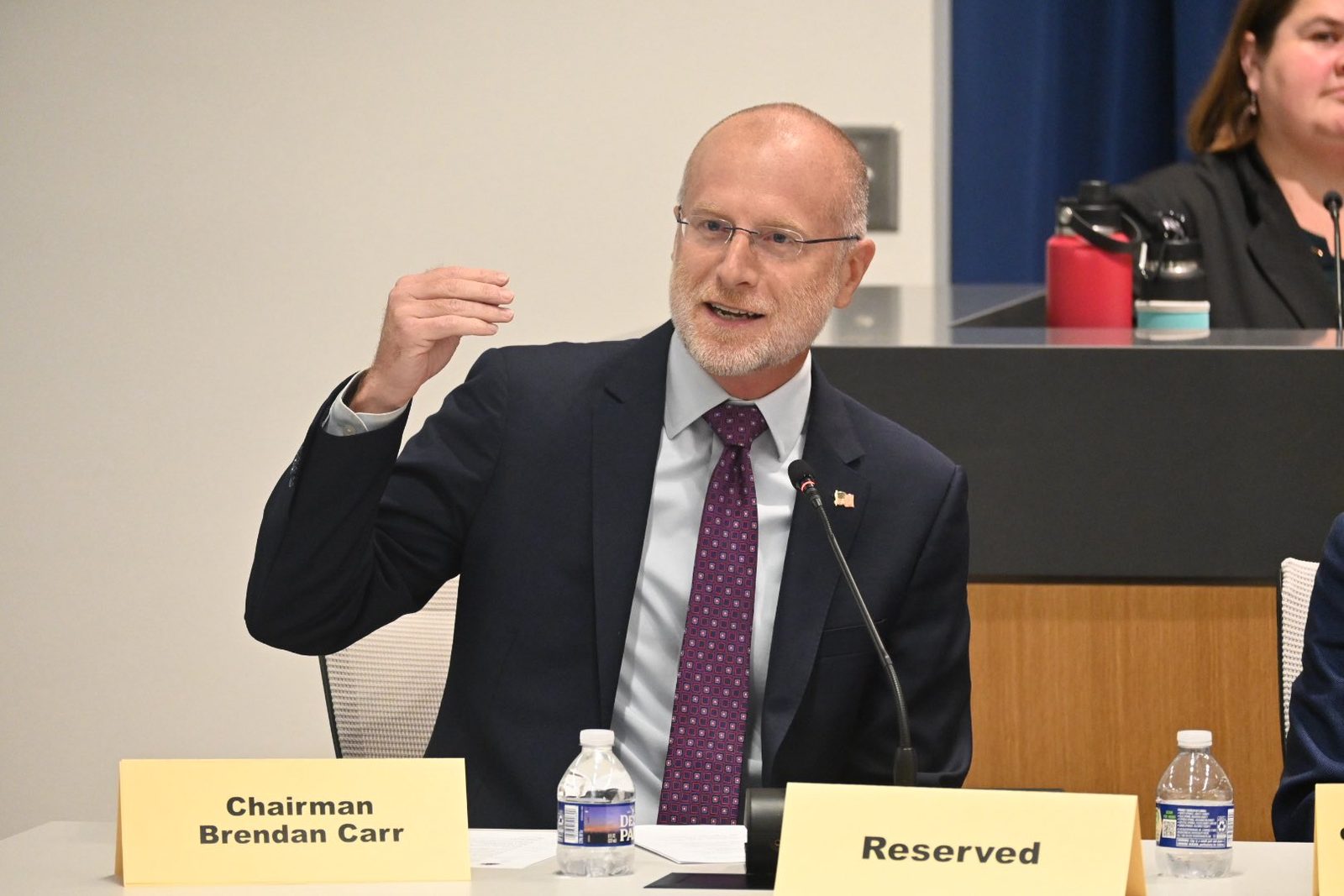
Clearing the way for national TV consolidation
FCC Chair Carr moved to scrap the 39% national ownership cap - which Commissioner Gomez said only Congress can change - and the FCC repealed it 2-1 on August 6, 2026.
Key facts
- Replaced the 39% cap with case-by-case review (Aug. 6, 2026 vote)
- Commissioner Gomez: only Congress can change it
- Gomez: a hand-off to "billionaire buddies of this administration"
Summary
On July 15, 2026, FCC Chairman Brendan Carr circulated a draft order to eliminate the national television ownership cap - which bars a single owner from reaching more than 39% of US TV households - and replace it with case-by-case review of transactions. The FCC voted 2-1 on August 6, 2026 to repeal the cap; Democratic Commissioner Anna Gomez said the cap is set in federal statute and only Congress can change it.
What happened
Carr proposed replacing the blanket 39% limit with individualized 'public interest' review, arguing the cap is obsolete because national programmers can already reach the whole country via streaming. The National Association of Broadcasters applauded the plan; pay-TV distributor DirecTV opposed it, saying broadcaster consolidation leads to higher consumer prices. Gomez argued Congress codified the 39% cap in the Consolidated Appropriations Act of 2004 and that the FCC lacks authority to raise or eliminate it, forecasting litigation. Nexstar, the largest station owner, praised it; Gomez called it an "unlawful effort to hand control of the public airwaves to billionaire buddies of this administration."
Impact on the United States
Clears the way for a wave of national broadcast-TV consolidation, concentrating local news ownership in fewer national hands, reducing local editorial diversity, and asserting FCC authority to override a limit Congress set by statute.
Documented effects
- FCC scheduled an August 6, 2026 vote to replace the 39% national ownership cap with case-by-case review[1][2]
- Commissioner Anna Gomez said only Congress, which set the cap in statute, can change it - signaling likely legal challenge[2][3]
- NAB applauded the move; DirecTV warned that broadcaster consolidation leads to higher prices for consumers[1][3]
- FCC votes 2-1 (Carr, Trusty; Gomez dissenting) to repeal the 39% national TV ownership rule and replace it with case-by-case review[4][5]
- The pending $6.2 billion Nexstar-Tegna merger would reach at least 60% of US households; a federal judge had put it on hold after eight state attorneys general sued on antitrust grounds; Free Press announced plans to sue over the repeal[5]
Why this is rated significant
Enables large-scale national TV consolidation; Commissioner Gomez argued the FCC lacks authority to change a cap Congress set by statute. The FCC adopted the repeal 2-1 on August 6, 2026, a lawsuit has been announced, and the largest pending deal, Nexstar-Tegna, is on hold in court.
FCC voted 2-1 on Aug. 6, 2026 to repeal the 39% cap; Free Press said it plans to sue
Corrections & updates [6]
Every change to a fact on this page after publication is logged here, newest first.
- UpdatedStatus
Updated: on August 6, 2026 the FCC voted 2-1 (Carr and Trusty for, Gomez dissenting) to repeal the 39% national TV ownership cap and replace it with case-by-case review. Free Press said it plans to sue.[4][5]
- CorrectedSource
Corrected: Variety and Deadline, entertainment trade publications, were labeled major outlets (Tier 2); they are now labeled Tier 3. The entry is still supported by the FCC's own release and CNBC.[1][3]
- UpdatedSummary
The FCC voted 2-1 on August 6, 2026 to repeal the cap (NBC News). The status and effects already reflect the vote; the teaser line and summary still described it as scheduled.[5]
- CorrectedWhat happened
The cited sources do not mention the American Television Alliance. The opposing statement they quote is from DirecTV, which said broadcaster consolidation leads to higher consumer prices. The claim that the repeal would benefit "Trump-friendly" station groups appears only as Commissioner Gomez's view ("billionaire buddies of this administration") and is now attributed to her.[1][2][3]
- ClarifiedSummary
The display subheading stated as fact that the cap is 'a limit Congress set by statute,' which is Commissioner Anna Gomez's argument against the FCC's authority to repeal it; it is now attributed to her.[2][5]
- Previously
- FCC Chair Carr moved to scrap the 39% national ownership cap - a limit Congress set by statute - and the FCC repealed it 2-1 on August 6, 2026.
- Now
- FCC Chair Carr moved to scrap the 39% national ownership cap - which Commissioner Gomez said only Congress can change - and the FCC repealed it 2-1 on August 6, 2026.
- CorrectedSeverity rationale
The rationale stated as fact that the repeal 'likely exceeds' the FCC's authority; that is Commissioner Gomez's argument and is now attributed. A document number not in the entry's record was removed. Severity unchanged.[2][4][5]
+ Show previous and current text- Hide previous and current text
- Previously
- Enables sweeping national TV consolidation and likely exceeds the FCC's statutory authority; the FCC adopted the repeal 2-1 on August 6, 2026 (Report and Order FCC 26-53), but a lawsuit has been announced and the largest pending deal, Nexstar-Tegna, is on hold in court.
- Now
- Enables large-scale national TV consolidation; Commissioner Gomez argued the FCC lacks authority to change a cap Congress set by statute. The FCC adopted the repeal 2-1 on August 6, 2026, a lawsuit has been announced, and the largest pending deal, Nexstar-Tegna, is on hold in court.
Sources [5]
- T3Variety - FCC Moves to End Cap on National Broadcast Ownership · Jul 15, 2026 ↗
- T2CNBC - U.S. agency to vote to end 39% local TV station ownership cap · Jul 15, 2026 ↗
- T3Deadline - FCC Chairman Proposes Repeal Of National Ownership Cap · Jul 15, 2026 ↗
- T1Federal Communications Commission - FCC Replaces National Broadcast Ownership Cap · Aug 6, 2026 ↗
- T2NBC News - Federal Communications Commission scraps limit on broadcast TV ownership · Aug 6, 2026 ↗
Image: Federal Communications Commission, Public domain (Wikimedia Commons)