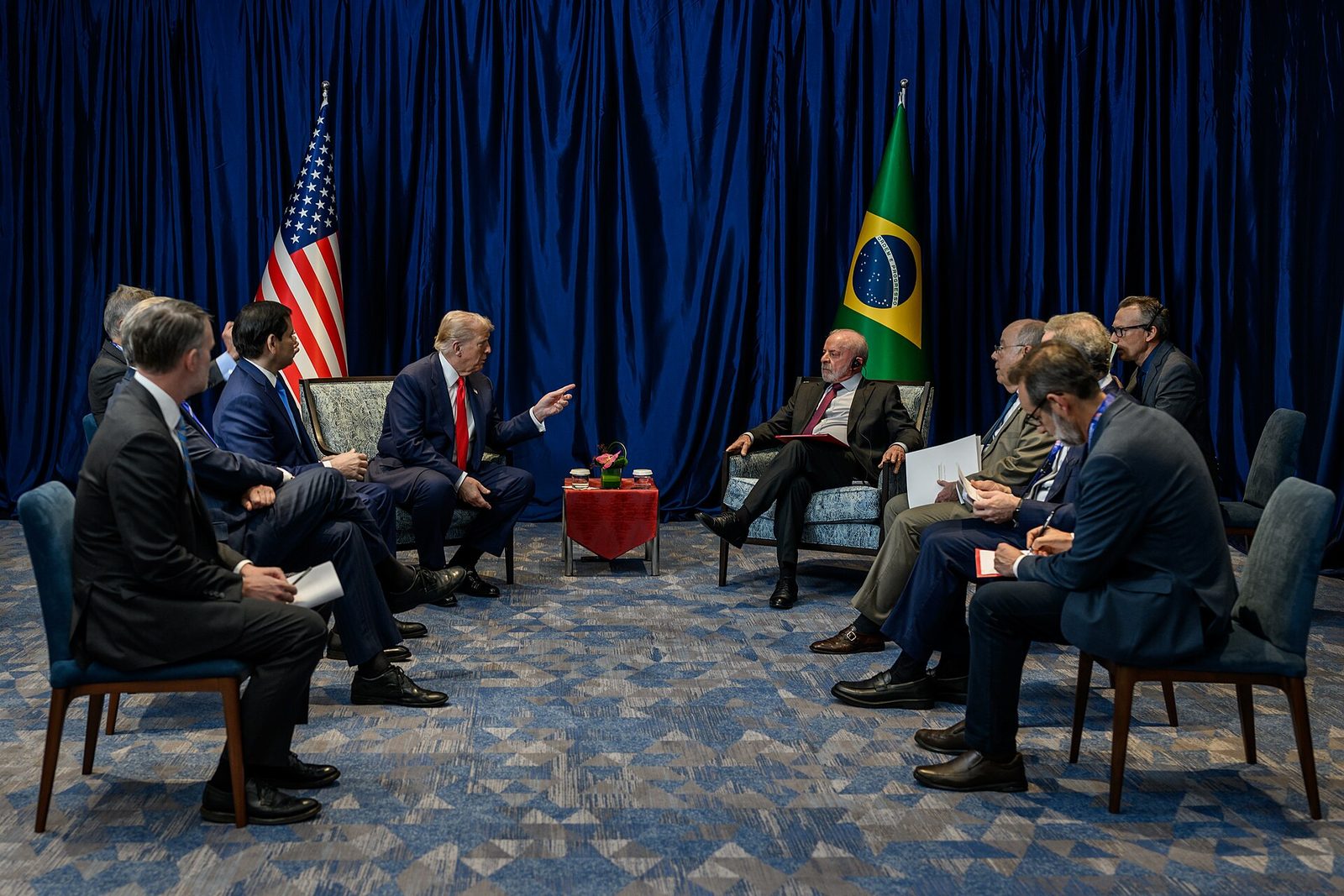
A 25% tariff on Brazil, round two
After the Supreme Court struck down his IEEPA tariffs, Trump hit Brazil again under Section 301, effective July 22.
Key facts
- 25% on most Brazilian goods; coffee, beef, OJ exempt
- ~$40B/yr of imports affected before carve-outs
- Lula condemned it and vowed WTO retaliation
Summary
On July 15, 2026, the Trump administration announced a 25% tariff on most imports from Brazil under Section 301 of the Trade Act of 1974, effective July 22, 2026, after a USTR determination that Brazil's digital-trade, electronic-payments, ethanol, IP and deforestation policies are 'unreasonable' and burden US commerce. It exempts coffee, beef, orange juice, some energy products and aircraft parts.
What happened
After the Supreme Court struck down the administration's IEEPA tariffs in February 2026, the White House pivoted to Section 301 as its country-specific enforcement tool. USTR issued a determination (Federal Register notice June 4, 2026) finding Brazil's acts on digital trade, electronic payments, preferential tariffs, IP protection, ethanol market access and illegal deforestation unreasonable and burdensome to US commerce. On July 15, 2026, President Trump directed a 25% ad valorem tariff on most Brazilian-origin goods, effective July 22, 2026, with exemptions for coffee, beef, oranges and orange juice, some oil and gas, aerospace parts, rare earths and pig iron. This follows the earlier 50% IEEPA-based Brazil tariff (a 10% April 2025 baseline plus a 40% July 2025 surcharge tied to Brazil's prosecution of former president Jair Bolsonaro) that lapsed when the IEEPA tariffs were invalidated. Lula condemned the move and vowed WTO retaliation.
Impact on the United States
Raises costs for US importers and consumers of Brazilian goods (steel, machinery, wood and pulp, footwear, food products) at a 25% rate on roughly $40B of annual imports before exemptions, and invites Brazilian retaliation against US exporters (ethanol, agriculture, tech), adding a targeted layer of trade-war uncertainty on top of the 12.5% Section 301 forced-labor tariff that replaced the expired Section 122 global surcharge on July 24.
Global ripple effects
A US measure targeting Brazil, justified by a USTR Section 301 finding that Brazil's digital-trade, electronic-payments, ethanol, IP and deforestation policies burden US commerce; follows earlier IEEPA tariffs politically tied to Brazil's prosecution of former president Bolsonaro.
Documented effects
- 25% Section 301 tariff on most Brazilian goods announced July 15, 2026, effective July 22, 2026[1][2]
- USTR Section 301 determination on Brazil's digital-trade, ethanol, IP and deforestation policies[3][4]
- Exemptions for coffee, beef, orange juice, some energy products and aircraft parts[1][5]
- Brazil condemned the tariffs and vowed to retaliate[6]
- 25% Section 301 tariff on Brazilian goods took effect July 22, 2026[7]
- Separate Section 301 forced-labor action imposed a 12.5% tariff on products of Brazil (with exemptions) from July 24, 2026[8][2]
Projected cost to Americans
Cumulative cost if current policy holds: direct federal cost plus the broader economic burden. A conservative, lower-bound estimate (low confidence).
- So far
- $300M
- By 2035
- $16.00B
- By 2040
- $16.00B
How this is calculated: The tariff took effect July 22, 2026 [S3][S4]. Tax Foundation sizes the annualized affected import base at $16.2B, below the $18-22B assumed in the original block [S1]. Layer 2 is revised from ~$20B to ~$16B using the same method as the other durable tariff blocks: Tax Foundation's DYNAMIC 10-year net revenue for Section 301 Brazil, $16.0B [S1, Table 5], as a conservative floor (gross direct duties before offsets: $17.7B; conventional net revenue: $16.1B) [S1]. Layer 1 stays 0 (tariff revenue is not a federal saving). BOOKED (~$0.3B) is an estimate: $16.0B / 10 = $1.6B a year, x 69 days in effect (July 22 - Sept 29, 2026) / 365 = ~$0.30B. Brazilian goods also face the 12.5% forced-labor Section 301 tariff from July 24 [S2]. That burden is booked under section-301-forced-labor-tariffs, not here, to avoid double counting.
Why this is rated significant
New 25% duty on roughly $40B of annual Brazilian imports (major staples exempt) raises input and consumer costs and invites retaliation, but is country-specific and partly carved out, so realized harm is moderate.
25% tariff effective July 22, 2026; a separate 12.5% Section 301 forced-labor tariff on Brazilian goods applies from July 24, 2026
Corrections & updates [6]
Every change to a fact on this page after publication is logged here, newest first.
- UpdatedCost estimate
Once the tariff took effect on July 22, 2026, it was costed with the same method now used for all durable tariffs: Tax Foundation's dynamic 10-year net revenue as a conservative floor for the burden on US importers and consumers, with the cost so far pro-rated by the days the tariff has been in effect (an estimate).
- Previously
- $0 so far; $20B broader 10-year cost
- Now
- ~$0.3B so far; $16B broader 10-year cost
- UpdatedStatus
The 25% tariff took effect on July 22, 2026 (USTR notice of action, Federal Register July 20, 2026). Separately, in a Section 301 action on forced-labor import enforcement, USTR imposed a 12.5% tariff on products of Brazil, with exemptions, applicable from July 24, 2026 (Federal Register July 28, 2026). CNBC had reported it could be added on top of the 25%.[7][8][2]
- Previously
- ongoing (takes effect July 22, 2026)
- Now
- in-effect (25% tariff effective July 22, 2026; a separate 12.5% Section 301 forced-labor tariff on Brazilian goods applies from July 24, 2026)
- ClarifiedSource
The ~$40B annual import figure is now sourced: Census Bureau data show US goods imports from Brazil of $39.9 billion in 2025. The Federal Register determination's full title has also been corrected.[9]
- UpdatedUS impact
Updated: the entry said the Section 122 global surcharge "nears its July 24 statutory sunset". It expired that day and was replaced by Section 301 forced-labor tariffs, including a 12.5% rate on Brazilian goods (Federal Register).[8]
+ Show previous and current text- Hide previous and current text
- Previously
- Raises costs for US importers and consumers of Brazilian goods (steel, machinery, wood and pulp, footwear, food products) at a 25% rate on roughly $40B of annual imports before exemptions, and invites Brazilian retaliation against US exporters (ethanol, agriculture, tech), adding a targeted layer of trade-war uncertainty as the temporary Section 122 global surcharge nears its July 24 statutory sunset.
- Now
- Raises costs for US importers and consumers of Brazilian goods (steel, machinery, wood and pulp, footwear, food products) at a 25% rate on roughly $40B of annual imports before exemptions, and invites Brazilian retaliation against US exporters (ethanol, agriculture, tech), adding a targeted layer of trade-war uncertainty on top of the 12.5% Section 301 forced-labor tariff that replaced the expired Section 122 global surcharge on July 24.
- CorrectedSource
The entry described the earlier IEEPA tariff on Brazil as a 10% April 2025 baseline plus a 40% July 2025 surcharge, but cited no source for this. Two executive orders now support it. Executive Order 14323 (July 30, 2025) imposed an additional 40% duty on Brazil, citing the prosecution of Jair Bolsonaro, on top of the Executive Order 14257 duty. Executive Order 14257 (April 2, 2025) set the 10% baseline rate.[10][11]
- ClarifiedDisplay copy
Replaced informal wording ('killed') with 'struck down'.
- Previously
- After the Supreme Court killed his IEEPA tariffs, Trump hit Brazil again under Section 301, effective July 22.
- Now
- After the Supreme Court struck down his IEEPA tariffs, Trump hit Brazil again under Section 301, effective July 22.
Sources [11]
- T2NBC News - U.S. launches new round of tariffs with 25% tax on most Brazil imports · Jul 16, 2026 ↗
- T2CNBC - U.S. slaps 25% tariff on most Brazilian goods over 'unfair trade practices' · Jul 16, 2026 ↗
- T1United States Trade Representative - Fact Sheet: President Trump Directs USTR Section 301 Action on Brazil · Jul 15, 2026 ↗
- T1Federal Register - Notice of Determination and Request for Comments Concerning Action Pursuant to Section 301: Brazil's Acts, Policies, and Practices Related to Digital Trade and Electronic Payment Services; Unfair, Preferential Tariffs; Anti-Corruption Enforcement; Intellectual Property Protection; Ethanol Market Access; and Illegal Deforestation · Jun 4, 2026 ↗
- T2U.S. News & World Report (AP) - US Imposing a 25% Tariff on Some Brazilian Imports Starting July 22 · Jul 15, 2026 ↗
- T2TIME - Brazil Condemns U.S. Decision to Impose 25% Tariffs, Vows to Retaliate · Jul 16, 2026 ↗
- T1Federal Register - Notice of Action: Brazil's Acts, Policies, and Practices Related to Digital Trade and Electronic Payment Services; Unfair, Preferential Tariffs; Anti-Corruption Enforcement; Intellectual Property Protection; Ethanol Market Access; and Illegal Deforestation · Jul 20, 2026 ↗
- T1Federal Register - Notice of Actions in Section 301 Investigations of Acts, Policies, and Practices of Various Economies Related to the Failure of Each Economy To Impose and Effectively Enforce a Prohibition on the Importation of Goods Produced With Forced Labor · Jul 28, 2026 ↗
- T1U.S. Census Bureau - Trade in Goods with Brazil · Sep 1, 2026 ↗
- T1Federal Register - Addressing Threats to the United States by the Government of Brazil (Executive Order 14323) · Aug 5, 2025 ↗
- T1Federal Register - Regulating Imports With a Reciprocal Tariff To Rectify Trade Practices That Contribute to Large and Persistent Annual United States Goods Trade Deficits (Executive Order 14257) · Apr 7, 2025 ↗
Image: The White House (Daniel Torok), Public domain (Wikimedia Commons)