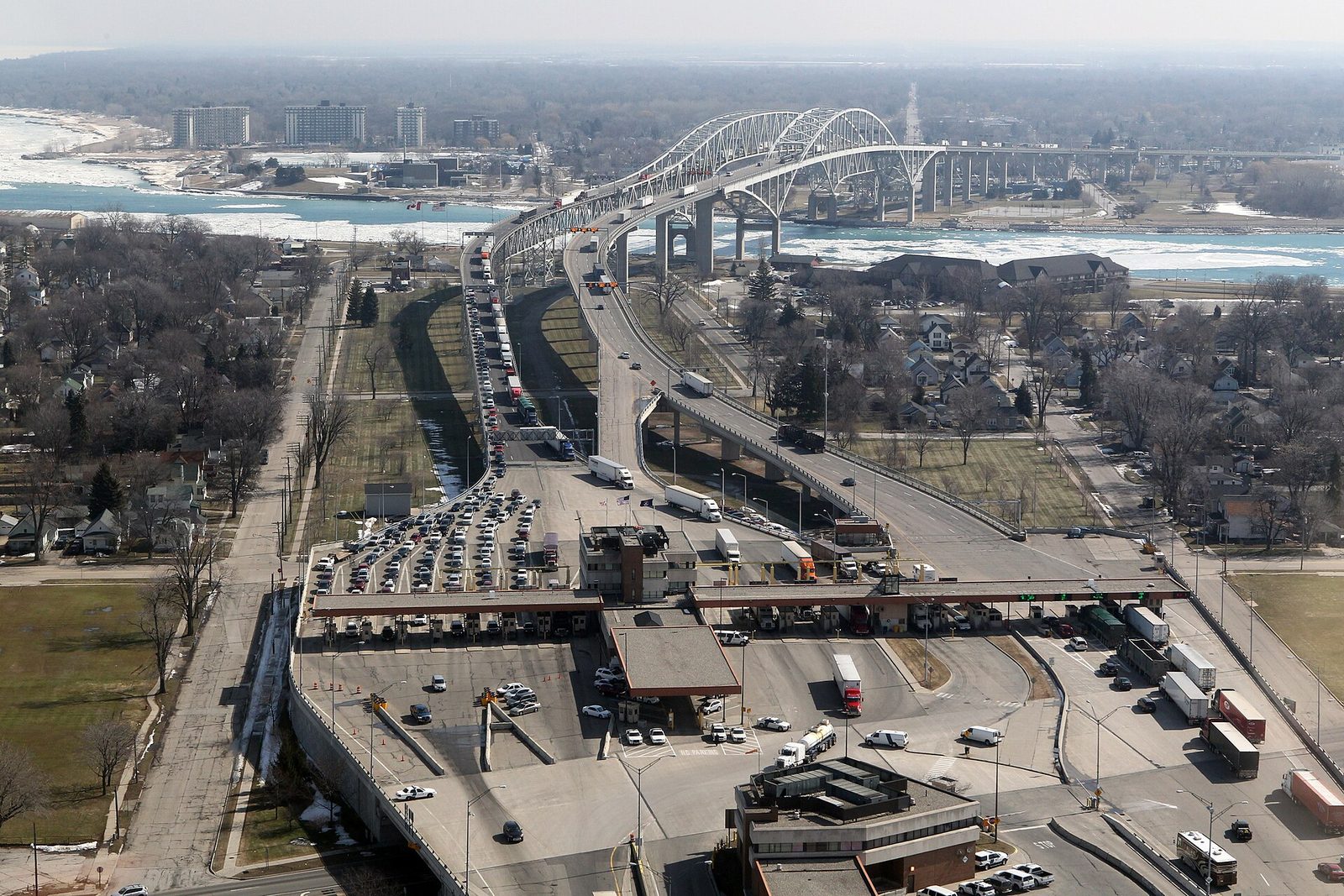
A 1930 law revived for 50% tariffs on Canada
The first tariffs expressly imposed under Section 338 put 50% duties on Canadian goods, with no USMCA exemption, and Canada hit back on US$20 billion of US exports.
Key facts
- 50% duty in effect Aug. 22, 2026
- Canada retaliates on US$20B of US goods
- Import bans on some goods from Sept. 29
Summary
On July 20, 2026, President Trump signed three proclamations under Section 338 of the Tariff Act of 1930 imposing 50% tariffs on certain Canadian goods, citing Canadian discrimination against US alcoholic beverages, dairy and motor vehicles. It is the first time a president has expressly cited Section 338 to impose tariffs. The tariffs took effect August 22, 2026, and Canada retaliated on C$27.6 billion (US$20 billion) of US goods from September 8.
What happened
The three proclamations (Nos. 11046-11048) set a 50% duty on Canadian products including alcoholic beverages, dairy, paper and wood products, sports equipment and household items. The duty applies whether or not goods qualify for USMCA treatment; energy, potash and goods under Section 232 tariffs were excluded at the outset. The White House said Canada treats US cars, alcohol and dairy worse than other countries' goods, citing a roughly 22% ($5.6 billion) drop in Canadian imports of US motor vehicles and an 81% ($582 million) drop in Canadian imports of US alcoholic beverages. The tariffs were set to start August 19; on August 18 the President suspended them until August 22 citing progress in talks, and they took effect August 22 after no deal was reached. On September 8 the administration changed the product lists (adding more dairy and wood products, furniture and motorboats, and removing some items; effective September 15), announced Section 338 import bans on some Canadian goods (effective September 29), and the President directed GSA to remove Canadian products from its federal procurement schedules.
Impact on the United States
US importers and consumers pay a 50% duty on the covered Canadian goods, with no USMCA exemption. Canada's matching counter-tariffs hit about US$20 billion of US goods, about 6% of US exports to Canada by Census data, including steel, dairy, appliances, agricultural equipment and pulp and paper. The US imported about $967 million of the products now banned in 2025.
Global ripple effects
Canada imposed counter-tariffs 'dollar for dollar, rate for rate' on C$27.6 billion (US$20 billion) of US goods from September 8, 2026. That cost falls on US exporters and producers of the targeted goods. Canada is the largest market for US automotive exports (38%, or $61 billion, in 2025 per CRS), and the dispute follows the US decision not to renew USMCA in its current form.
Documented effects
- Three Section 338 proclamations signed July 20, 2026 impose 50% tariffs on certain Canadian goods; the first time a president has expressly cited Section 338 to impose tariffs[1][2][3]
- The tariffs were suspended on August 18 until August 22, citing progress in negotiations, then took effect August 22, 2026 after the two sides did not reach agreement[1]
- Canada announced counter-tariffs of 15%, 25% and 50% on C$27.6 billion (US$20 billion) of US goods effective September 8, 2026, plus a C$7.5 billion support package for affected Canadian workers and firms[4][1]
- On September 8 the administration announced Section 338 import bans on certain Canadian goods, including alcoholic beverages, certain dairy products, molasses and motorcycles (effective September 29). The US imported about $967 million of the banned products in 2025.[1]
- Tax Foundation estimates the Section 338 tariffs apply to about $22 billion of annual imports and will collect about $30.3 billion in direct customs duties over 2026-2035 before income- and payroll-tax offsets ($20.8 billion in net revenue on a conventional basis)[5]
Projected cost to Americans
Cumulative cost if current policy holds: direct federal cost plus the broader economic burden. A conservative, lower-bound estimate (low confidence).
- So far
- $100M
- By 2035
- $11.00B
- By 2040
- $11.00B
How this is calculated: A 50% tariff on a ~$22B annual import base [S1]. Its revenue is not a federal saving, so Layer 1 is 0 (same convention as the Section 232 blocks). Layer 2 (~$11B) is a conservative floor, using the same method as section-301-forced-labor-tariffs: Tax Foundation's DYNAMIC 10-year net revenue for Section 338, $11.7B [S1, Table 5], rounded down. Gross direct customs duties before offsets are higher, at $30.3B over 10 years [S1]. It does NOT include the cost to US exporters of Canada's matching counter-tariffs on US$20B of US goods [S2]. Tax Foundation models that retaliation only jointly with China's (-0.1% GDP, -131,000 FTE jobs [S1]), so no Canada-only dollar figure is added and Layer 2 is a floor. It does not overlap with the forced-labor block: Canadian goods entered duty-free under USMCA are exempt from the forced-labor tariff, and Tax Foundation scores each authority separately, net of interactions. BOOKED (~$0.1B) is an estimate: $11.7B / 10 = $1.17B a year, x 38 days in effect (Aug 22 - Sept 29, 2026) / 365 = ~$0.12B, rounded down. The Sept 15 scope change and the Sept 29 import bans are not separately modeled.
Why this is rated significant
A 50% duty with no USMCA exemption on about $22 billion a year of Canadian imports (Tax Foundation) raises costs for US buyers of those goods, and Canada's matching retaliation on about US$20 billion of US exports hits US steel, dairy, appliance, farm-equipment and paper producers.
took effect August 22, 2026; product lists modified effective September 15; import bans on some Canadian goods effective September 29, 2026
Corrections & updates [1]
Every change to a fact on this page after publication is logged here, newest first.
- ClarifiedSummary
The display text called this "the first use of Section 338." The entry and its sources say it is the first time a president has expressly cited Section 338 to impose tariffs.[1]
- Previously
- The first use of Section 338 put 50% duties on Canadian goods, with no USMCA exemption, and Canada hit back on US$20 billion of US exports.
- Now
- The first tariffs expressly imposed under Section 338 put 50% duties on Canadian goods, with no USMCA exemption, and Canada hit back on US$20 billion of US exports.
Sources [5]
- T1Congressional Research Service (Congress.gov) - U.S. Tariffs on Canadian Imports: Section 338 of the Tariff Act of 1930 (R49349) · Sep 14, 2026 ↗
- T1The White House - Fact Sheet: President Donald J. Trump Imposes Additional Tariffs on Canada · Jul 20, 2026 ↗
- T2CNBC - Trump imposing 50% tariffs on certain Canadian goods over alleged trade discrimination · Jul 20, 2026 ↗
- T1Department of Finance Canada - Canada announces targeted countermeasures and substantive support for workers and businesses in response to U.S. tariffs · Aug 25, 2026 ↗
- T3Tax Foundation - Tracking the Impact of the Trump Tariffs & Trade War · Sep 10, 2026 ↗
Image: CBP Photography (Donna Burt), Public domain (Wikimedia Commons)