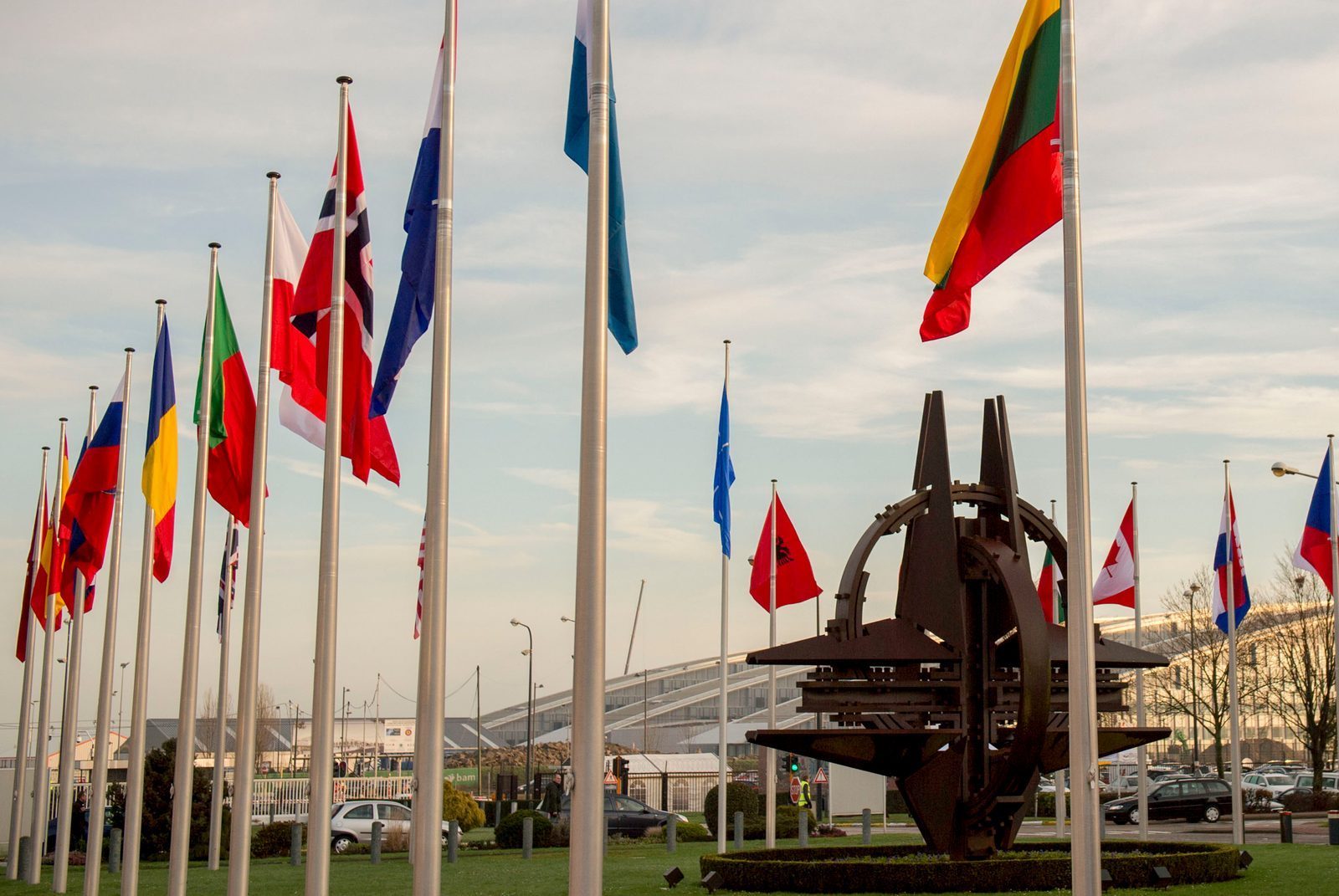
NATO Article 5 commitment publicly questioned
Sustained pressure on allies came alongside public questioning of the mutual-defense guarantee.
Key facts
- Trump questioned Article 5 commitment June 24, 2025
- Withdrawal of ~5,000 US troops from Germany announced May 2026
- NATO adopted 5% GDP defense target at Hague summit June 2025
Summary
The Trump administration conducted a sustained pressure campaign on NATO allies - including VP Vance's February 2025 Munich speech accusing Europe of internal democratic failure, Hegseth calling some allies "shameful" and announcing a troop review in June 2026, and Trump personally questioning his Article 5 commitment - while simultaneously demanding allies increase defense spending to 5% of GDP.
What happened
On February 14, 2025, VP Vance delivered a speech at the Munich Security Conference accusing European governments of censoring dissent and calling internal democratic threats a greater danger than Russia, prompting sparse applause and public rebukes from Germany's defense minister. On June 18, 2026 Hegseth separately announced what he called a "NATO 3.0" review of US forces and bases in Europe, to take six months or less, calling some allies "shameful" for refusing to grant basing access for US strikes on Iran. Trump on June 24, 2025, told reporters that his Article 5 commitment "depends on your definition," and the next day the US joined allies in the Hague Summit Declaration reaffirming their "ironclad commitment" to Article 5. In May 2026 the Pentagon announced the withdrawal of approximately 5,000 troops from Germany over the following 6 to 12 months.
Impact on the United States
Every time a senior US official casts doubt on Article 5, adversaries - especially Russia - are invited to test the edges of the alliance. US troops stationed in the Baltic states, Poland, Romania, and Germany are more exposed if deterrence credibility erodes. European allies began investing in independent defense structures (EU defense fund, autonomous command structures) that reduce dependence on US leadership and therefore US leverage in post-conflict diplomatic negotiations.
Global ripple effects
Russia assessed the Munich speech and Article 5 ambiguity as indicators that US alliance commitments were weakening, emboldening its posture on the eastern flank. Putin has consistently probed for signs of NATO disunity; public US questioning of Article 5 supplies that signal. Conversely, the 5% spending target NATO adopted at the Hague (June 2025) increases European military capabilities but also European strategic autonomy, reducing future US diplomatic leverage over European security decisions.
Documented effects
- Vance Munich speech (2025-02-14) received sparse applause; Germany's defense minister publicly rejected the framing[1][5]
- Trump questioned Article 5 commitment on June 24, 2025 ("depends on your definition"); the next day the US joined the Hague Summit Declaration reaffirming allies' "ironclad commitment" to Article 5[2][7]
- Pentagon announced withdrawal of ~5,000 troops from Germany over 6-12 months (May 2026)[3][6]
- Hegseth announced six-month review of all US forces in Europe - June 18, 2026[3]
- NATO adopted 5% GDP defense spending target at The Hague summit, June 25, 2025[4][7]
- The Pentagon is weighing withdrawing 25,000 or more of the roughly 68,000 US troops in Europe, with one option of 40,000 troops plus aircraft, ships and weapons, under the review Hegseth announced in June; a decision is expected by Nov. 6, 2026[8][9]
Why this is rated significant
Public questioning of the Article 5 guarantee, alongside a planned troop drawdown and a review of US forces in Europe, raised doubts about US commitments to allies; a significant security risk rather than a realized loss.
Corrections & updates [7]
Every change to a fact on this page after publication is logged here, newest first.
- CorrectedDate
Three corrections. Vance's Munich speech was delivered February 14, 2025 (Foreign Policy), not February 13; Germany's defense minister Boris Pistorius's rebuke ("This is not acceptable") now cites DW. The cited Al Jazeera report does not show Trump personally reaffirming Article 5 within 24 hours; what is documented is that on June 25, 2025 the US joined the Hague Summit Declaration reaffirming allies' "ironclad commitment" to Article 5, and the text now says that. No cited source supports the claim that the Pentagon canceled two other European deployments; it is removed, and the Germany drawdown (announced May 2026, over 6-12 months) now also cites PBS.[1][5][6][7]
- UpdatedKey facts
Updated: NBC News reported on Sept. 17, 2026 that the Pentagon is weighing withdrawing 25,000 or more US troops from Europe. Al Jazeera, citing NBC, reported options of about a third of the roughly 68,000 US troops there or 40,000 troops plus aircraft, ships and weapons, with a decision expected by Nov. 6. The status stays "ongoing".[8][9]
- CorrectedSummary
The summary said Hegseth called NATO a "paper tiger"; the cited CBS News report does not contain that phrase and no Tier 1/2 source was found, so it is replaced with what CBS reports: Hegseth called some allies "shameful" and announced what he called a "NATO 3.0" review of US forces and bases in Europe lasting six months or less. The display text said Trump walked back his Article 5 remark 24 hours later; the record shows the next day the US joined the Hague Summit Declaration reaffirming an "ironclad commitment" to Article 5. The display also said ~5,000 troops were withdrawn from Germany; the Pentagon announced that withdrawal to take place over 6 to 12 months.[3][2][7][6]
- ClarifiedSeverity rationale
The severity rationale stated as fact that questioning Article 5 'eroded deterrence credibility and pushed allies toward autonomy'; it now describes the documented actions. Severity unchanged.
+ Show previous and current text- Hide previous and current text
- Previously
- Questioning Article 5 eroded deterrence credibility and pushed allies toward autonomy, a significant security harm that remains a risk rather than realized loss.
- Now
- Public questioning of the Article 5 guarantee, alongside a planned troop drawdown and a review of US forces in Europe, raised doubts about US commitments to allies; a significant security risk rather than a realized loss.
- ClarifiedDisplay copy
The summary line stated as fact that the pressure 'eroded alliance credibility'; it now describes the actions without that conclusion.
- Previously
- Sustained pressure on allies and questioning of the mutual-defense guarantee eroded alliance credibility.
- Now
- Sustained pressure on allies came alongside public questioning of the mutual-defense guarantee.
- ClarifiedSource labels
Source tier labels brought in line with the site's tier rule (specialist and trade publications are Tier 3; general news organizations are Tier 2): Foreign Policy (Tier 2 to 3). No claim in the entry changed.
- CorrectedCost estimate
The $1B projected cost of moving troops out of Germany had no source; the cited reports give no cost. It is removed until a published estimate exists.
- Previously
- $1B 10/15-yr
- Now
- $0 10/15-yr
Sources [9]
- T3Foreign Policy - J.D. Vance Speech at Munich Security Conference Criticizes Europe's Democracies · Feb 14, 2025 ↗
- T2Al Jazeera - Trump questions mutual defence as NATO gets set to boost defence spending · Jun 24, 2025 ↗
- T2CBS News - Hegseth announces review of US forces in Europe, blasts 'shameful' NATO allies · Jun 18, 2026 ↗
- T2CNBC - NATO allies agree to higher 5% defense spending target · Jun 25, 2025 ↗
- T2DW - Pistorius: JD Vance's criticism 'is not acceptable' · Feb 14, 2025 ↗
- T2PBS NewsHour - U.S. to withdraw 5,000 troops from Germany in next 6 to 12 months · May 2, 2026 ↗
- T1NATO - The Hague Summit Declaration · Jun 25, 2025 ↗
- T2NBC News - Pentagon weighs pulling nearly a third of U.S. forces from Europe · Sep 17, 2026 ↗
- T2Al Jazeera - Could US pull one-third of troops from Europe? What that would mean · Sep 19, 2026 ↗
Image: Senior Master Sgt. Adrian Cadiz, U.S. Department of Defense, Public Domain (160211-D-DT527-007_NATO_country_flags_wave_at_the_entrance_of_NATO_headquarters_in_Brussels_2016.JPG)