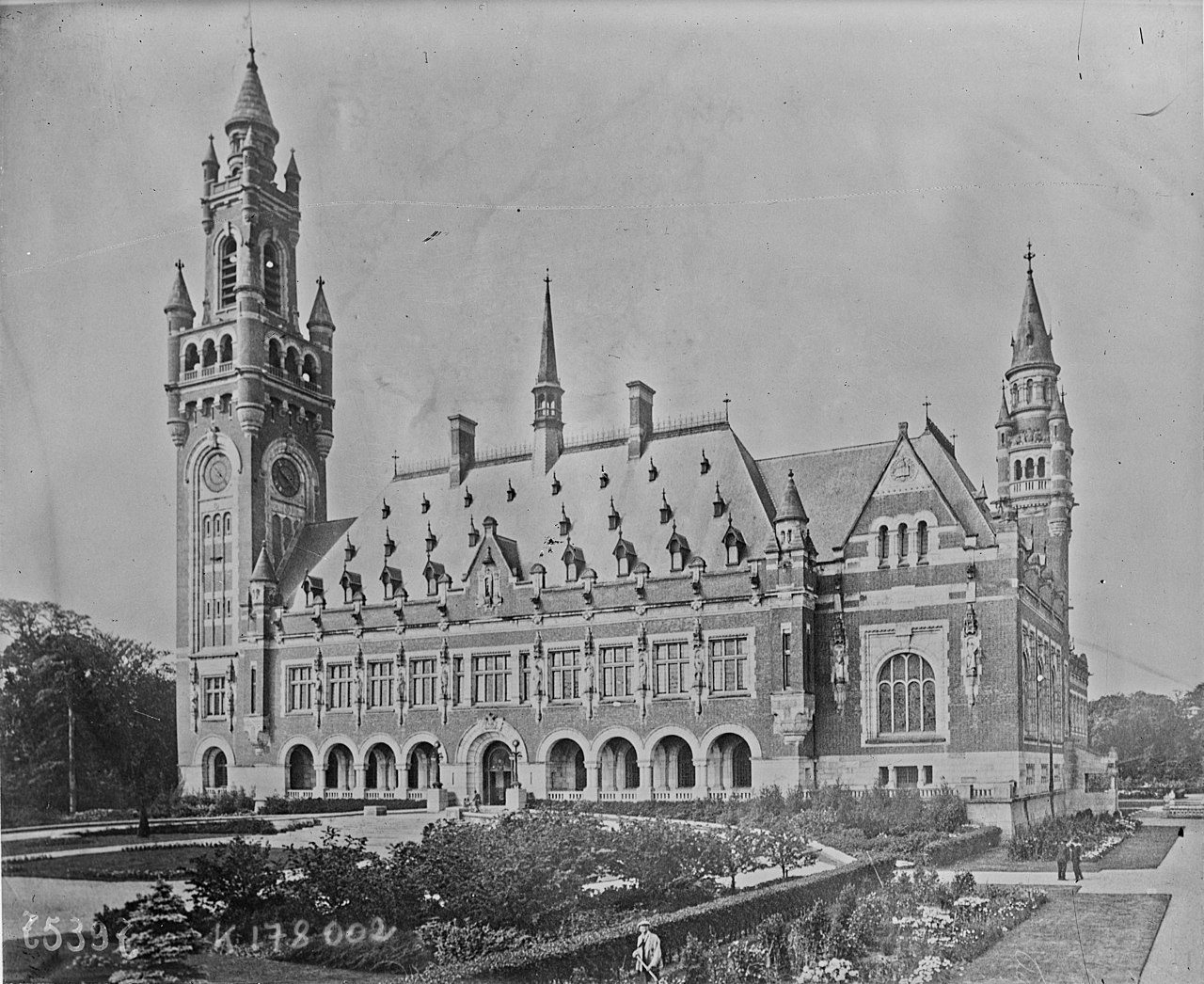
US sanctions ICC prosecutor and judges
An executive order authorized sanctions on Court personnel in response to warrants for Israeli leaders.
Key facts
- Prosecutor, 2 deputies, and 9 judges sanctioned
- Issued over warrants for Netanyahu and Gallant
- Judge enjoined enforcement vs. two US citizens
Summary
Trump signed Executive Order 14203 authorizing sanctions on International Criminal Court personnel in response to ICC arrest warrants for Israeli PM Netanyahu and ex-Defense Minister Gallant. The US sanctioned Prosecutor Karim Khan, his two deputies, nine ICC judges (the ninth, ICC President Tomoko Akane, on August 18, 2026), and an ICC senior trial lawyer.
What happened
On February 6, 2025, Trump signed Executive Order 14203 authorizing sanctions on International Criminal Court personnel, in response to ICC arrest warrants for Israeli Prime Minister Benjamin Netanyahu and former Defense Minister Yoav Gallant. The administration sanctioned Prosecutor Karim Khan, his two deputies, nine ICC judges (the ninth, ICC President Tomoko Akane, on August 18, 2026), and an ICC senior trial lawyer. On July 18, 2025 a federal judge in Maine issued a narrow preliminary injunction barring civil or criminal penalties against two US-citizen plaintiffs for providing speech-based services to the ICC, on First Amendment grounds; the executive order and sanctions otherwise remained in effect.
Impact on the United States
Sanctioning an international tribunal's judges to shield Israel weakens US ability to invoke the ICC against adversaries such as Russia over Ukraine and isolates Washington from European allies who back the Court. It exposes US officials and tech firms to legal jeopardy.
Global ripple effects
Punishing the ICC's judges to protect Israeli officials undercuts the same court the US has invoked against adversaries like Russia, isolates Washington from European allies who back the Court, and erodes the rules-based order the US helped build and relies on to constrain rivals.
Documented effects
- Prosecutor Karim Khan, his two deputies, and nine ICC judges sanctioned (the last two judges designated December 18, 2025 and ICC President Tomoko Akane on August 18, 2026), plus ICC Senior Trial Lawyer Abdoulaye Seye[1][3][4]
- Order issued in response to ICC arrest warrants for Israeli PM Netanyahu and ex-Defense Minister Gallant[2]
- A federal judge in Maine (Smith v. Trump) issued a narrow preliminary injunction on July 18, 2025 barring civil or criminal penalties against two US-citizen human rights advocates for providing speech-based services to the ICC, on First Amendment grounds; the executive order and sanctions otherwise remained in effect[5]
- Under the same order the State Department designated UN Special Rapporteur Francesca Albanese in July 2025; a federal judge preliminarily enjoined that designation on May 13, 2026 in a suit by her husband and US-citizen daughter, but the D.C. Circuit stayed the injunction in part on June 15, 2026, allowing the designation to be enforced except against the family's OFAC licenses[6][7]
Why this is rated severe
Sanctioning the ICC prosecutor, his deputies and nine judges weakens US ability to invoke the Court against adversaries such as Russia and isolates Washington from European allies that back it.
Corrections & updates [6]
Every change to a fact on this page after publication is logged here, newest first.
- UpdatedFigure
Since publication the US has sanctioned more ICC officials under Executive Order 14203. After two more judges on December 18, 2025 (which brought the total to eight), on August 18, 2026 the Secretary of State designated ICC President Tomoko Akane, a judge, and ICC Senior Trial Lawyer Abdoulaye Seye. Nine ICC judges are now sanctioned, along with the Prosecutor and his two deputies.[3][4]
- CorrectedSource
The narrow injunction protecting two US-citizen plaintiffs was cited to an Al Jazeera article that does not mention it. The court order is now cited: on July 18, 2025 a federal judge in Maine (Smith v. Trump) enjoined the government from imposing civil or criminal penalties on two US-citizen human rights advocates for providing speech-based services to the ICC, finding they were likely to succeed on their First Amendment claim.[5]
- UpdatedKey facts
Added: under the same executive order the State Department designated UN Special Rapporteur Francesca Albanese in July 2025. A federal judge preliminarily enjoined that designation on May 13, 2026 in a suit by her husband and US-citizen daughter; on June 15, 2026 the D.C. Circuit stayed the injunction in part, allowing the designation to be enforced except against the family's OFAC licenses (court records).[6][7]
- CorrectedSummary
The display text said eight judges were sanctioned and that the Court "sought" warrants. The record (State Department releases) lists nine sanctioned judges, and the ICC issued the arrest warrants.[3][4]
+ Show previous and current text- Hide previous and current text
- Previously
- Trump's Executive Order 14203 imposed sanctions on ICC Prosecutor Karim Khan, his deputies, and eight judges after the Court sought warrants for Israeli leaders. A federal judge later issued a narrow injunction barring enforcement against two US-citizen plaintiffs on First Amendment grounds; the order otherwise remained in effect.
- Now
- Trump's Executive Order 14203 imposed sanctions on ICC Prosecutor Karim Khan, his two deputies, and nine judges after the Court issued arrest warrants for Israeli leaders. A federal judge later issued a narrow injunction barring enforcement against two US-citizen plaintiffs on First Amendment grounds; the order otherwise remained in effect.
- ClarifiedSeverity rationale
Reworded to neutral language; the facts and the severity rating are unchanged.
- Previously
- Attacking the ICC's personnel weakens the rules-based order the US relies on against adversaries.
- Now
- Sanctioning the ICC prosecutor, his deputies and nine judges weakens US ability to invoke the Court against adversaries such as Russia and isolates Washington from European allies that back it.
- ClarifiedDisplay copy
Replaced 'punished' with what the order does.
- Previously
- An executive order punished the Court over warrants for Israeli leaders.
- Now
- An executive order authorized sanctions on Court personnel in response to warrants for Israeli leaders.
Sources [7]
- T1OFAC/US Treasury - Issuance of Executive Order Imposing Sanctions on the International Criminal Court; ICC-related Designation · Feb 13, 2025 ↗
- T2Al Jazeera - ICC judges stoic in face of US sanctions over Israeli war crimes cases · Dec 12, 2025 ↗
- T1U.S. Department of State - Sanctioning ICC Judges Directly Engaged in the Illegitimate Targeting of Israel · Dec 18, 2025 ↗
- T1U.S. Department of State - Advancing the United States' Campaign to Address the Threat Posed by the International Criminal Court · Aug 18, 2026 ↗
- T1U.S. District Court for the District of Maine - Smith v. Trump, No. 1:25-cv-00158-NT: Order on Motion for Preliminary Injunction · Jul 18, 2025 ↗
- T1U.S. District Court for the District of Columbia - L.C. v. Trump, No. 26-cv-688 (RJL): Memorandum Opinion granting preliminary injunction · May 13, 2026 ↗
- T1U.S. Court of Appeals for the D.C. Circuit - Cali v. Trump, No. 26-5172: Order granting stay in part pending appeal · Jun 15, 2026 ↗
Image: Agence Rol / Bibliotheque nationale de France, Public domain (Wikimedia Commons)