$810 million canceled without a vote
Five days before the fiscal year ended, the White House used a pocket rescission - a tactic GAO calls illegal - to let bipartisan funding lapse.
Key facts
- 11 rescissions totaling $810 million sent Sept. 25, 2026
- $567.4 million cut from HHS refugee and entrant assistance
- GOP Appropriations Chair Collins called it 'unlawful'
Summary
On September 25, 2026, five days before the fiscal year ended, President Trump sent Congress 11 proposed rescissions totaling $810 million under the Impoundment Control Act. Because the funds expire on September 30, before Congress's 45-day review window can run, the 'pocket rescission' lets the money lapse without a vote - a tactic the Government Accountability Office has said is illegal.
What happened
The largest item is $567,401,904 of the $6.3 billion appropriated in FY2024 for HHS's Refugee and Entrant Assistance account, which the transmittal said is 'overfunded due to the Administration's successful border policies.' Other items include $69.6 million for Education's international education and foreign language programs, $56.1 million in HUD housing counseling, $27.7 million from the Agency for Healthcare Research and Quality, $24.9 million for migrant-student grants, $15 million each from FEMA's Alternatives to Detention case-management pilot and DOJ's Community Relations Service, and $10 million each from USCIS citizenship grants and the Minority Business Development Agency. The transmittal said the refugee rescission was 'consistent with the Administration's goal of ending the use of Federal taxpayer dollars to support non-citizens, putting Americans first.' It follows a $4.9 billion foreign-aid pocket rescission in August 2025 that the Supreme Court allowed to proceed in September 2025, saying its order should not be read as a final determination on the merits.
Impact on the United States
The move cancels funding Congress enacted on a bipartisan basis - including housing counseling, health-care quality research and services for refugees and asylees living in the US - without any vote, and entrenches a precedent that lets the executive let appropriations expire at year's end. Senate Appropriations Chair Susan Collins (R-Maine) said OMB 'intentionally withheld these funds for months' to carry out the cancellation, shifting control of spending from Congress to the White House.
Documented effects
- 11 rescissions totaling $810 million sent to Congress on Sept. 25, 2026, covering Commerce, Education, HHS, DHS, HUD, Justice and International Assistance Programs[1][2]
- Largest cut: $567.4 million from HHS Refugee and Entrant Assistance; also $56.1 million in HUD housing counseling and $27.7 million from AHRQ[1][3]
- Senate Appropriations Chair Susan Collins called the move 'unlawful' and 'a usurpation of Congress's appropriations powers'; GAO has said pocket rescissions are illegal[2][3][4]
- Second use of the tactic after the $4.9 billion August 2025 foreign-aid pocket rescission, which the Supreme Court let proceed without a final ruling on the merits[3][4]
Why this is rated significant
Repeats a budget maneuver GAO has called unlawful, letting the executive cancel $810 million in bipartisan appropriations without a congressional vote; the Republican chair of Senate Appropriations called it 'a usurpation of Congress's appropriations powers.'
funds withheld through the Sept. 30, 2026 end of the fiscal year; GAO considers pocket rescissions unlawful
Sources [4]
- T1The White House - Letter to Speaker Johnson transmitting 11 proposed rescissions of budget authority (September 25, 2026) · Sep 25, 2026 ↗
- T2NBC News - Lawmakers slam Trump's 'unlawful' move to cut $810 million in federal funds · Sep 26, 2026 ↗
- T2TIME - What Is a 'Pocket Rescission'? Inside Trump's Move to Cancel $810 Million in Federal Funding · Sep 26, 2026 ↗
- T2ABC News - White House orders over $800M in funds rescinded; Collins calls it 'clear violation' of law · Sep 26, 2026 ↗
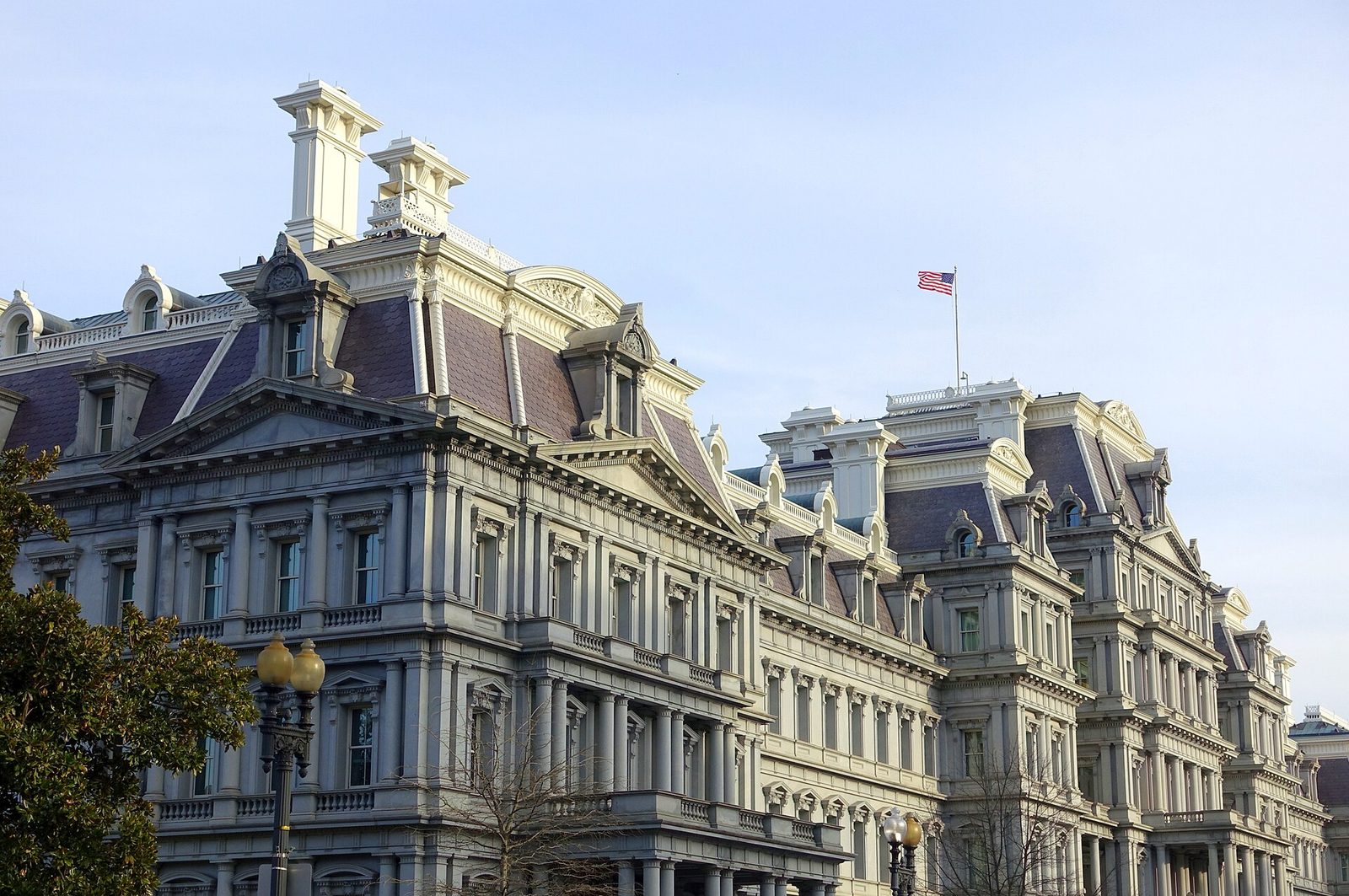
Image: Daderot, CC0 (Wikimedia Commons)