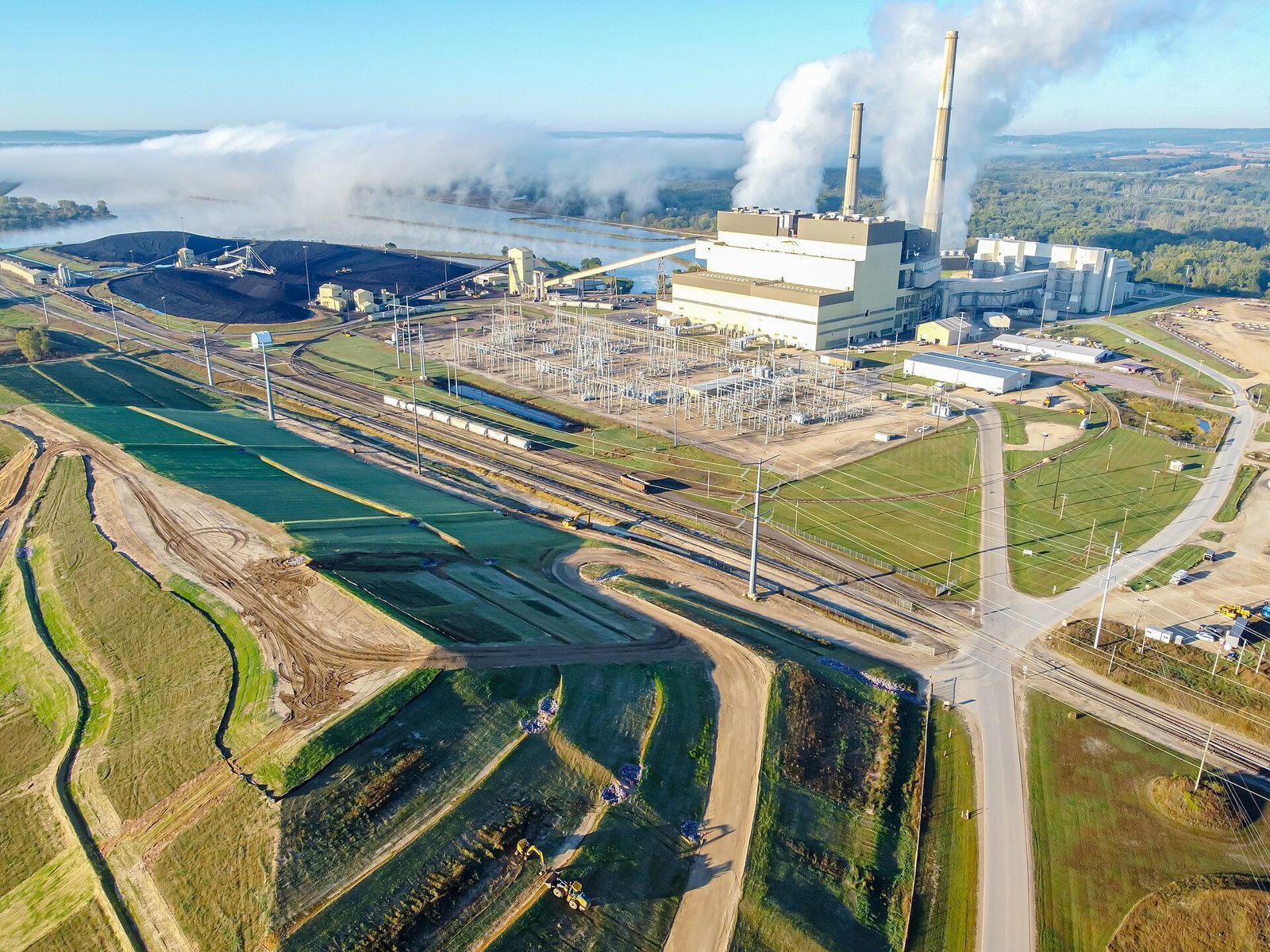
EPA scraps carbon limits on power plants
A September 2026 rule repeals most of the 2024 carbon standards for coal and gas plants, and a companion proposal would end federal power-plant climate rules entirely.
Key facts
- Existing coal plants lose their federal carbon limits
- EPA's 2024 analysis: $370B in net benefits over 2024-2047
- Health groups sued in the D.C. Circuit three days later
Summary
On September 14, 2026, EPA Administrator Lee Zeldin signed a final rule repealing the majority of the 2024 Carbon Pollution Standards for fossil fuel-fired power plants, including the emission guidelines for existing steam units, and proposed rescinding the remaining power-sector greenhouse gas standards. EPA projected $310 billion in savings; health and environmental groups sued in the D.C. Circuit on September 17.
What happened
The final rule (published September 17, 2026, effective November 16, 2026) repeals the 2024 emission guidelines for existing fossil fuel-fired steam generating units in their entirety - including the 90 percent carbon capture standard for long-term coal units and 40 percent natural-gas co-firing for medium-term coal units - the carbon-capture standards for coal units undertaking large modifications, and the Phase 2 carbon-capture standards for new base-load gas turbines. EPA found that 90 percent carbon capture 'was not adequately demonstrated and was unreasonably costly' and that co-firing amounted to impermissible generation shifting under West Virginia v. EPA; other 2024 turbine standards, such as efficiency requirements, remain. In a concurrent supplemental proposal, EPA proposed rescinding its greenhouse gas findings for fossil fuel-fired power plants and repealing all remaining power-plant GHG standards under Clean Air Act section 111. Zeldin announced the action at the G20 Energy Abundance Ministerial in Houston, saying 'Americans will see a decrease in electricity prices.' The American Lung Association and other groups filed suit in the D.C. Circuit on September 17, 2026.
Impact on the United States
EPA's 2024 analysis projected the 2024 standards would avoid up to 1.38 billion metric tons of CO2 through 2047 and deliver $370 billion in net climate and health benefits over 2024-2047, including $120 billion in health benefits from reduced fine-particle and ozone pollution; the prior administration estimated they would prevent 1,200 premature deaths, 360,000 cases of asthma symptoms and 47,000 lost workdays in 2035. Most of those benefits are forgone, and EPA itself projects coal production for power-sector use will increase more than tenfold.
Documented effects
- Final rule repeals the emission guidelines for existing fossil fuel-fired steam units, carbon-capture standards for modified coal units, and Phase 2 carbon-capture standards for new base-load gas turbines; effective November 16, 2026[1][2][6]
- EPA projects $310 billion in savings from the repeal and a more than tenfold increase in coal production for power-sector use[1][7]
- Supplemental proposal would rescind EPA's greenhouse gas findings for fossil fuel-fired power plants and repeal all remaining power-plant greenhouse gas standards; comments due November 2, 2026[3]
- Forgone benefits: EPA's 2024 analysis projected up to 1.38 billion metric tons of CO2 avoided through 2047 and $370 billion in net climate and health benefits over 2024-2047 ($120 billion in health benefits)[5]
- The prior administration estimated the standards would prevent 1,200 premature deaths, 360,000 cases of asthma symptoms and 47,000 lost workdays in 2035[4]
- Health and environmental groups sued in the D.C. Circuit on September 17, 2026 (American Lung Association v. EPA, No. 26-1238)[6]
Why this is rated severe
Removes the federal carbon limits on existing coal-fired power plants, in a sector responsible for about one-quarter of US climate pollution (CBS News), and forgoes much of the health and climate benefit EPA projected for the 2024 standards; a companion proposal would end federal power-plant GHG regulation entirely.
final rule effective November 16, 2026; challenged in the D.C. Circuit, American Lung Association v. EPA, No. 26-1238; supplemental proposal to repeal all remaining power-plant GHG standards open for comment to November 2, 2026
Corrections & updates [1]
Every change to a fact on this page after publication is logged here, newest first.
- CorrectedSeverity rationale
The severity rationale said EPA counted the sector at '25 percent of US greenhouse gas emissions in 2022'; the cited EPA pages do not state that figure. The cited CBS News report says power plants produce 'about one-quarter of the nation's total climate pollution', and the figure is now attributed to it. Severity unchanged.[7]
+ Show previous and current text- Hide previous and current text
- Previously
- Removes the federal carbon limits on existing coal-fired power plants in a sector EPA counted at 25 percent of US greenhouse gas emissions in 2022, and forgoes much of the health and climate benefit EPA projected for the 2024 standards; a companion proposal would end federal power-plant GHG regulation entirely.
- Now
- Removes the federal carbon limits on existing coal-fired power plants, in a sector responsible for about one-quarter of US climate pollution (CBS News), and forgoes much of the health and climate benefit EPA projected for the 2024 standards; a companion proposal would end federal power-plant GHG regulation entirely.
Sources [7]
- T1US Environmental Protection Agency - EPA Finalizes Repeal of 2024 Power Plant Regulations, Delivering $300+ Billion in Savings, Proposes Repeal of All Remaining Greenhouse Gas Emissions Standards for Power Plants · Sep 14, 2026 ↗
- T1US Environmental Protection Agency - Greenhouse Gas Standards and Guidelines for Fossil Fuel-Fired Power Plants · Sep 14, 2026 ↗
- T1Federal Register (govinfo) - Rescission of the Greenhouse Gas Findings for Fossil Fuel-Fired Power Plants and Repeal of Regulations for Power Plant Greenhouse Gas Emissions Under Clean Air Act Section 111 (supplemental notice of proposed rulemaking, 91 FR 59002) · Sep 17, 2026 ↗
- T2NBC News - EPA to repeal limits on greenhouse gas pollution from power plants · Sep 14, 2026 ↗
- T1US Environmental Protection Agency - Final Carbon Pollution Standards to Reduce Greenhouse Gas Emissions from Power Plants (presentation) · Apr 25, 2024 ↗
- T3National Law Review (Beveridge & Diamond PC) - EPA Partially Repeals Power Plant Carbon Rules, Punts Questions of Broader Authority to New Proposal · Sep 23, 2026 ↗
- T2CBS News - EPA to eliminate limits on climate pollution from power plants · Sep 14, 2026 ↗
Image: Wikideas1, CC0 (Wikimedia Commons)