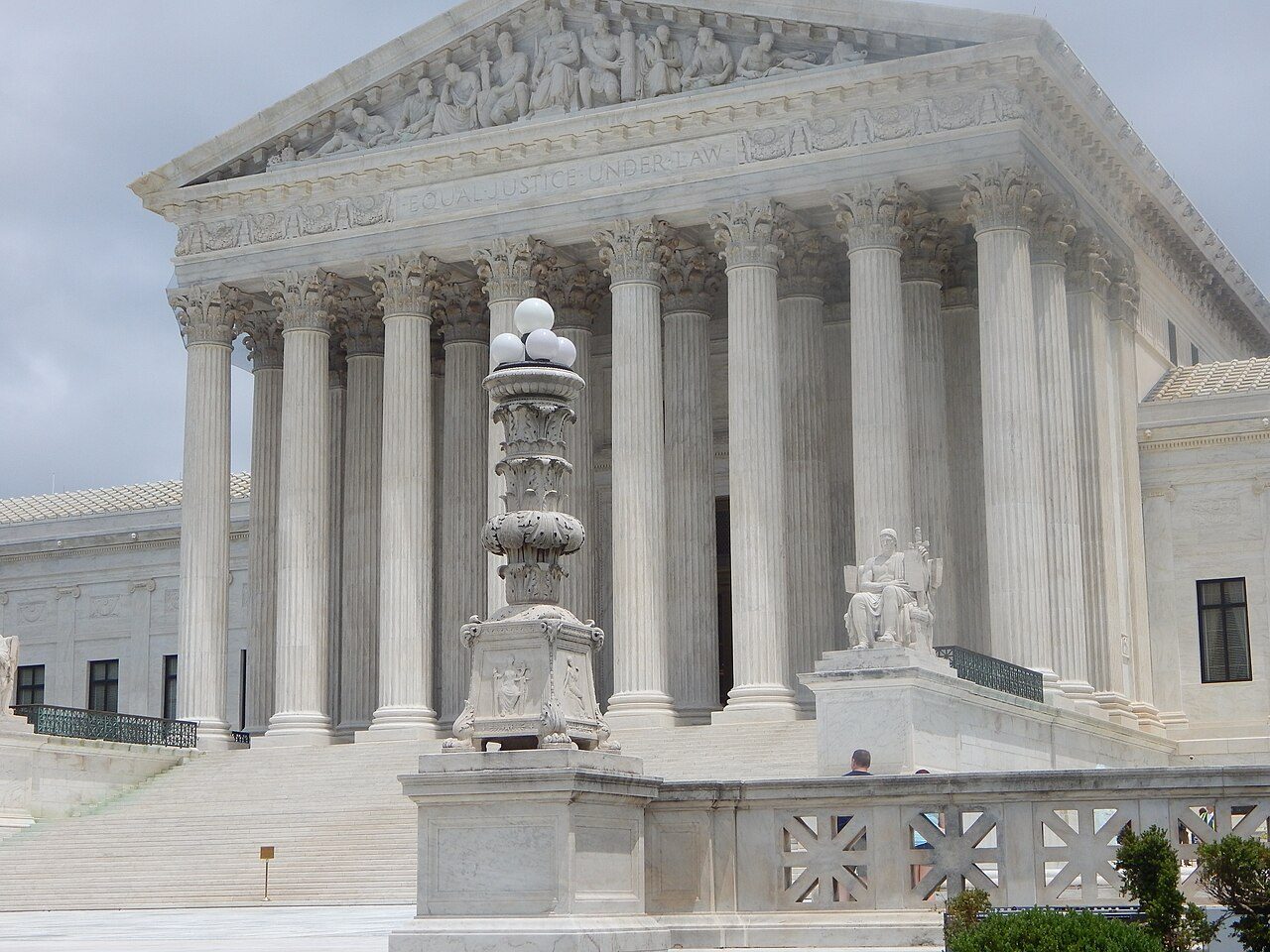
Judge finds noncompliance after 9-0 Supreme Court order
After a 9-0 ruling, a judge found the government had failed to comply and accused it of bad faith; he was returned two months later.
Key facts
- Supreme Court ruled 9-0 April 10, 2025
- Judge Xinis accused the government of bad faith in discovery
- Abrego Garcia returned June 6, 2025
Summary
On April 10, 2025, the Supreme Court unanimously (9-0) ordered the Trump administration to "facilitate" the return of Kilmar Abrego Garcia, a Maryland resident who had been illegally deported to El Salvador's CECOT prison on March 15 despite a valid withholding-of-removal order. Judge Paula Xinis found on April 11 that the government had failed to comply with her order, wrote on April 15 that "the record reflects that Defendants have done nothing at all," and on April 22 accused it of acting in bad faith by refusing to provide information; the government returned him on June 6, 2025 to face criminal charges.
What happened
Abrego Garcia had a standing legal protection against removal to El Salvador, which the government acknowledged was violated when he was deported on March 15. District Judge Xinis ordered his return by April 7; the Fourth Circuit denied the government's request for a stay. The Supreme Court's April 10 opinion required the government to "facilitate" his release, but left "effectuate" language to be clarified below. The administration's April 12 status report stated only that Abrego Garcia was "alive and secure," with no steps toward return. Xinis accused the government of ignoring her orders and acting in bad faith by refusing to provide information in discovery. El Salvador's President Bukele called the return suggestion "preposterous" after meeting Trump at the White House on April 14. Abrego Garcia was later released from ICE detention under court order, and a February 17, 2026 ruling barred ICE from re-detaining him. On May 22, 2026, U.S. District Judge Waverly Crenshaw dismissed the separate human-smuggling indictment against him in Tennessee, finding "presumptive vindictiveness."
Impact on the United States
A federal judge found the government had not complied with orders to facilitate the return of a man it acknowledged was illegally removed, and the government took nearly two months to bring him back. The case raised the prospect that people with legal protections against removal could be deported with no effective judicial remedy if the executive does not comply with court orders.
Global ripple effects
The administration's reliance on El Salvador's Bukele government to hold Abrego Garcia beyond U.S. courts' reach allowed a foreign government to serve as the mechanism for circumventing a U.S. Supreme Court order.
Documented effects
- Judge Xinis found on April 11, 2025 that the government had failed to comply with her order, and on April 22 accused it of acting in bad faith by refusing to provide discovery; Abrego Garcia's lawyers later alleged a "pattern of deliberate delay and bad faith"[1]
- As of June 2026, Abrego Garcia is free in the U.S. -- released from ICE custody under court order and shielded from re-detention by a February 17, 2026 ruling -- while still subject to removal proceedings; his Tennessee human-smuggling indictment was dismissed for "presumptive vindictiveness" by Judge Waverly Crenshaw on May 22, 2026[2][4][5]
- Fourth Circuit denied the government's stay request April 7, 2025: "The United States Government has no legal authority to snatch a person who is lawfully present in the United States off the street and remove him from the country without due process"[1]
- DOJ appealed the vindictive-prosecution dismissal to the Sixth Circuit (notice filed June 22, 2026) and in an August 2026 brief argued it had 'multiple legitimate bases to prosecute'; separately, in his Maryland removal proceedings the government has sought to deport him to Liberia.[6][7]
Why this is rated severe
After a unanimous Supreme Court ruling, a federal judge found the government had failed to comply with orders to facilitate the return of a man it acknowledged was wrongly removed and accused it of bad faith; the case raised the prospect of removals with no effective judicial remedy.
released from ICE custody, barred from re-detention Feb 2026; Tennessee criminal case dismissed May 2026, dismissal appealed by DOJ to the Sixth Circuit; removal proceedings continue, with the government seeking his removal to Liberia
Corrections & updates [7]
Every change to a fact on this page after publication is logged here, newest first.
- CorrectedSource
The Civil Rights Litigation Clearinghouse, a university-run case database, was labeled as a primary record (Tier 1). It is relabeled Tier 3. The entry's primary support comes from the Supreme Court's order, and its Tier 2 support from PBS and Courthouse News Service.[3][5]
- UpdatedStatus
Updated: the Justice Department appealed the May 22, 2026 dismissal of the smuggling case to the Sixth Circuit (notice filed June 22; brief filed in August 2026), and the government is seeking his removal to Liberia in separate proceedings in Maryland.[6][7]
+ Show previous and current text- Hide previous and current text
- Previously
- ongoing (released from ICE custody, barred from re-detention Feb 2026; Tennessee criminal case dismissed May 2026; removal proceedings continue)
- Now
- ongoing (released from ICE custody, barred from re-detention Feb 2026; Tennessee criminal case dismissed May 2026, dismissal appealed by DOJ to the Sixth Circuit; removal proceedings continue, with the government seeking his removal to Liberia)
- CorrectedDate
The government's filing stating that Abrego Garcia was 'alive and secure' was made on April 12, 2025, not April 22. On April 7 the Fourth Circuit denied the government's request for a stay of Judge Xinis's order; it did not 'affirm' on the merits.[1]
- CorrectedQuote
'Pattern of deliberate delay and bad faith' is from Abrego Garcia's lawyers' June 2025 sanctions motion, not a finding by Judge Xinis. According to the case record, Xinis found on April 11, 2025 that the government had failed to comply with her order, and on April 22 accused it of acting in bad faith by refusing to provide information in discovery. The quote 'willful and intentional noncompliance' could not be found in a cited source.[1]
- CorrectedSummary
The summary quoted Judge Paula Xinis as finding a 'willful and bad faith refusal' to obey; no source containing that finding was found. The case record shows she found on April 11, 2025 that the government had failed to comply with her order, wrote on April 15 that 'the record reflects that Defendants have done nothing at all,' and on April 22 accused the government of acting in bad faith by refusing to provide information in discovery; the government returned Abrego Garcia on June 6, 2025 to face criminal charges. The title, headline and impact text also stated 'defiance' of the Supreme Court as fact; they now describe the court's findings.[1][3]
- CorrectedSource
Courthouse News Service, a legal trade publication, was labeled as major news (Tier 2). It is relabeled as specialist press (Tier 3). The entry keeps its Supreme Court, PBS, ABC and other Tier 1/2 sources.[3]
- ClarifiedSeverity rationale
Replaced 'open defiance' with what the court found (noncompliance and bad faith). Severity unchanged.
+ Show previous and current text- Hide previous and current text
- Previously
- Open defiance of a unanimous Supreme Court order was the most serious realized executive-judicial confrontation, undermining the rule of law nationwide.
- Now
- After a unanimous Supreme Court ruling, a federal judge found the government had failed to comply with orders to facilitate the return of a man it acknowledged was wrongly removed and accused it of bad faith; the case raised the prospect of removals with no effective judicial remedy.
Sources [7]
- T3Civil Rights Litigation Clearinghouse - Abrego Garcia v. Noem 8:25-cv-00951 (D. Md.) · Jan 1, 2025 ↗
- T3Courthouse News Service - Federal judge throws out criminal case against Kilmar Abrego Garcia as vindictive prosecution · May 22, 2026 ↗
- T1Supreme Court - Noem v. Abrego Garcia, 24A949 · Apr 10, 2025 ↗
- T2Newsweek - Trump's DOJ suffers loss in Abrego Garcia case over vindictiveness · May 22, 2026 ↗
- T2PBS News - Judge rules Kilmar Abrego Garcia can't be re-detained by immigration authorities · Feb 17, 2026 ↗
- T2ABC News - DOJ to appeal judge's order dismissing Kilmar Abrego Garcia's human smuggling case · Jun 22, 2026 ↗
- T2UPI - DOJ appeals dismissal of charges against Kilmar Abrego Garcia · Aug 18, 2026 ↗
Image: Laura Choate, CC BY-SA 3.0 (Wikimedia Commons)