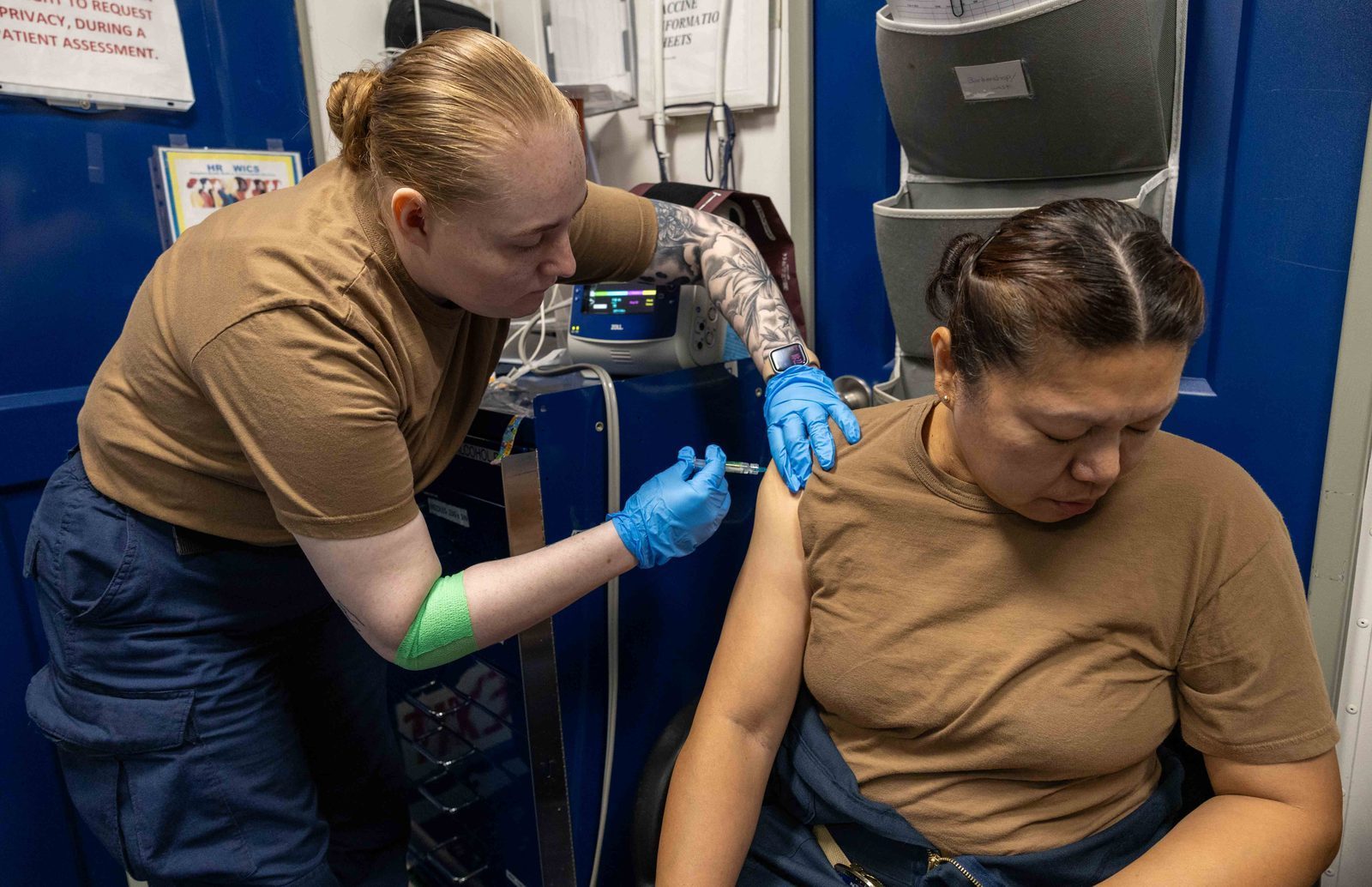
CDC downgrades 6 childhood vaccine recommendations
After a presidential directive, routine recommendations fell from 17 diseases to 11; a court blocked it.
Key facts
- Routine recommendations cut from 17 diseases to 11, Jan 2026
- Federal court blocked implementation March 16, 2026
- Court found new ACIP appointments violated federal advisory law
Summary
On January 5, 2026, following a December 2025 presidential memorandum, the acting CDC director approved a revised childhood immunization schedule that downgraded six routine vaccine recommendations to risk-based or shared clinical decision-making, cutting the diseases covered by routine recommendations from 17 to 11. A federal court stayed it on March 16, 2026, restoring the June 2024 schedule.
What happened
A January 5, 2026 CDC decision memo, issued after a December 2025 presidential memorandum, changed recommendations for hepatitis A, MenACWY and RSV to risk-based and for rotavirus and influenza to shared clinical decision-making, and incorporated earlier ACIP changes to COVID-19 and hepatitis B; no vaccines were removed from the schedule, but routine recommendations fell from 17 diseases to 11. CRS found no past instance of a President directing changes to the childhood schedule. The American Academy of Pediatrics, APHA, and others filed suit. On March 16, 2026, Judge Brian Murphy (D. Mass.) found the January 2026 memo "arbitrary and capricious" under the Administrative Procedures Act, that the CDC director could not bypass ACIP (whose reconstitution itself was found to violate the Federal Advisory Committee Act for lack of "fair balance"), and issued a preliminary injunction staying the revised schedule. The June 2024 schedule was restored.
Impact on the United States
Had the schedule been permanently implemented, insurance coverage for removed vaccines would have lapsed for millions of children; reduced routine vaccination rates risk outbreaks of preventable diseases, particularly given the concurrent measles crisis.
Documented effects
- January 5, 2026: routine recommendations cut from 17 diseases to 11; six recommendations downgraded to risk-based or shared clinical decision-making under a presidential directive[1][3]
- March 16, 2026: Judge Brian Murphy (D. Mass.) blocked the revised schedule; June 2024 schedule restored[5][4]
- Court found new ACIP appointments violated Federal Advisory Committee Act for lacking "fair balance" in vaccine expertise[5][6]
- April 29, 2026: the government appealed the stay to the First Circuit[7][1]
- May 29, 2026: Executive Order 14407 called the assessment behind the 2026 schedule a "guiding resource" and directed CDC and ACIP to update the schedules to the extent permitted by law[1]
- On August 10, 2026 President Trump signed an executive order seeking to cut the number of diseases all children are routinely vaccinated against from 18 to 11; legal experts said it would likely be blocked in court[8]
Why this is rated limited
Downgrading six routine childhood vaccine recommendations would have been a major change, but a court stayed it after about ten weeks, limiting realized harm.
March 16, 2026 stay; government appeal pending at the First Circuit
Corrections & updates [7]
Every change to a fact on this page after publication is logged here, newest first.
- CorrectedSummary
The entry said six vaccines were removed from the schedule and that it was cut from 17 to 11 vaccines. CRS (R48982) states no vaccines were removed: the January 5, 2026 schedule changed recommendations for hepatitis A, MenACWY and RSV to risk-based, and for rotavirus and influenza to shared clinical decision-making (six federal changes in all). CIDRAP describes the cut as from 17 to 11 diseases covered by routine recommendations. Polio and MMR were not changed. The acting CDC director approved the memo on January 5, 2026, following a December 2025 presidential memorandum.[1][3]
- CorrectedSource
Source s1 (CRS R48982, 'The 2026 Childhood Immunization Schedule') is dated June 11, 2026, not January 1, 2026. Source s2 was an APHA news release; APHA is a plaintiff in the case, and its release says the order overturned the May 2025 COVID directive, which the docketed order does not do. It is replaced by the court's order (Tier 1) and Guardian reporting. CIDRAP s4's date is corrected to March 16, 2026.[5][6][1]
- UpdatedStatus
The government appealed the March 16 order to the First Circuit on April 29, 2026 (NBC News; CRS). On May 29, 2026, Executive Order 14407 called the assessment behind the 2026 schedule a 'guiding resource' and directed CDC and ACIP to update the schedules to the extent permitted by law (CRS). The schedule remains stayed.[7][1]
- Previously
- blocked-by-court (March 16, 2026 injunction)
- Now
- blocked-by-court (March 16, 2026 stay; government appeal pending at the First Circuit)
- UpdatedKey facts
Updated: on August 10, 2026 President Trump signed an executive order seeking to cut the number of diseases all children are routinely vaccinated against from 18 to 11 (see the separate entry on that order).[8]
- CorrectedSummary card
The summary card said a presidential directive removed recommendations for six vaccines and that a judge 'reversed' the changes. The January 5, 2026 revision was a CDC decision memo issued after a December 2025 presidential memorandum; it downgraded six routine recommendations (no vaccine was removed from the schedule), and the March 16, 2026 order stayed it pending the case, restoring the June 2024 schedule. The card now matches.[1][5][7]
- ClarifiedSource labels
Source tier labels brought in line with the site's tier rule (specialist and trade publications are Tier 3; general news organizations are Tier 2): CIDRAP (Tier 2 to 3); CIDRAP (Tier 2 to 3). No claim in the entry changed.
- CorrectedCost estimate
The $15M booked figure (an assumed $100 per medical practice) and the $50M broader figure had no source. No measured cost or change in vaccine uptake was published during the 2.5 months the change was in effect, so nothing is booked. An unrelated source is also removed.
- Previously
- net $15M so far; 10yr $15M; 15yr $15M; broader $50M
- Now
- net $0; 10yr $0; 15yr $0; broader $0
Sources [7]
- T1Congressional Research Service - The 2026 Childhood Immunization Schedule · Jun 11, 2026 ↗
- T3CIDRAP - The State of US Vaccine Policy: Special Edition · Mar 17, 2026 ↗
- T3CIDRAP - Federal judge blocks Kennedy's changes to childhood vaccine policy · Mar 16, 2026 ↗
- T1US District Court for the District of Massachusetts - American Academy of Pediatrics v. Kennedy, No. 1:25-cv-11916, Memorandum and Order on Plaintiffs' Motion for Preliminary Injunction (ECF 291) · Mar 16, 2026 ↗
- T2The Guardian - Federal judge blocks RFK Jr's overhaul of vaccine recommendations · Mar 16, 2026 ↗
- T2NBC News - Trump administration appeals ruling that blocked RFK Jr.'s vaccine overhaul · Apr 29, 2026 ↗
- T2NBC News - Trump order aims to cut number of diseases all children should be vaccinated against from 18 to 11 · Aug 10, 2026 ↗
Image: Mass Communication Specialist Seaman Joseph Mendoza, U.S. Navy, Public Domain (US Government Work) (Wikimedia Commons)