US threatens to take Greenland, Panama Canal, Canada
Threats toward allies strained relations while Canada retaliated against US tariffs.
Key facts
- Canada imposed 25% counter-tariffs on C$30B of US goods, plus steel, aluminum and autos
- Denmark committed ~$4.3B in extra Arctic defense
- No territory acquired
Summary
Beginning in early January 2025, President Trump repeatedly refused to rule out military or economic coercion to acquire Greenland from Denmark and the Panama Canal from Panama, and said he would use "economic force" to annex Canada as the "51st state." He threatened tariffs on Denmark "at a very high level" over Greenland.
What happened
On January 7, Trump stated he would not exclude using military or economic force to acquire Greenland, citing US national security interests in the Arctic. He revived canal-control threats, claiming China was "basically taking it over" (the canal is administered by the Panama Canal Authority, a Hong Kong-based contractor operates two ports connected to it, and Panama's president denied China has influence over it), and sent Secretary Rubio to Panama as the first stop of a February 1-6, 2025 regional trip. On Canada, Trump repeatedly called Prime Minister Trudeau the "Governor of the Great State of Canada" and said he would use "economic force" to make Canada part of the US; the 25% tariffs he imposed on Canadian imports were officially justified by illegal immigration and fentanyl. Denmark responded by committing roughly $4.3 billion (DKK 27.4 billion) in additional Arctic and North Atlantic defense spending (October 2025), including 16 new F-35s. The White House stated "utilizing the U.S. military is always an option" regarding Greenland as late as 2026. The posture softened at Davos: in his January 21, 2026 speech Trump said he would not use force to acquire Greenland and sought immediate negotiations, and after meeting NATO Secretary General Mark Rutte he dropped the 10% tariffs he had threatened to impose on European countries on February 1.
Impact on the United States
Denmark - which, per the Atlantic Council, suffered the most casualties relative to its population of any NATO ally apart from the United States in Afghanistan - entered 2026 in a state of diplomatic crisis with Washington. Panamanian authorities rejected US claims that China controls the canal. Canada imposed 25% retaliatory tariffs on C$30 billion of US goods in March 2025, later adding US steel, aluminum and autos, before removing most of them on September 1, 2025. Danish Prime Minister Frederiksen warned the threats could lead to "the end of NATO."
Global ripple effects
Adversaries (Russia, China) exploited the NATO-internal rupture: Russia cited US unilateralism as evidence of Western hypocrisy; China used US coercion of Canada and Denmark to position itself as a more reliable trade and security partner in those markets. The threats accelerated European defense autonomy, reducing US influence over European security spending and basing decisions that protect US interests.
Documented effects
- Denmark committed ~$4.3 billion (DKK 27.4 billion) extra Arctic/North Atlantic defense spending - October 2025[5]
- Canada imposed 25% retaliatory tariffs on C$30 billion of US goods (March 4, 2025), then on C$29.8 billion of US steel, aluminum and other goods (March 13) and on non-CUSMA-compliant US vehicles (April 9); on September 1, 2025 it removed most of them, keeping those on steel, aluminum and autos[6]
- Atlantic Council warned the Greenland threats constitute "NATO's darkest hour"[1]
- Panama Canal experienced a business slowdown directly linked to US tariff policies disrupting shipping flows[3]
- At Davos (Jan 21, 2026) Trump said he would not use force to acquire Greenland and sought negotiations, and after meeting NATO chief Mark Rutte dropped the threatened 10% Feb 1 tariffs on European countries[4]
- The US, Denmark and Greenland signed an Arctic security agreement at the UN on Sept 22, 2026. It stops short of a US takeover - Denmark and Greenland keep sovereignty - but adds US defense areas at Narsarsuaq and Mestersvig, allows US aircraft to fly over and land anywhere in Greenland, bars any non-NATO military presence without the three parties' unanimous approval, and has no end date[10][11]
Why this is rated significant
Threats toward allies strained diplomatic trust, and Denmark added Arctic defense spending, but no territory was taken; the September 2026 agreement left sovereignty with Denmark and Greenland, and the harm is largely reputational and reversible.
no territory acquired; after Trump said at Davos in January 2026 that he would not use force to acquire Greenland, a Sept 22, 2026 US-Denmark-Greenland security agreement left sovereignty with Denmark and Greenland while expanding US military access
Corrections & updates [9]
Every change to a fact on this page after publication is logged here, newest first.
- CorrectedFigure
The Denmark Arctic-spending effect cited an Atlantic Council analysis that gives the DKK 27.4 billion package as $2.7 billion and does not mention F-35s. Al Jazeera's October 2025 report confirms Denmark's plan to spend about DKK 27.4 billion ($4.26 billion) on Arctic defence and buy 16 more F-35s; the effect now cites it. The Atlantic Council is a think tank, so its source tier is corrected from 2 to 3.[5]
- CorrectedFigure
The entry said Canada imposed 25% tariffs on CA$155 billion (~US$107 billion) of US goods in February 2025. Canada's Department of Finance records show the tariffs actually imposed were 25% on C$30 billion of US goods from March 4, 2025, C$29.8 billion more on steel, aluminum and other goods from March 13, and tariffs on non-CUSMA vehicles from April 9; most were removed on September 1, 2025, except those on steel, aluminum and autos. Canada's tariffs answered US tariffs that the White House tied to illegal immigration and fentanyl, so the summary line no longer says the threats "triggered" them. Two usImpact claims no cited source supports were also replaced or removed: that Denmark lost 50 soldiers alongside Americans (the Atlantic Council says Denmark suffered the most casualties relative to its population of any NATO ally apart from the US in Afghanistan), and that Panama "began diversifying diplomatic relationships" and Denmark reduced its willingness to join US-led coalitions.[1][3][6][9]
- ClarifiedSummary
Wording made more precise to match the sources. On January 7, 2025 Trump refused to rule out military or economic coercion over Greenland and the Panama Canal, said he would use "economic force" regarding Canada, and threatened (rather than ordered) tariffs on Denmark (NBC News). The 25% tariffs on Canada were officially justified by illegal immigration and fentanyl (White House fact sheet), so they are no longer described as leverage toward annexation. At Davos on January 21, 2026 Trump said he would not use force and sought negotiations; he dropped the threatened February 1 tariffs on European countries after meeting NATO's Mark Rutte - he did not pledge to forgo tariffs generally (Al Jazeera). The White House "always an option" statement (January 6, 2026) now cites ABC News.[4][7][8][9]
- UpdatedStatus
Updated: on Sept. 22, 2026 the US, Denmark and Greenland signed an Arctic security agreement at the UN. It stops short of the US takeover Trump had demanded - Denmark and Greenland keep sovereignty - but lets the US establish defense areas at Narsarsuaq and Mestersvig, fly over and land anywhere in Greenland, and block any non-NATO country's military presence; the accord has no end date (TIME; Al Jazeera). No territory has been acquired.[10][11]
+ Show previous and current text- Hide previous and current text
- Previously
- proposed (no territory acquired; at Davos on Jan 21, 2026 Trump said he would not use force to acquire Greenland and sought negotiations, and after meeting NATO chief Mark Rutte dropped the threatened 10% Feb 1 tariffs on European countries)
- Now
- proposed (no territory acquired; after Trump said at Davos in January 2026 that he would not use force to acquire Greenland, a Sept 22, 2026 US-Denmark-Greenland security agreement left sovereignty with Denmark and Greenland while expanding US military access)
- CorrectedSource
The White & Case item was labeled Tier 2 (major news) but is a law-firm client alert, so it is relabeled Tier 3. The Canadian retaliation it was cited for is supported by the Department of Finance Canada (Tier 1).[6]
- CorrectedDate
The entry said Rubio was in Panama February 1-3; the State Department's travel announcement gives a February 1-6 trip to Panama, El Salvador, Costa Rica, Guatemala and the Dominican Republic, with no Panama-only dates, so the wording now follows it. The word "inaccurately" (an editorial judgment) is replaced with the facts NBC News reports: the canal is administered by the Panama Canal Authority, a Hong Kong-based contractor operates two ports connected to it, and Panama's president denied China has influence over it. The display text said all three governments rejected the overtures; the record supports Canada's retaliatory tariffs and Panama's rejection, so it now says that.[12][7][6]
- CorrectedSeverity rationale
The rationale said the threats 'drew retaliatory tariffs.' Canada's retaliatory tariffs answered the separate 25% tariffs, which were officially justified by immigration and fentanyl. Severity unchanged.[5][6][10]
+ Show previous and current text- Hide previous and current text
- Previously
- Threats against allies damaged diplomatic trust and drew retaliatory tariffs, but no territory was taken and harm is largely reputational and reversible.
- Now
- Threats toward allies strained diplomatic trust, and Denmark added Arctic defense spending, but no territory was taken; the September 2026 agreement left sovereignty with Denmark and Greenland, and the harm is largely reputational and reversible.
- CorrectedDisplay copy
The body said Panama's president 'rejected any US takeover of the canal'; the record documents that he denied China has influence over it. The headline now reflects that the Panama threat concerned the canal.
- CorrectedCost estimate
The only costs this entry counted were the effects of Canada's retaliatory tariffs, which are now booked once under the Canada/Mexico tariff entry. The $500M figure was also booked as a federal cost though it was not one, and neither figure appeared in the cited sources. This entry is now $0 in every column.
- Previously
- $0.5B booked; $0.5B federal 10-yr; $26B broader
- Now
- $0 in all columns
Sources [12]
- T3Atlantic Council - Trump's quest for Greenland could be NATO's darkest hour · Jan 7, 2026 ↗
- T3White & Case - Canada Imposes 25% Tariffs on United States in Retaliation to Trump Tariffs · Feb 1, 2025 ↗
- T2NBC News - Why the Panama Canal is a big, long-term prize in Trump's global trade war · May 4, 2025 ↗
- T2Al Jazeera - 'I won't use force for Greenland': Key takeaways from Trump's Davos speech · Jan 22, 2026 ↗
- T2Al Jazeera - Denmark to boost Arctic defence by $4.26bn, plans to buy 16 new F-35s · Oct 11, 2025 ↗
- T1Department of Finance Canada - Canada's response to U.S. tariffs on Canadian goods (archived) · Jun 19, 2026 ↗
- T1White House - Fact Sheet: President Donald J. Trump Imposes Tariffs on Imports from Canada, Mexico and China · Feb 1, 2025 ↗
- T2NBC News - Trump suggests use of military force to acquire Panama Canal and Greenland, 'economic force' for Canada · Jan 7, 2025 ↗
- T2ABC News - US military is 'always an option' for Trump to acquire Greenland, White House official says · Jan 6, 2026 ↗
- T2TIME - Understanding Trump's Deal With Denmark-and What It Means for Greenland's Sovereignty · Sep 22, 2026 ↗
- T2Al Jazeera - Trump signs 'tremendous' Arctic security deal with Denmark, Greenland · Sep 22, 2026 ↗
- T1U.S. Department of State - Secretary Rubio's Travel to Panama, El Salvador, Costa Rica, Guatemala, and the Dominican Republic · Jan 31, 2025 ↗
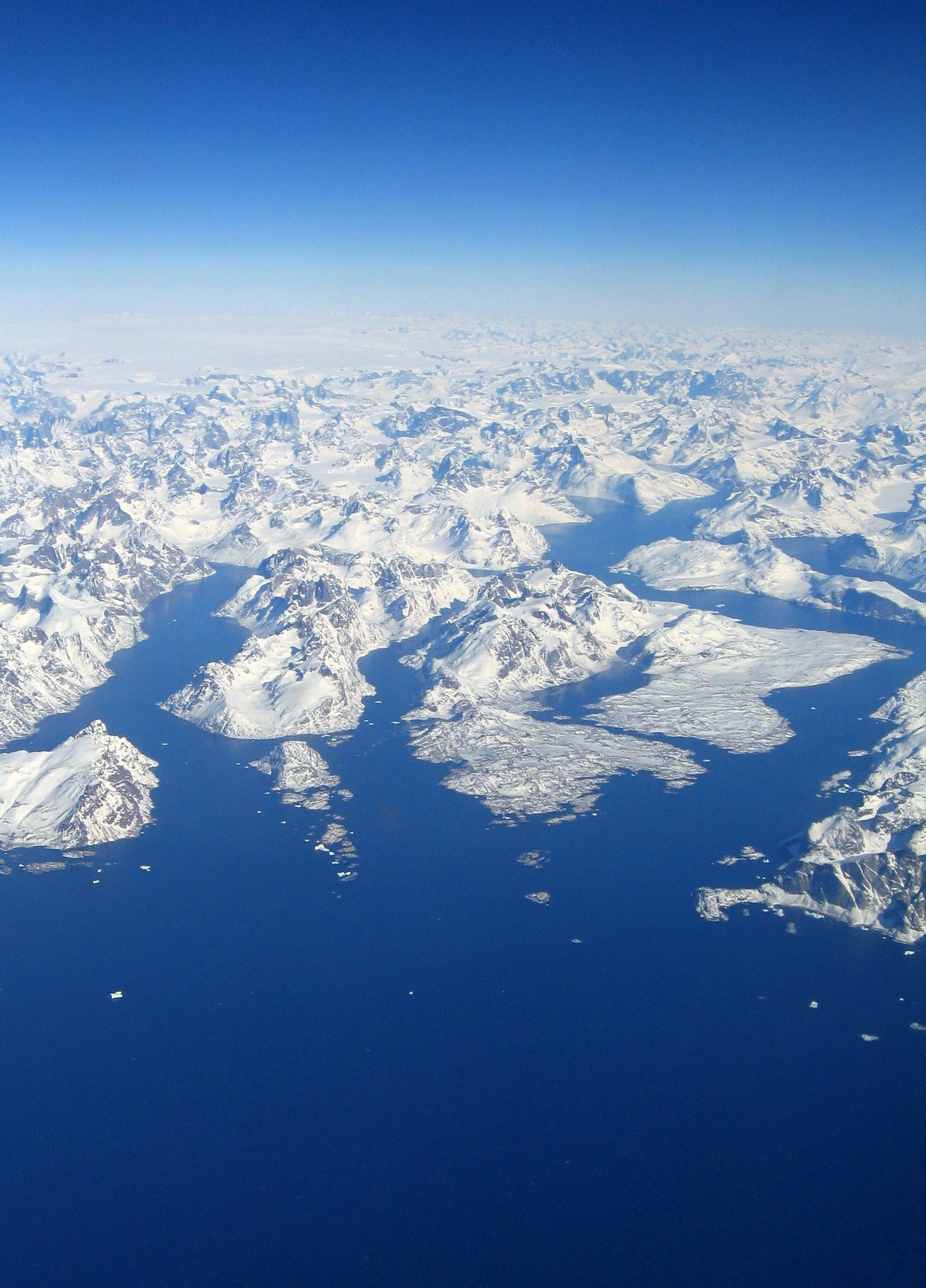
Image: Stig Nygaard, CC BY 2.0 (Aerial_view_of_Greenland.jpg)