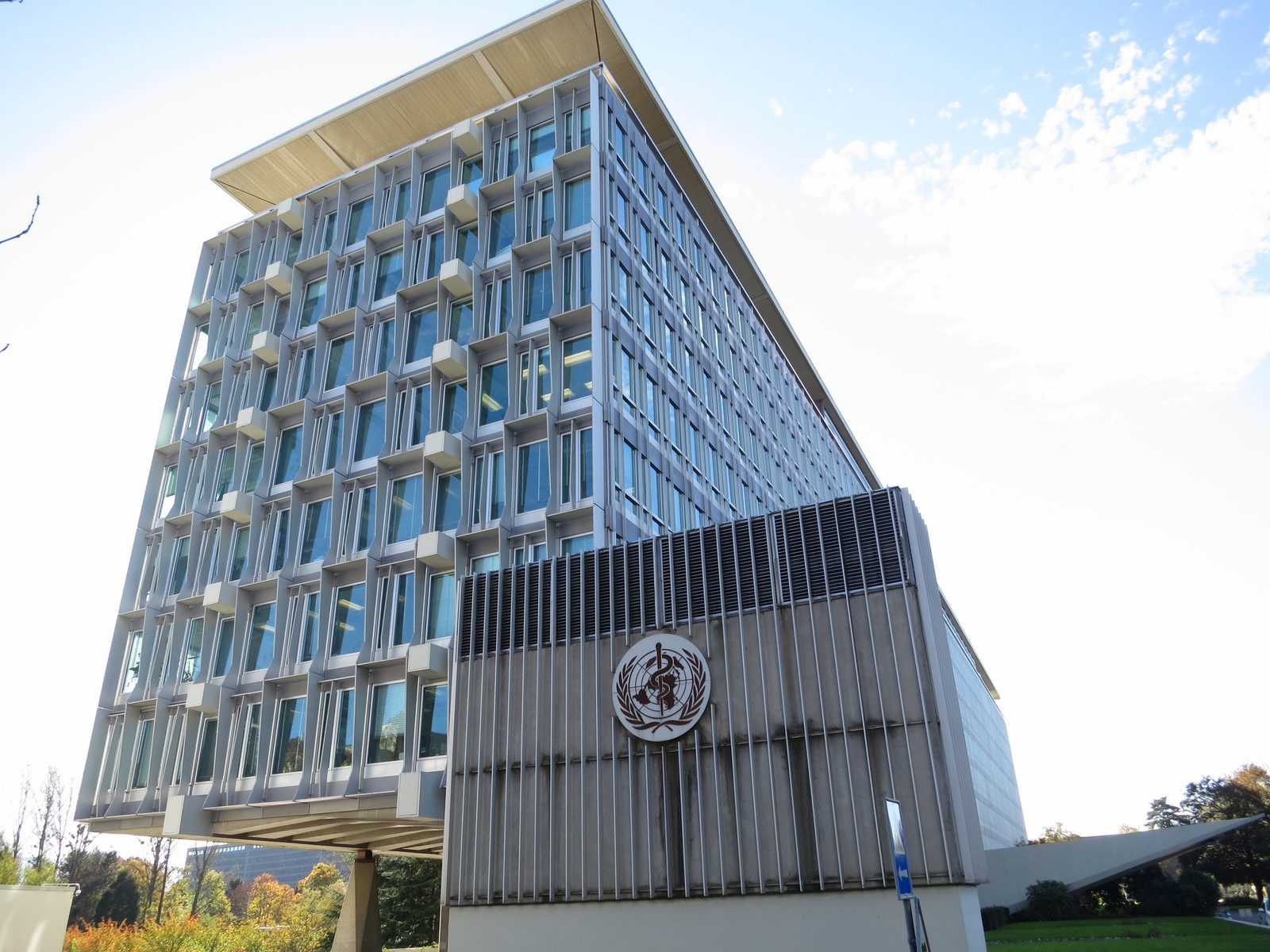
US exits the World Health Organization
The exit ended US participation in WHO flu surveillance and cut off disease data other countries share for early pandemic warning.
Key facts
- Formal exit Jan 22, 2026
- WHO announced plans to cut ~2,300 jobs (25% of staff)
- US left GISRS flu-strain surveillance network, operating since 1952
Summary
President Trump signed Executive Order 14155 on January 20, 2025, initiating a second US withdrawal from the WHO, immediately pausing all funding, recalling US personnel, and directing cessation of Pandemic Agreement negotiations. The formal exit took effect January 22, 2026, after the required one-year notification period.
What happened
EO 14155 revoked the Biden administration's 2021 letter rejoining the WHO, directed the Secretary of State to cease WHO Pandemic Agreement negotiations, paused all US funding (~$1.28 billion contributed in 2022-23), and ordered US personnel recalled. The US did not participate in the WHO's Global Influenza Surveillance and Response System (GISRS) for the flu seasons following withdrawal. Administration officials acknowledged unresolved issues including lost access to other countries' disease data for early pandemic warnings. The WHO announced plans to cut approximately 2,300 jobs - a quarter of its workforce - by summer 2026 following the loss of US funding.
Impact on the United States
The US no longer participates directly in WHO's Global Influenza Surveillance and Response System (GISRS) and the WHO committee that determines annual flu-vaccine strains. The US also loses access to the disease-surveillance data other countries share through WHO, an early warning system for potential pandemics.
Global ripple effects
The loss of US presence in WHO governance allows China and other powers to shape global health standards and pandemic-response rules without a US counterweight, reducing US ability to influence reporting obligations during future outbreaks that could reach American soil. The WHO announced staff cuts of 2,300 that will hollow emergency-response capacity globally, increasing the risk of an undetected outbreak reaching the US.
Documented effects
- Formal US exit effective 2026-01-22, one year after the executive order[1][2]
- WHO announced plans to eliminate ~2,300 positions (25% of staff) by summer 2026 due to funding loss[3]
- US participation in Global Influenza Surveillance and Response System (GISRS) - operational since 1952 - ceased[3]
- A Lancet study reported 2026-02-04 projected that global aid cuts, a year after the dismantling of USAID, could lead to 9.4 million deaths by 2030; the projection concerns aid cuts broadly, not WHO withdrawal specifically[4]
Projected cost to Americans
Cumulative cost if current policy holds: direct federal cost plus the broader economic burden. A conservative, lower-bound estimate (low confidence).
- So far
- $0
- By 2035
- $0
- By 2040
- $0
How this is calculated: Layer 1 is a net federal SAVING. WHO reports the US contributed $1.284B (assessed plus voluntary) in the 2022-2023 biennium, ~$642M a year [S3]. EO 14155 paused all US funding on Jan 20, 2025, and the withdrawal took effect Jan 22, 2026 (event record). Assuming contributions would otherwise have continued at the 2022-23 rate: 10yr (Jan 20, 2025 - Sept 30, 2035, 10.69 years) = ~$6.86B saved; 15yr (through Dec 31, 2040, 15.95 years) = ~$10.23B saved. Whether the voluntary part (most of the total; much of it flowed through agency grants) is a genuine budget saving depends on whether those appropriations were cut or redirected; see decisions. Layer 2 = 0: the loss of US participation in WHO's Global Influenza Surveillance and Response System and of shared outbreak data is a real public-health risk, but no source puts a dollar figure on it (the earlier ~$2B was an unsourced judgment). The earlier ~$339M-a-year rate came from a secondary aggregator (Katadata, mislabeled "Harvard") and was about half WHO's own figure.
Why this is rated significant
The loss of access to WHO flu-strain surveillance and shared disease data, which administration officials acknowledged as unresolved, reduces US early-warning capacity; a real but diffuse and indirect harm.
formal withdrawal completed 2026-01-22
Corrections & updates [6]
Every change to a fact on this page after publication is logged here, newest first.
- CorrectedSource
Source attributions fixed. The claim that the UN confirmed receipt of the US withdrawal letter on January 24, 2025 was cited to the executive order, which does not say this; it is removed and the exit date now cites CBS News as well. The WHO job-cut figure (~2,300 positions, about 25% of staff) appears in The Conversation, not in the CBS article it cited. The Conversation is an academic-authored outlet (Tier 3, not 2) and its article is dated January 31, 2026. The US contribution of $1.284 billion in 2022-2023 now cites WHO's own contributor page. A typo in the key facts (GISIR) is corrected to GISRS.[2][3][5]
- CorrectedKey facts
The effect linked a Lancet study's projection of 9.4 million deaths by 2030 to the US withdrawal from WHO. The cited CNN report presents it as a projection of the effect of global aid cuts, one year after the dismantling of USAID - not of WHO withdrawal - so the effect now says that.[4]
+ Show previous and current text- Hide previous and current text
- Previously
- Lancet study (published 2026-02-04) projected global aid and health-system cuts linked to US withdrawal could contribute to 9.4 million additional deaths by 2030
- Now
- A Lancet study reported 2026-02-04 projected that global aid cuts, a year after the dismantling of USAID, could lead to 9.4 million deaths by 2030; the projection concerns aid cuts broadly, not WHO withdrawal specifically
- CorrectedSummary
Two usImpact claims were not supported by any cited source and are removed: that CDC programs co-funded through WHO in more than 40 countries were terminated, and that the US has "no mechanism" to receive early warning from 193 WHO member states. The remaining text follows CBS News (loss of access to other nations' disease-surveillance data and exit from the flu-strain committee) and The Conversation (GISRS).[2][3]
+ Show previous and current text- Hide previous and current text
- Previously
- American citizens face degraded domestic flu-vaccine matching because US researchers no longer receive GISRS strain data in real time. The US has no mechanism to receive standardized early warning from 193 WHO member states if a novel pathogen emerges; any warning now depends on ad hoc bilateral arrangements. CDC programs co-funded through WHO in more than 40 countries that tracked disease outbreaks with potential US travel exposure were terminated or handed to other donors.
- Now
- The US no longer participates directly in WHO's Global Influenza Surveillance and Response System (GISRS) and the WHO committee that determines annual flu-vaccine strains. The US also loses access to the disease-surveillance data other countries share through WHO, an early warning system for potential pandemics.
- ClarifiedKey facts
Display wording aligned with the record: the WHO announced plans to cut about 2,300 jobs, and the exit ended US participation in WHO flu surveillance, while administration officials acknowledged unresolved issues including lost access to other countries' disease data (CBS News).[2][3]
- ClarifiedSeverity rationale
The severity rationale stated as fact that the withdrawal 'degrades US public-health preparedness'; it now describes the documented loss of access. Severity unchanged.
+ Show previous and current text- Hide previous and current text
- Previously
- Loss of WHO surveillance and flu-strain data degrades US public-health preparedness, a real nationwide-relevant harm that is diffuse and indirect.
- Now
- The loss of access to WHO flu-strain surveillance and shared disease data, which administration officials acknowledged as unresolved, reduces US early-warning capacity; a real but diffuse and indirect harm.
- CorrectedCost estimate
The savings used a secondary aggregator's figure that was about half of WHO's own number; they now use WHO's reported US contribution of $1.284B for 2022-23 (~$642M a year), counted from the January 2025 funding pause. The $400M cost and the $2B broader cost had no source and are removed; the $278M in unpaid dues (not the $260M previously cited) has not been paid, so it is not booked.
- Previously
- -$0.28B net ($0.4B cost, $0.68B saved); -$3.0B / -$4.7B 10/15-yr; $2B broader
- Now
- -$1.08B net ($0 cost, $1.08B saved); -$6.86B / -$10.23B 10/15-yr; $0 broader
Sources [5]
- T1White House - Withdrawing the United States from the World Health Organization (Executive Order 14155) · Jan 20, 2025 ↗
- T2CBS News - U.S. completes withdrawal from World Health Organization, hampering global response to outbreaks · Jan 22, 2026 ↗
- T3The Conversation - US exit from the World Health Organization marks a new era in global health policy · Jan 31, 2026 ↗
- T2CNN - One year on from dismantling of USAID, study projects that global aid cuts could lead to 9.4 million deaths by 2030 · Feb 4, 2026 ↗
- T1World Health Organization - United States of America - Contributors (WHO funding) · 2025 ↗
Image: Thorkild Tylleskar, CC BY-SA 3.0 (WHO_HQ_main_building,_Geneva,_from_North.JPG)