Reconciliation law eliminates most IRA clean-energy credits
Congress ended the EV credit, solar credit, and wind production credits ahead of schedule.
Key facts
- $7,500 EV credit ended for purchases after Sept 30, 2025
- Residential solar credit ended after Dec 31, 2025
- Wind/solar credits end after 2027 unless begun by July 4, 2026
Summary
The One Big Beautiful Bill Act (OBBBA), signed into law on July 4, 2025, terminated or sharply accelerated the phase-out of the major IRA clean-energy tax credits, including the $7,500 EV credit, the residential solar credit, and production/investment tax credits for wind and solar - reversing the central clean-energy incentive framework passed in 2022.
What happened
The OBBBA ended the $7,500 new-EV tax credit and $4,000 used-EV credit for vehicles purchased after September 30, 2025. The Residential Clean Energy Credit (rooftop solar) was terminated for installations after December 31, 2025 (originally running through 2032). The Energy Efficient Home Improvement Credit (appliances, insulation, heat pumps) ended December 31, 2025. Wind and solar clean electricity production and investment tax credits (Sections 45Y and 48E) were ended for facilities placed in service after December 31, 2027, unless construction began within 12 months of enactment (by July 4, 2026) - compressing a multi-year pipeline into a fraction of the original window. Hydrogen production credits ended for projects beginning construction after 2027.
Impact on the United States
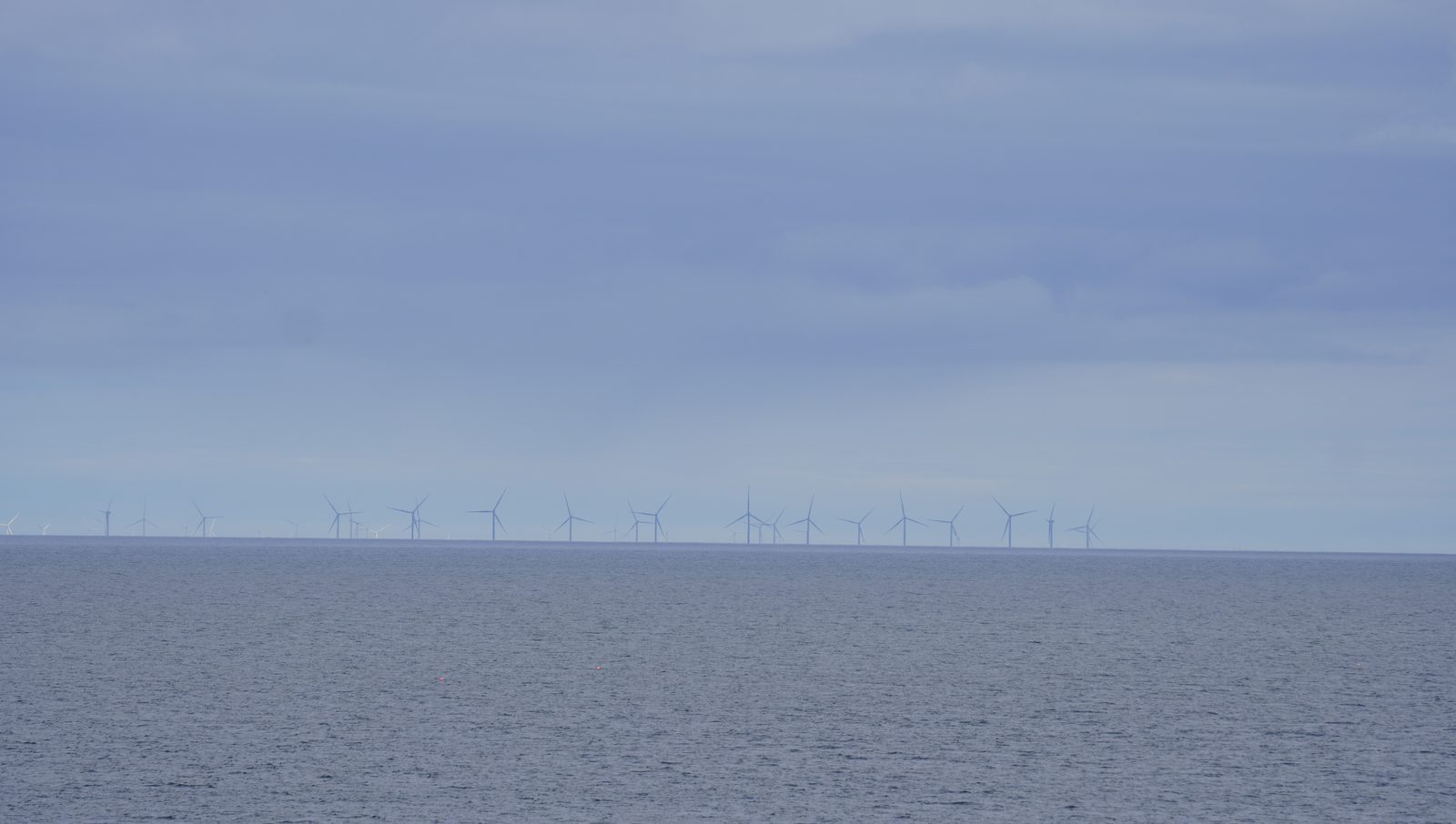
Homeowners who had planned solar installations lost the 30% credit with minimal notice. EV buyers who had planned purchases after September 2025 faced full price without the federal offset. Manufacturing facilities that had committed capital based on multi-year credit expectations faced stranded investment. The compressed timelines were particularly damaging to offshore wind, which requires 5-10 year development cycles.
Documented effects
- EV tax credits ($7,500 new / $4,000 used) terminated for purchases after September 30, 2025; residential solar credit terminated for installations after December 31, 2025 - years ahead of schedule.[3]
- Wind and solar investment/production tax credits restricted to projects that begin construction by July 4, 2026 or are placed in service by the end of 2027.[2][4]
Projected cost to Americans
Cumulative cost if current policy holds: direct federal cost plus the broader economic burden. A conservative, lower-bound estimate (medium confidence).
- So far
- $0
- By 2035
- $139.00B
- By 2040
- $139.00B
How this is calculated: Layer 1 = 0 by design: the federal revenue effect of ending the clean-energy credits (about $496B over ten years per the Peterson Foundation's tally, of which clean-vehicle credits $190B, clean-electricity investment credit $166B, residential clean-energy credit $77B [S2]) is part of P.L. 119-21's net deficit and is booked once, under the obbba-reconciliation-law anchor (economy). Layer 2 is the single place the enacted law's energy provisions' higher household energy bills are booked (clean-energy-investment-collapse books none, to avoid counting them twice): Energy Innovation's modeling of the final Senate text (signed unchanged) finds household energy bills rise $130 a year by 2030 and $170 a year by 2035 [S5]. Interpolating linearly from $0 in 2026 to $130 in 2030 and $170 in 2035 gives ~$1,050 per household over 2027-FY2035; times ~132.8M US households (Census: 38.5M one-person households were 29% of all households in 2024) [S6] = ~$140B, booked as $139B. Not included: Energy Innovation's $980B cumulative GDP loss and 760,000 jobs lost by 2030 (broader and overlapping with other effects), and the value of the credits households no longer receive (see decisions). Medium confidence: one modeling group, linear interpolation.
Why this is rated severe
Terminating or accelerating the phase-out of the major IRA clean-energy credits removed incentives that homeowners, EV buyers and manufacturers had planned around, a severe enacted economic harm nationwide.
Public Law 119-21
Corrections & updates [8]
Every change to a fact on this page after publication is logged here, newest first.
- CorrectedSummary
The wind and solar credit cutoff was misstated. Under Public Law 119-21 (sections 70512-70513), the Section 45Y and 48E credits end for wind and solar facilities placed in service after December 31, 2027, unless construction begins within 12 months of enactment (by July 4, 2026). There was no 'began construction before 2025' test, and the credits are Sections 45Y/48E, not 45/48.[2][4]
- CorrectedSource
The White House release cited for the EV and residential solar cutoffs does not mention clean-energy credits. The dates are confirmed by IRS guidance: 30D and 25E end for vehicles acquired after September 30, 2025; 25D ends for expenditures after December 31, 2025; 25C ends for property placed in service after December 31, 2025.[3]
- CorrectedKey facts
The statement that most canceled investment fell in 'red-state manufacturing communities' is not supported by any cited source and was removed.[2][4]
- CorrectedForeign linkback
Removed an unsourced passage about China and the EU's clean-energy programs; no cited source supports it.[4]
- Previously
- China, which dominates solar panel, battery, and EV supply chains, benefits directly from the retreat of US market incentives. The EU's Green Industrial Plan and China's EV subsidies remain intact, further widening the competitive gap.
- ClarifiedSummary
Removed unsourced characterizations from the short description (a 'domestic manufacturing boom' and 'minimal advance notice'); the dates of the credit terminations are unchanged.[3][4]
+ Show previous and current text- Hide previous and current text
- Previously
- The reconciliation law signed July 4, 2025, terminated major clean-energy incentives driving a domestic manufacturing boom. EV buyers and homeowners planning solar installations lost the federal credits with minimal advance notice.
- Now
- The reconciliation law signed July 4, 2025, ended the EV credits for purchases after September 30, 2025 and the residential solar and home-efficiency credits after December 31, 2025, and cut off wind and solar production and investment credits for projects placed in service after 2027 unless construction began by July 4, 2026.
- ClarifiedSeverity rationale
The severity rationale stated as fact that the change 'stranded investments and raised costs' nationwide; it now describes what the law did and whom it affects. Severity unchanged.
+ Show previous and current text- Hide previous and current text
- Previously
- Repealing IRA clean-energy credits stranded investments and raised costs for homeowners and manufacturers nationwide, a severe enacted economic harm.
- Now
- Terminating or accelerating the phase-out of the major IRA clean-energy credits removed incentives that homeowners, EV buyers and manufacturers had planned around, a severe enacted economic harm nationwide.
- CorrectedDisplay copy
The headline said the law eliminated the IRA clean-energy credits; per the record it terminated or accelerated the phase-out of most of the major credits, so the headline now says 'most'.
- Previously
- Reconciliation law eliminates IRA clean-energy credits
- Now
- Reconciliation law eliminates most IRA clean-energy credits
- CorrectedCost estimate
The broader cost was an unsourced $60B placeholder. It is now based on Energy Innovation's model of the enacted law, which finds household energy bills rise $130 a year by 2030 and $170 a year by 2035. Across about 133 million households that comes to about $139B through FY2035. This entry is now the only place those higher energy bills are counted; the clean-energy-investment entry no longer counts them.
- Previously
- $60B broader 10yr
- Now
- $139B broader 10yr
Sources [4]
- T1White House - President Trump's One Big Beautiful Bill Is Now the Law · Jul 4, 2025 ↗
- T3Columbia University Climate Law Blog - The One Big Beautiful Bill Act: Considerations for Cities and Community Partners · Jul 7, 2025 ↗
- T1US Government Publishing Office - Public Law 119-21 (139 Stat. 72), sections 70511-70513 · Jul 4, 2025 ↗
- T1IRS - FAQs for modification of sections 25C, 25D, 25E, 30C, 30D, 45L, 45W, and 179D under Public Law 119-21 (FS-2025-05) · Aug 21, 2025 ↗
Image: AyaanAhmed4Real, CC BY-SA 4.0 (Wikimedia Commons)