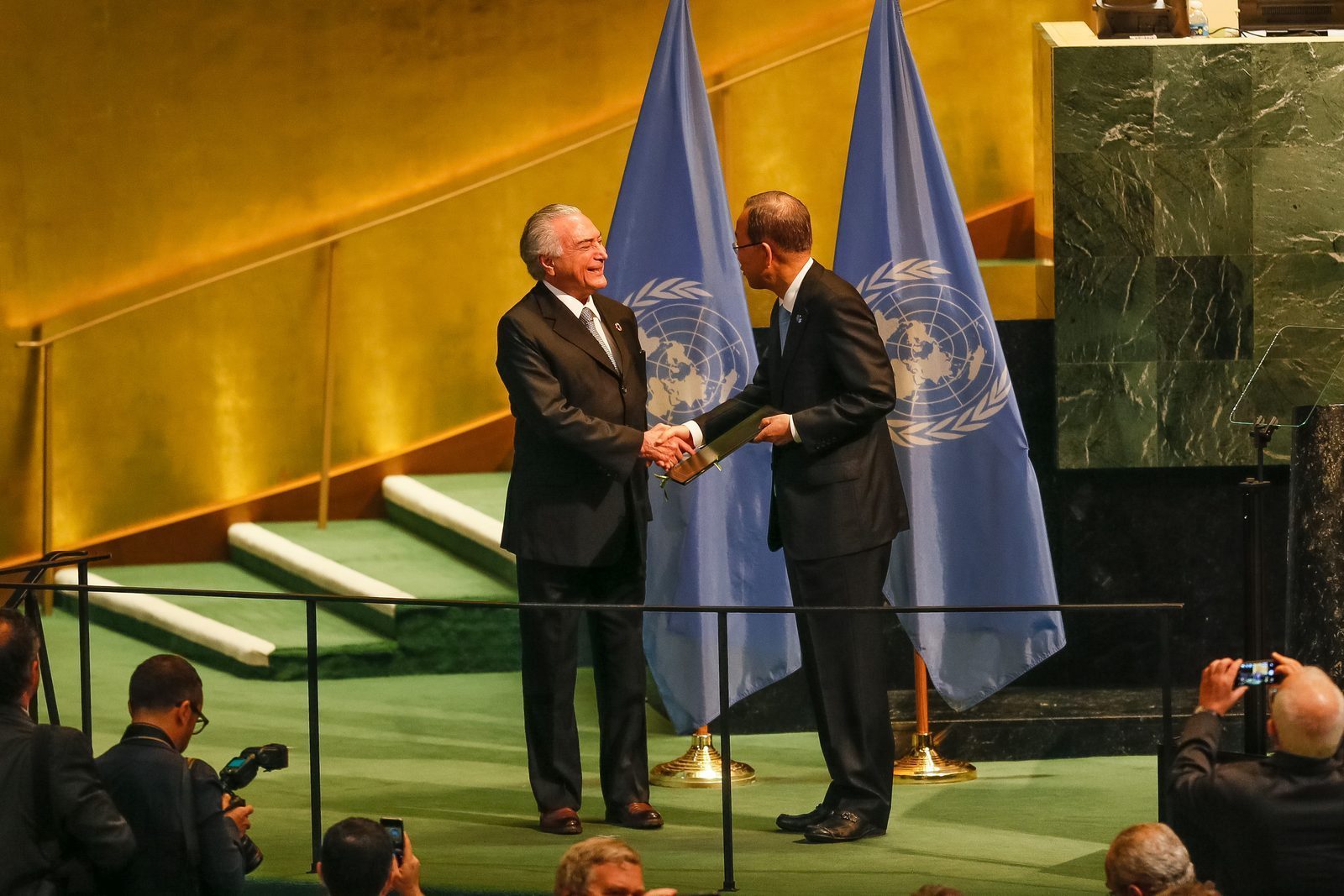
US exits Paris climate accord again
The US left the accord in January 2026; the order also revoked the US international climate-finance plan.
Key facts
- Withdrawal effective Jan 27, 2026
- US climate-finance commitments revoked
- First nation to withdraw twice
Summary
On his first day in office, President Trump signed Executive Order 14162, "Putting America First in International Environmental Agreements," directing immediate US withdrawal from the Paris Agreement. The formal UN withdrawal notification was submitted on 2025-01-27; withdrawal became legally effective on 2026-01-27.
What happened
EO 14162 directed the US Ambassador to the United Nations to submit formal written notice of withdrawal to the UN Secretary-General. Although the order declared the withdrawal effective immediately upon notice, Article 28 of the Paris Agreement required a one-year notice period. The notice was deposited on January 27, 2025, and the US officially departed the accord on January 27, 2026. The order also directed withdrawal from any other agreement or commitment made under the UN Framework Convention on Climate Change and revoked the U.S. International Climate Finance Plan.
Impact on the United States
The order revoked the U.S. International Climate Finance Plan and directed the US to stop or revoke its financial commitments under the UN climate convention. The US emissions-reduction target for 2035 that the Biden administration had announced under the agreement became moot.
Global ripple effects
David Waskow of the World Resources Institute told NPR that leaving the accord could prove damaging by potentially sidelining the US from some clean-energy and green-tech markets and reducing US leverage with other countries.
Documented effects
- US officially departed the Paris Agreement on 2026-01-27, the first nation to withdraw twice. The UN confirmed receipt of the notification in January 2025.[3]
- EO 14162 ordered the immediate cessation or revocation of any US financial commitment made under the UN Framework Convention on Climate Change and revoked the U.S. International Climate Finance Plan.[4]
Why this is rated significant
Exits the global climate agreement and revokes the US international climate-finance plan; near-term realized US harm is institutional and diffuse rather than immediate.
withdrawal effective 2026-01-27
Corrections & updates [8]
Every change to a fact on this page after publication is logged here, newest first.
- CorrectedWhat happened
The entry said the US exit took effect on the same date Trump's first-term withdrawal would have, had Biden not rejoined. That was wrong: the UN depositary record shows the first withdrawal took effect on November 4, 2020, and the second on January 27, 2026. The entry also said the order went through the State Department and revoked all US nationally determined contributions. The executive order text directs the US Ambassador to the UN to give notice. It revokes the U.S. International Climate Finance Plan and orders withdrawal from other commitments under the UN climate convention; it does not mention nationally determined contributions.[3][4][1]
+ Show previous and current text- Hide previous and current text
- Previously
- EO 14162 ordered the State Department to transmit the withdrawal letter to the UN Secretary-General. Under Article 28 of the Paris Agreement, the process required a one-year notice period. The US officially departed the accord on January 27, 2026, the same date Trump's first-term withdrawal would have been effective had Biden not rejoined. The EO also revoked all US nationally determined contributions and directed agencies to cease implementing Paris-related commitments.
- Now
- EO 14162 directed the US Ambassador to the United Nations to submit formal written notice of withdrawal to the UN Secretary-General. Although the order declared the withdrawal effective immediately upon notice, Article 28 of the Paris Agreement required a one-year notice period. The notice was deposited on January 27, 2025, and the US officially departed the accord on January 27, 2026. The order also directed withdrawal from any other agreement or commitment made under the UN Framework Convention on Climate Change and revoked the U.S. International Climate Finance Plan.
- CorrectedKey facts
The entry said the order revoked a $3 billion Green Climate Fund pledge, and added an unclear phrase about congressional critics and exporters. None of the cited sources mentions the Green Climate Fund or a $3 billion figure. The executive order text says the US must stop or revoke any financial commitment made under the UN climate convention, and it revokes the U.S. International Climate Finance Plan.[4]
- CorrectedSource
The effective date and the UN's receipt of the notice were attributed to an NPR article that mentions neither. They are now cited to the UN depositary record (notification C.N.71.2025). The US is the only party the record shows ever withdrawing, which it has now done twice.[3]
- CorrectedUS impact
The previous US-impact text said the withdrawal ended federal climate-risk coordination and procurement standards, and cut FEMA off from early-warning programs "funded through the agreement." No cited source supports any of this. The text now states only what the executive order and NPR document.[4][1]
+ Show previous and current text- Hide previous and current text
- Previously
- Federal agencies lost their legal framework for coordinating climate risk disclosures, infrastructure planning, and international climate finance. Federal procurement climate standards were eliminated. FEMA and other agencies must now plan disaster response without US participation in cooperative early-warning and adaptation programs funded through the agreement.
- Now
- The order revoked the U.S. International Climate Finance Plan and directed the US to stop or revoke its financial commitments under the UN climate convention. The US emissions-reduction target for 2035 that the Biden administration had announced under the agreement became moot.
- CorrectedForeign link
The foreign-impact text said withdrawal exposes US exporters to carbon border taxes such as the EU CBAM and cedes clean-energy industries that were generating tens of thousands of US jobs. No cited source says this. NPR reports the World Resources Institute's David Waskow as saying leaving the accord could sideline the US from some clean-energy and green-tech markets and reduce its leverage with other countries; the text now says only that.[1]
+ Show previous and current text- Hide previous and current text
- Previously
- US withdrawal signals to trading partners that the US does not price carbon, exposing US exporters to growing carbon border adjustment mechanisms (EU CBAM, others). It also cedes leadership of clean-energy standard-setting to the EU and China, accelerating those nations' competitive advantage in solar, wind, and battery manufacturing - industries that were generating tens of thousands of US jobs.
- Now
- David Waskow of the World Resources Institute told NPR that leaving the accord could prove damaging by potentially sidelining the US from some clean-energy and green-tech markets and reducing US leverage with other countries.
- CorrectedSubtitle
The subtitle and summary text said the withdrawal eliminated federal climate coordination, exposed exporters to carbon border taxes and abandoned international emissions coordination. No cited source says this. They now state what the executive order and the UN record document: the US left the agreement on January 27, 2026, and the order revoked the U.S. International Climate Finance Plan.[3][4]
- ClarifiedSeverity rationale
The severity rationale asserted 'real long-term costs' without attribution; it now describes the action. Severity unchanged.
- Previously
- Exits the global climate framework with real long-term costs, but near-term realized US harm is institutional and diffuse rather than immediate.
- Now
- Exits the global climate agreement and revokes the US international climate-finance plan; near-term realized US harm is institutional and diffuse rather than immediate.
- CorrectedCost estimate
Removed all figures. The $1.5B and $50B were built on the EU carbon border tax, but the cited EUR 6B a year is the value of US exports a proposed expansion would cover, not a charge on US firms, and the tax does not depend on Paris membership. The $3B Green Climate Fund narrative had no source. No source puts a dollar cost on the withdrawal itself.
- Previously
- $1.5B so far; $3B / $3B federal 10yr/15yr; $50B broader 10yr
- Now
- $0 on all horizons
Sources [4]
- T2NPR - Trump orders U.S. withdrawal from Paris Agreement, revokes Biden climate actions · Jan 21, 2025 ↗
- T3Columbia Sabin Center for Climate Change Law - Trump Administration Orders Withdrawal from Paris Agreement · Jan 20, 2025 ↗
- T1United Nations Treaty Collection - Paris Agreement (Chapter XXVII, 7.d) - status and depositary notifications · Jan 27, 2025 ↗
- T1Federal Register - Executive Order 14162: Putting America First in International Environmental Agreements · Jan 30, 2025 ↗
Image: Beto Barata/PR (Agência Brasil), CC BY 2.0 (Wikimedia Commons)