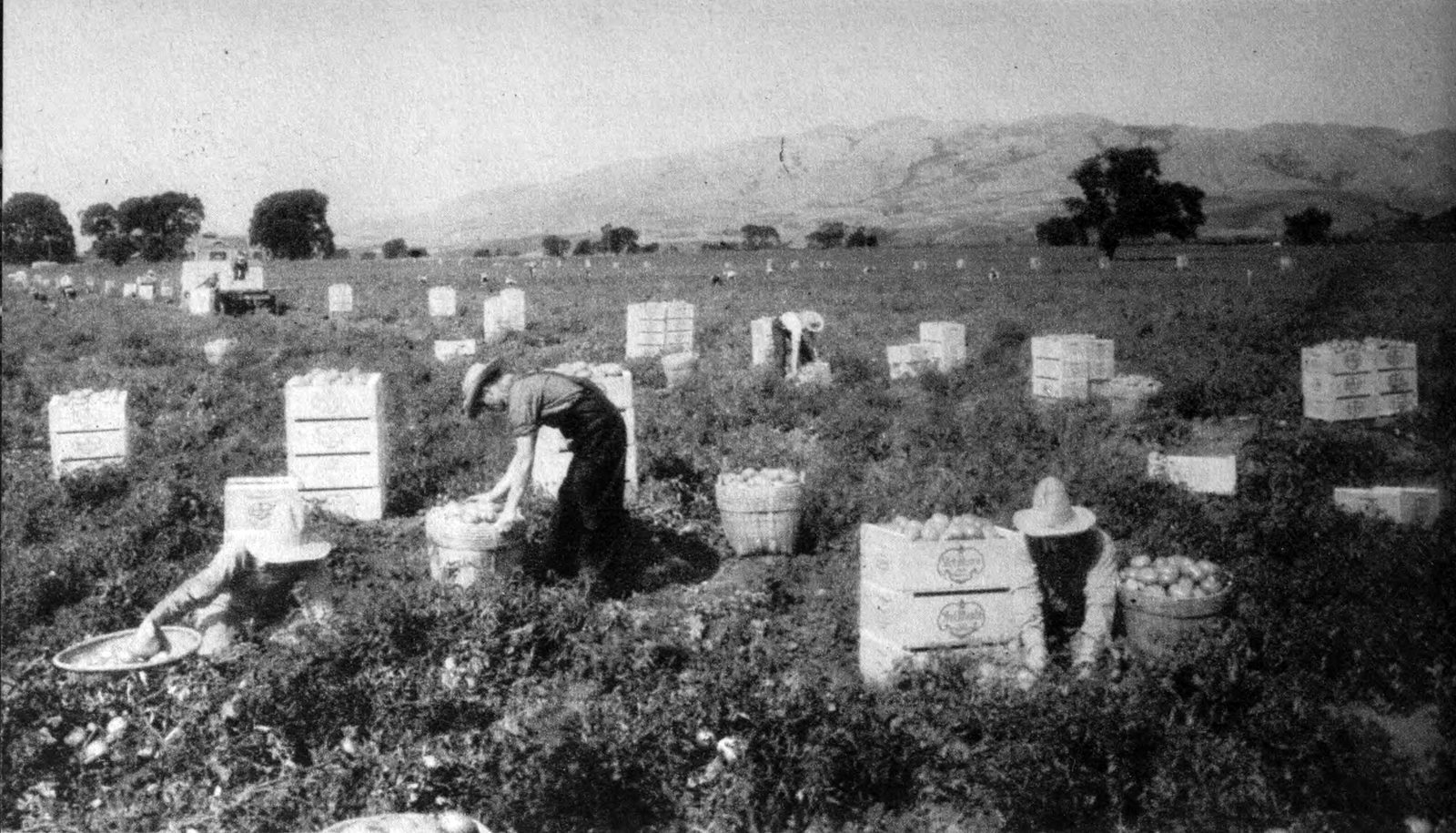
Farm groups say ICE raids are keeping workers away
Farm groups said raids kept workers from the fields; a preprint modeled billions in crop losses in Oxnard.
Key facts
- DHS told ICE to keep raiding farms, ranches and dairies (June 2025)
- Up to 70% of strawberry crops unharvested in some Ventura County fields (preprint)
- Preprint modeled $3-7B a year in Oxnard crop losses and 5-12% higher produce prices
Summary
ICE enforcement operations in agricultural and food-processing communities beginning in mid-2025 drew warnings from farm groups that raids were keeping workers away, disrupting the food supply and pushing up food prices. In June 2025 the Department of Homeland Security told ICE to keep conducting raids on farms, ranches and dairies after President Trump briefly paused them. Bureau of Labor Statistics survey data show agricultural employment fell about 5.7% between March and July 2025, a change the data do not attribute to any single cause.
What happened
ICE stepped up enforcement in Southern California in June 2025; a modeling preprint, citing the Los Angeles Times, reported that ICE arrests in Southern California rose from 699 in May to nearly 2,000 in June 2025. In mid-June the Department of Homeland Security told ICE agents to continue raids on farms, ranches and dairies across the country, after President Trump had briefly paused them following large operations that included the arrest of more than 70 people at a meatpacking facility in Omaha, Nebraska. The preprint (an Oxnard case study, not peer-reviewed) estimated that a 20-40% reduction in the local agricultural workforce would cause $3-7 billion in annual crop losses in Oxnard and a 5-12% increase in produce prices. It cited press reports of unharvested fields in Oxnard and said up to 70% of strawberry crops went unharvested in some Ventura County fields.
Impact on the United States
Bureau of Labor Statistics household-survey data (seasonally adjusted) show agricultural employment fell from 2.353 million in March 2025 to 2.220 million in July 2025 (about 5.7%) and stood at 2.332 million in December 2025; the data do not isolate the effect of enforcement. The head of the Kansas Livestock Association said the raids "disrupt our food supply and contribute to higher food prices" and lead even legal workers to stay home out of fear. A modeling preprint found labor-intensive crops such as strawberries most exposed.
Documented effects
- Bureau of Labor Statistics survey data show agricultural employment fell about 5.7% from March to July 2025 (2.353 million to 2.220 million, seasonally adjusted); a modeling preprint, citing the Los Angeles Times, reported ICE arrests in Southern California rose from 699 in May to nearly 2,000 in June 2025.[3][2]
- Estimated $3-7 billion in annual crop losses in Oxnard and a 5-12% produce price increase, modeled from a 20-40% agricultural workforce reduction (arXiv preprint modeling study, not peer-reviewed).[2]
- A modeling preprint on Oxnard reported up to 70% of strawberry crops unharvested in some Ventura County fields and cited press reports of unharvested fields in Oxnard after the June 2025 raids.[2]
Why this is rated severe
Farm groups said raids kept workers from the fields in food-producing regions, and a modeling preprint estimated billions of dollars in potential crop losses and higher produce prices; a serious economic risk, though BLS data do not isolate the effect of enforcement.
Corrections & updates [6]
Every change to a fact on this page after publication is logged here, newest first.
- CorrectedKey facts
The entry said up to 70% of farm workers were absent on some California farms and attributed this to the KCUR/NPR report. Neither cited source says that. The arXiv preprint (s2) says 'up to 70% of crops unharvested in some fields' for Ventura County strawberries, and it cites Financial Times reporting of unharvested fields in Oxnard. It is a single-author preprint and does not say it is University of California research, so that attribution has been removed.[2]
- CorrectedFigure
Corrected: the entry said agricultural employment fell 6.5% nationally between March and July 2025 and that the raids caused or contributed to that drop. None of the cited sources gives that figure. Bureau of Labor Statistics household-survey data (seasonally adjusted) show agricultural employment of 2.353 million in March 2025 and 2.220 million in July 2025, a decline of about 5.7%, and 2.332 million in December 2025; the data do not measure how much of any change was caused by immigration enforcement. The figure has been replaced, the causal wording removed, and the BLS series added as a source.[3][1]
- CorrectedSummary
Corrected: the entry said about 1,900 ICE arrests were made in Southern California June 6-26, 2025 (88 a day), that about 60% of those arrested had no criminal history, that DHS reported more than 10,000 Los Angeles-area arrests through December, that farmers across California reported up to 70% of workers absent, and that Bloomberg warned of higher food prices. None of the cited sources supports these statements, and they have been removed. The entry now reports what the sources say: a preprint, citing the Los Angeles Times, reported arrests in Southern California rose from 699 in May to nearly 2,000 in June 2025; DHS told ICE to continue farm raids after a brief pause; and the preprint's $3-7 billion estimate is for annual crop losses in Oxnard.[1][2]
- CorrectedSeverity rationale
The severity rationale stated as fact that raids 'disrupted farm labor' causing 'a serious food-security harm'; the record attributes the labor effect to farm groups and notes BLS data do not isolate it. Severity unchanged.[1][2][3]
+ Show previous and current text- Hide previous and current text
- Previously
- Raids disrupted farm labor in food-producing regions, and a modeling preprint estimated billions of dollars in crop losses and higher produce prices, a serious food-security and economic harm.
- Now
- Farm groups said raids kept workers from the fields in food-producing regions, and a modeling preprint estimated billions of dollars in potential crop losses and higher produce prices; a serious economic risk, though BLS data do not isolate the effect of enforcement.
- CorrectedDisplay copy
The headline said raids 'trigger labor shortages'; the record attributes that effect to farm groups and notes BLS data do not isolate the effect of enforcement.[1][3]
- Previously
- ICE worksite raids trigger labor shortages
- Now
- Farm groups say ICE raids are keeping workers away
- CorrectedCost estimate
The $1.5B booked figure rested on inputs that appear in no cited source: a 6.5% employment drop (BLS shows 5.7%, with no link to the raids established), an unsourced crop-value base, and an assumed attribution share. The preprint behind it was also wrongly called peer-reviewed. No sourced dollar estimate remains, so nothing is booked. That is a floor, not a finding of no harm.
- Previously
- net $1.5B so far; 10yr $0.5B; 15yr $0.7B; broader $14B
- Now
- net $0; 10yr $0; 15yr $0; broader $0
Sources [3]
- T2NPR / KCUR - ICE raids push farm workers to stay home 'out of fear.' That could hurt U.S. food production · Jun 23, 2025 ↗
- T3arXiv (preprint, not peer-reviewed) - Quantifying the Economic Impact of 2025 ICE Raids on California's Agricultural Industry: A Case Study of Oxnard · Aug 5, 2025 ↗
- T1U.S. Bureau of Labor Statistics - Employment Level - Agriculture and Related Industries, seasonally adjusted (Current Population Survey series LNS12034560) · Sep 29, 2026 ↗
Image: Federal Writers' Project / Works Progress Administration, Public domain (Wikimedia Commons)