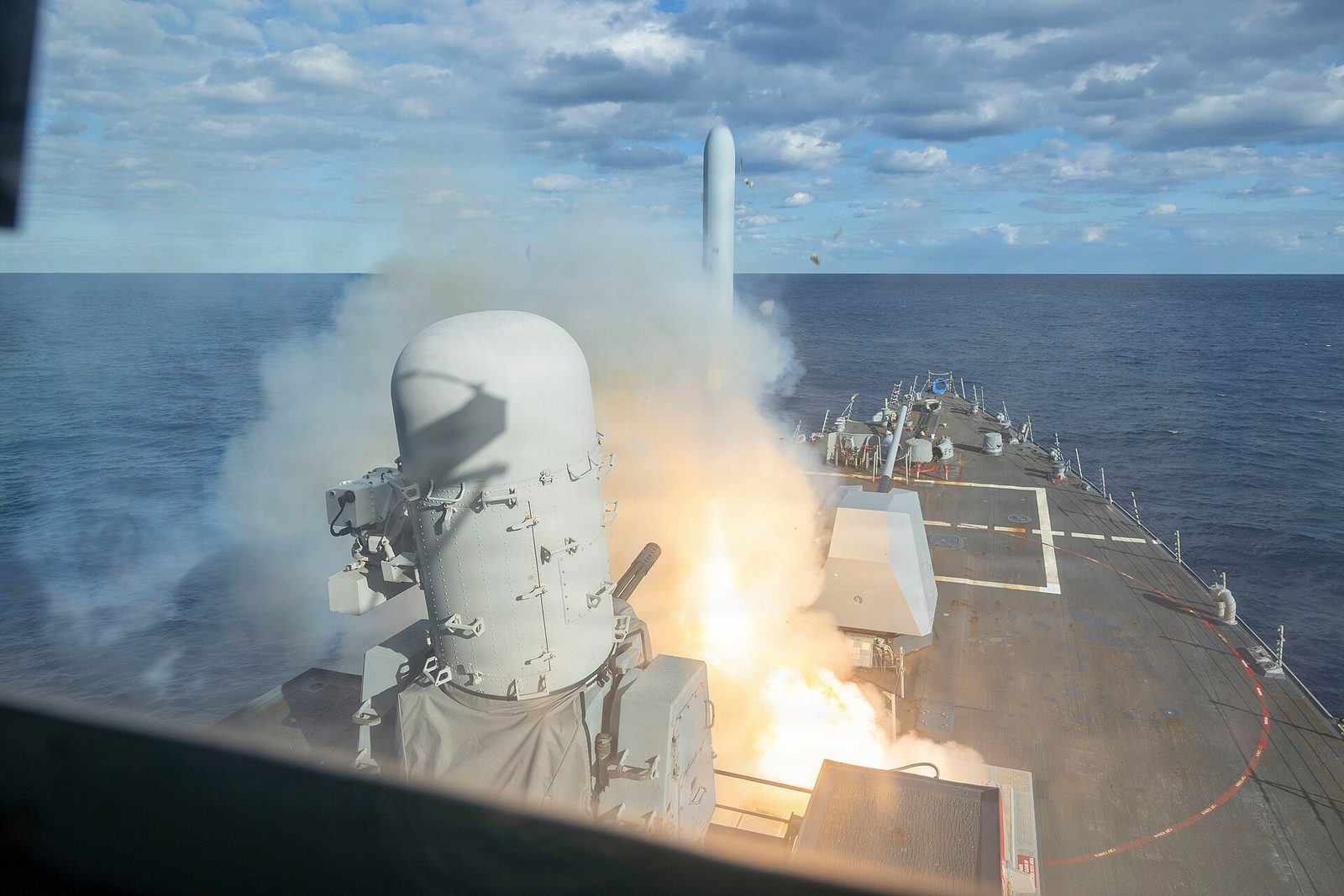
The ceasefire lasted three weeks
On July 8, 2026 Trump declared the June deal 'over' and the Iran war resumed - strikes, a blockade, and an oil spike.
Key facts
- Trump declared the ceasefire over July 8
- US reimposed the Strait of Hormuz blockade
- Brent up ~$13 to almost $85 by July 16; at least 19 US troops killed in the war by Sept 24 (DoD)
Summary
Three weeks after signing a 60-day ceasefire memorandum with Iran, the Trump administration declared the deal 'over' on July 8, 2026 and resumed strikes, sliding back into open conflict over control of the Strait of Hormuz.
What happened
The June 17 Islamabad Memorandum established a 60-day ceasefire, reopened the Strait of Hormuz, lifted the US naval blockade, and (via Treasury General License X, issued June 21) authorized transactions involving Iranian crude oil and petroleum products. The sides remained split over Hormuz: Iran insisted it retained authority over passage while the US expected a fully open waterway. After Iran struck commercial vessels in the strait on July 7, the US rescinded Iran's oil-sales license and, on July 8 at the NATO summit in Ankara, Trump declared the ceasefire over and launched a second strike round of roughly 90 targets. Iran retaliated with attacks on US allies including Qatar, Kuwait and Jordan. The US reinstated the Hormuz naval blockade on July 14, and strikes continued for roughly seven consecutive nights through July 18.
Impact on the United States
Oil prices spiked - oil posted its biggest one-day gain since April on July 8, and by July 16 Brent crude was up about $13 for the month to almost $85 a barrel and WTI more than $10 to just under $80 (CNN) - raising energy costs for US consumers. Commercial traffic through the Strait of Hormuz fell to eight vessels on July 16, the lowest in three weeks (Fox News). US forces and bases across the Gulf (Al Udeid in Qatar and others) were targeted; cumulative US casualties in the 2026 Iran war were reported at roughly 14 service members killed and 427 wounded before a July 17 Iranian attack on a base in Jordan killed three more soldiers; by Sept. 24, 2026 the Defense Department counted at least 19 killed. The Pentagon told Congress the war had cost $43.6 billion through Sept. 3, 2026. The resumption undercut the administration's own signature ceasefire and diplomatic credibility.
Global ripple effects
Reignited a US-Iran war that directly endangered tens of thousands of US troops and multiple bases across the Gulf (Qatar, Kuwait, Saudi Arabia, Jordan, Iraq), spiked global oil prices paid by US consumers, and choked the Strait of Hormuz, through which a large share of the world's oil transits.
Documented effects
- US rescinded Iran's oil-sales license (July 7) and reinstated the naval blockade of Iran (July 14)[5][7]
- Trump declared the ceasefire 'over' at the NATO summit; US launched a second strike round of about 90 targets[2][3][7]
- Iran fired missiles at US allies including Qatar, Kuwait and Jordan, where the government said its air defenses intercepted them[2][4]
- Oil posted its biggest one-day gain since April on July 8; by July 16 Brent was up about $13 for the month to almost $85 and WTI more than $10 to just under $80. Hormuz commercial traffic fell to eight vessels on July 16, the lowest in three weeks[2][4][6]
- Seven consecutive nights of US strikes reported through July 18; cumulative US war casualties were then reported at ~14 killed and 427 wounded, before the soldiers killed in a July 17 attack in Jordan were counted (18 killed by July 21)[6]
- In early September 2026 the US and Iran again exchanged attacks at levels approaching mid-July; CRS counted 18 US service members killed and 824 wounded as of Sept 15, 2026[7]
- An Iranian ballistic missile and drone attack on a base in Jordan on July 17 killed three US soldiers, raising US deaths in the war to 18[8][9]
- The House passed a war powers resolution to end the war 214-208, its second such rebuke; a Senate version failed 47-49 the same day[9]
- After weeks of relative calm (no known US strike from July 29 until Aug. 30 on Larak Island), US forces struck IRGC air-defense, radar, maritime and mine-laying targets near Hormuz on Sept. 1 after an attempted mine-laying; the Pentagon counted 18 US killed and more than 750 wounded[10]
- Pentagon inspector general: the war cost $33.4B from Feb. 28 to June 30 ($22.3B in munitions), with munitions use causing "strategic inventory shortfalls"; CBO: more than $38B through Aug. 1 and up to $3B a month or more, with inflation about 0.5 percentage points higher into early 2027[11][12]
- The Pentagon told Congress the war cost $43.6B through Sept. 3 ($11.2B obligated operating costs plus $32.4B in unfunded replacement costs), excluding damage to US bases and veterans' costs[14]
- The Senate defeated the House-passed war powers resolution 49-50 with four Republicans in favor; a second House resolution drew 220 votes, including a record seven Republicans. The Defense Department counted at least 19 US service members killed[13]
- Trump rejected a seven-day Iranian plan, conveyed through Qatar, to reopen the Strait of Hormuz and resume talks, saying "that deal would not be acceptable"[15]
Projected cost to Americans
Cumulative cost if current policy holds: direct federal cost plus the broader economic burden. A conservative, lower-bound estimate (low confidence).
- So far
- $10.20B
- By 2035
- $22.00B
- By 2040
- $22.00B
How this is calculated: Booked = DERIVED increment (method stated): the Pentagon's all-war estimate to Congress of $43.6B through Sept. 3, 2026 [S1] minus the $33.4B DoD IG figure booked to iran-war-hormuz-2026 (through June 29/30) [S2] = $10.2B for roughly July 1 - Sept. 3. The two war blocks therefore sum to exactly $43.6B, the Pentagon's latest official total, with no double counting. Caveat: the two figures use different accounting (IG: expended munitions + obligations + equipment losses; Comptroller: $11.2B obligated operating expenses + $32.4B unfunded replacement costs), so the split between the two events is approximate even though the combined total is official. CBO (more than $38B through Aug. 1) is consistent with both [S3]. 10yr adds about four further months of operations (Sept. 3 - Dec. 31, 2026) at CBO's "$3 billion a month or more" [S3] = ~$12B, giving ~$22B, assuming no major re-escalation and no end-2026 settlement; low confidence because the war has no end date. The long tail (rebuild, veterans' care) stays in the iran-war-hormuz-2026 forecast, so 15yr = 10yr here. Layer 2 = 0: the fuel-price shock is booked under iran-war-gas-price-spike. The $67.1B DoD supplemental request [S1] (part of the $87.6B June request, of which CBO counts $42.3B as conflict-related [S3]) is not added: it is an unenacted request and overlaps the costs booked here.
Why this is rated critical
The war resumed three weeks after the June 17 ceasefire: the US declared the ceasefire over and resumed strikes, US bases and troops across the Gulf were attacked, oil prices rose and Strait of Hormuz traffic fell, and the Defense Department counted at least 19 US service members killed in the war by Sept. 24, 2026.
after an August lull, US strikes resumed Aug. 30 - Sept. 1, 2026; on Sept. 26 Trump rejected an Iranian plan to reopen the Strait of Hormuz; no ceasefire as of late September 2026
Corrections & updates [7]
Every change to a fact on this page after publication is logged here, newest first.
- UpdatedCost estimate
The earlier figure was a rough order-of-magnitude estimate. It is replaced with a figure derived from official totals: the Pentagon's $43.6B cost of the war through Sept. 3, 2026, minus the $33.4B the Inspector General attributes to the period before July. The projection now uses CBO's estimate of "$3 billion a month or more". Both are estimates, low confidence.
- Previously
- ~$5B so far; ~$5B over 10 years
- Now
- ~$10.2B so far; ~$22B over 10 years
- CorrectedDate
Two dates were off. CRS (R48887, updated Sept. 18, 2026) says General License X was issued on June 21 (not June 22), and that the naval blockade was reinstated on July 14; the entry had combined the blockade with the July 7 license rescission.[7][5]
- UpdatedKey facts
Casualties and fighting continued after publication. CRS reports 18 US service members killed and 824 wounded as of Sept. 15, 2026 (the entry's 14 killed / 427 wounded was AP's count as of July 18), and that in early September 2026 the US and Iran 'again exchanged attacks at levels approaching that of mid-July.'[7]
- UpdatedStatus
Updated: the war has continued. A July 17 Iranian missile and drone attack on a base in Jordan killed three US soldiers; after an August lull, US strikes resumed Aug. 30 and Sept. 1; the Defense Department counted at least 19 US service members killed by Sept. 24; and on Sept. 26 Trump rejected an Iranian plan to reopen the Strait of Hormuz. The Pentagon puts the war's cost at $43.6 billion through Sept. 3.[8][10][13][14][15]
- ClarifiedKey facts
The July 18 casualty count (about 14 killed, 427 wounded) predates the Pentagon's confirmation of the soldiers killed in the July 17 attack in Jordan; the effect now says so. AP (via The Guardian) reported on July 21 that the confirmed toll had reached 18.[8]
+ Show previous and current text- Hide previous and current text
- Previously
- Seven consecutive nights of US strikes reported through July 18; cumulative US war casualties ~14 killed, 427 wounded
- Now
- Seven consecutive nights of US strikes reported through July 18; cumulative US war casualties were then reported at ~14 killed and 427 wounded, before the soldiers killed in a July 17 attack in Jordan were counted (18 killed by July 21)
- CorrectedFigure
Oil-price figures (Brent +5% to ~$78, intraday +8.7% to ~$80.6; WTI +4.4% to ~$73.5) came from a paywalled Bloomberg article that could not be read, and the "about 9%" spike repeated them; they are replaced with what CNN reported: oil posted its biggest one-day gain since April on July 8, and by July 16 Brent was up about $13 for the month to almost $85 and WTI more than $10 to just under $80. Hormuz traffic "about 8 vessels a day" is narrowed to what Fox News reported (eight vessels on July 16, the lowest in three weeks). A UAE tanker crew member's death and attacks on Iraqi Kurdish areas are not in any cited source and are removed. The oil-sales waiver is described as CRS does (General License X, issued June 21) without the unsupported "through August 21".[2][4][6][7]
- ClarifiedSeverity rationale
The severity rationale characterized the collapse as 'a self-inflicted reversal' of the administration's deal; it now states the documented sequence and effects without that characterization. Severity unchanged.
+ Show previous and current text- Hide previous and current text
- Previously
- Reignited a regional shooting war three weeks after the ceasefire; US bases and troops across the Gulf were attacked, oil prices surged, and the Strait of Hormuz was choked - a self-inflicted reversal of the administration's own June 17 deal.
- Now
- The war resumed three weeks after the June 17 ceasefire: the US declared the ceasefire over and resumed strikes, US bases and troops across the Gulf were attacked, oil prices rose and Strait of Hormuz traffic fell, and the Defense Department counted at least 19 US service members killed in the war by Sept. 24, 2026.
Sources [15]
- T2Bloomberg - US, Iran Escalate Attacks, Undermining Ceasefire and Pressuring Oil Prices · Jul 17, 2026 ↗
- T2CNN - US-Iran ceasefire crumbles as fresh strikes rock Middle East · Jul 9, 2026 ↗
- T2Axios - Trump says Iran talks will continue, but 'ceasefire is OVER' · Jul 10, 2026 ↗
- T2CNN - Qatar, Kuwait fend off fresh attacks, US continues Iran strikes · Jul 16, 2026 ↗
- T2ABC News - How the US-Iran ceasefire and MOU broke down - a timeline · Jul 9, 2026 ↗
- T2Fox News - Iran strikes US allies, Brent crude oil prices continue to rise · Jul 17, 2026 ↗
- T1Congressional Research Service - U.S. Conflict with Iran (R48887) · Sep 18, 2026 ↗
- T2The Guardian (Associated Press) - US military identifies third soldier killed in Iranian attack on Jordan base · Jul 21, 2026 ↗
- T2NPR - For a 2nd time, House approves resolution to end the war in Iran in a rebuke to Trump · Jul 23, 2026 ↗
- T2Stars and Stripes - US forces strike IRGC targets in Iran, CENTCOM says · Sep 1, 2026 ↗
- T2CBS News - Pentagon inspector general says $22.3B spent on Iran war munitions has caused "strategic inventory shortfalls" · Sep 15, 2026 ↗
- T2PBS News / Associated Press - Iran war has cost the U.S. more than $38 billion so far, budget office says · Sep 16, 2026 ↗
- T2NPR - In one of their last votes before November, Senate GOP blocks effort to end Iran war · Sep 24, 2026 ↗
- T2Roll Call - Pentagon's latest Iran war cost estimate: $43.6 billion · Sep 18, 2026 ↗
- T2NPR - Trump rejects plan to reopen Strait of Hormuz · Sep 26, 2026 ↗
Image: U.S. Navy, Public domain (Wikimedia Commons)