US strikes Iran's nuclear sites; ceasefire
Iran's enriched uranium stockpile location remains unaccounted for after the strikes.
Key facts
- 7 B-2 bombers, 14 bunker-buster MOPs, 24+ Tomahawks deployed June 21, 2025
- Iran retaliated with ~14 missiles on Al Udeid Air Base June 23
- ~400 kg of 60%-enriched uranium stockpile location unaccounted for
Summary
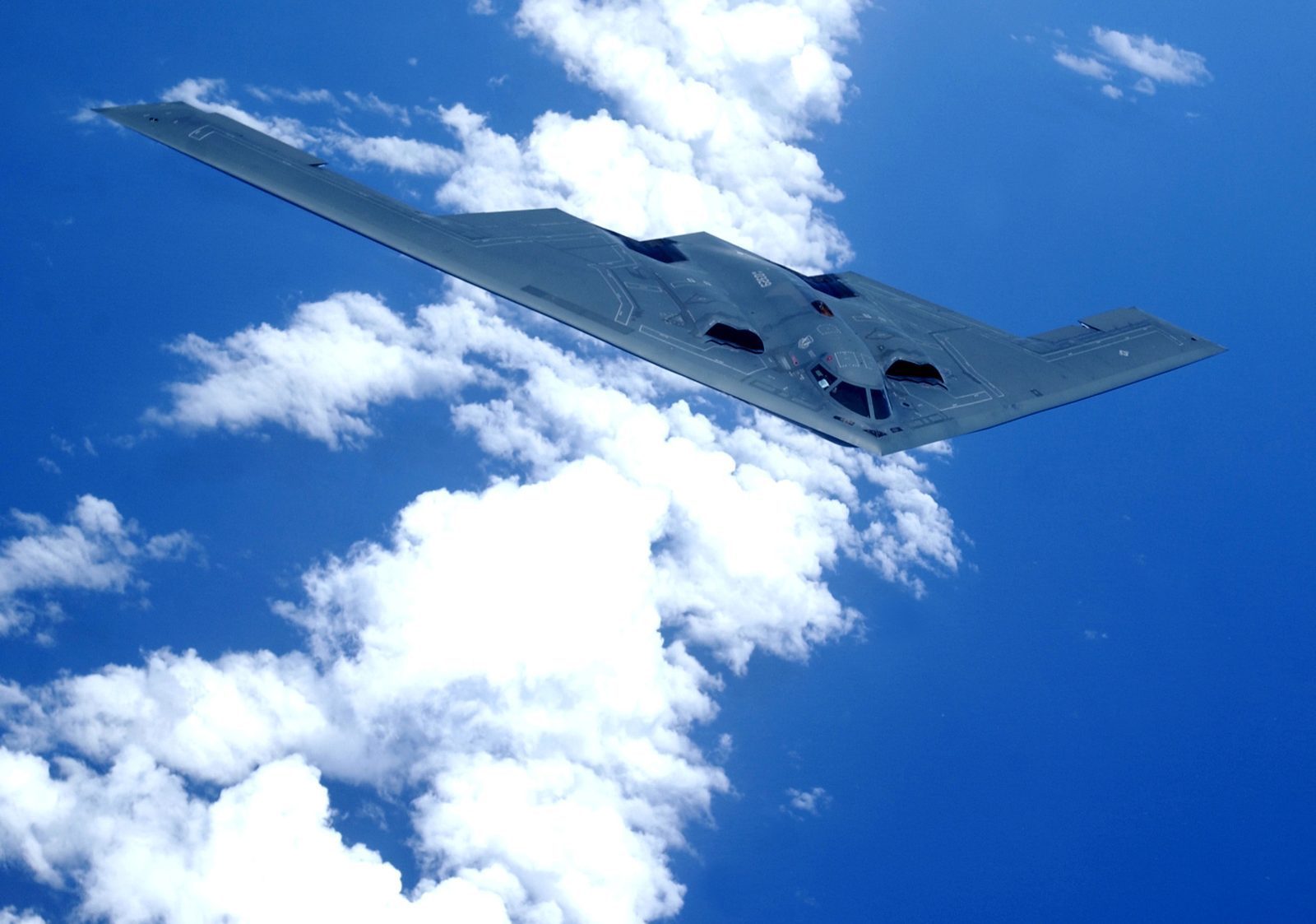
On June 21, 2025, the United States launched Operation Midnight Hammer - seven B-2 stealth bombers, 14 GBU-57 Massive Ordnance Penetrator bunker-busters, and over two dozen Tomahawk cruise missiles - against Iran's nuclear facilities at Fordow, Natanz, and Isfahan. Iran retaliated two days later with ballistic missile strikes on Al Udeid Air Base in Qatar, which is home to thousands of US troops.
What happened
Seven B-2 Spirit bombers flew from Whiteman AFB in Missouri, refueled in flight over 18 hours, and launched at approximately 6:40 p.m. ET (2:10 a.m. Iran time). The 14 GBU-57 MOPs targeted the deeply buried Fordow and Natanz facilities; Tomahawk cruise missiles launched from a submarine struck Isfahan's nuclear technology center. Over 125 US aircraft participated total. Pentagon Chairman Gen. Dan Caine said "all three sites sustained extremely severe damage." On June 23, Iran's IRGC Aerospace Force launched approximately 14 ballistic missiles at Al Udeid Air Base in Qatar (Operation Glad Tidings of Victory); Qatar said its air defenses intercepted the rest and one missile got through, damaging a radome. Zero US casualties were confirmed. A ceasefire ending the "Twelve-Day War" was brokered by late June 2025. However, the IAEA-assessed stockpile of about 400 kg of 60%-enriched uranium was not accounted for; VP Vance said Iran still controlled the stockpile and that the administration would work to ensure something was done with that fuel.
Impact on the United States
US forces at Al Udeid - the largest US military base in the Middle East - came under direct Iranian ballistic missile fire; one missile got through and damaged a radome. Iran's parliament voted to close the Strait of Hormuz, a route for approximately 20% of the world's oil supply (CSIS); oil prices jumped more than 10% during the hostilities before falling back after Iran's limited retaliation (CNN). The unaccounted-for enriched uranium stockpile constitutes an ongoing proliferation risk affecting US national security. Senior House Democrats planned a War Powers Resolution to end US involvement, while House Speaker Mike Johnson called such efforts "kind of a moot point now" (CNN).
Global ripple effects
Iran's uranium enrichment was at 60% purity at the time of the strikes; CSIS notes Iran resumed enrichment at Fordow after the 2018 US withdrawal from the JCPOA. CSIS also notes that with Fordow and Natanz disabled, Iran would need new or repaired centrifuges or a covert enrichment facility to take its 60%-enriched stockpile to weapons grade, and CRS reports the IAEA has not been able to conduct safeguards at the Iranian nuclear facilities struck in 2025 - an unresolved standoff that preceded the 2026 US-Iran war (see iran-war-hormuz-2026).
Documented effects
- Seven B-2 bombers, 125+ aircraft, 14 MOPs, and 24+ Tomahawks struck Fordow, Natanz, and Isfahan - June 21, 2025[1]
- Iran launched 14 ballistic missiles at Al Udeid Air Base - June 23, 2025; one got through and damaged a radome, with no US casualties[4][5]
- Iran's ~400 kg of 60%-enriched uranium (IAEA estimate) not accounted for after the strikes; VP Vance said Iran still controlled the stockpile - June 2025[3]
- Iran's parliament voted to close the Strait of Hormuz (final decision rested with its Supreme National Security Council)[3]
- Ceasefire brokered, ending the "Twelve-Day War" - late June 2025[5]
Projected cost to Americans
Cumulative cost if current policy holds: direct federal cost plus the broader economic burden. A conservative, lower-bound estimate (medium confidence).
- So far
- $2.04B
- By 2035
- $2.04B
- By 2040
- $2.04B
How this is calculated: A single, resolved military operation (Operation Midnight Hammer, June 2025), so 10yr = 15yr = booked. The earlier ~$2.6B added an unsourced residual for munitions replenishment and repair of Al Udeid Air Base after Iran's retaliation; no published figure for either was found, so none is added (Costs of War's estimate already includes the operation's munitions). The 2026 war is booked separately under iran-war-hormuz-2026. Layer 2 = 0: long-run non-proliferation and regional-security effects are indeterminate in sign and not monetized. [S1]
Why this is rated critical
The strikes risked regional war, placed thousands of US troops under direct missile fire, and left Iran's ~400 kg stockpile of 60%-enriched uranium unaccounted for, a continuing proliferation risk.
Twelve-Day War ceasefire; Iran's uranium stockpile unaccounted for and IAEA access lapsed, contributing to the Feb 2026 war - see iran-war-hormuz-2026
Corrections & updates [9]
Every change to a fact on this page after publication is logged here, newest first.
- CorrectedKey facts
The entry said Iran's June 23, 2025 missile attack left Al Udeid's Combined Air Operations Center temporarily inoperable. That damage happened during the 2026 war, not in 2025: Air & Space Forces Magazine reports the CAOC was struck 'during the early weeks of the war' that began Feb. 28, 2026, and that of the 14 missiles fired in June 2025 'only one... got through, damaging a radome.' The Wikipedia page previously cited for this has been replaced.[4][5]
- CorrectedSource
The ceasefire effect cited the CBS Pentagon-briefing article, which does not mention the ceasefire; it now cites Al Jazeera, which reports Trump announced the Israel-Iran ceasefire about two hours after Iran's strike on Al Udeid. The CSIS analysis was dated June 1, 2025; it was published June 23, 2025.[5][3]
- ClarifiedFigure
The entry said Al Udeid hosts 'approximately 10,000 US personnel.' None of the cited sources gives that number; CNN's June 23, 2025 coverage describes the base as 'home to thousands of US troops.' Wording changed to match.[6]
- ClarifiedSummary
The entry said the stockpile's being unaccounted for was 'a fact VP Vance acknowledged publicly.' CSIS reports Vance said Iran still controls the stockpile and the administration would work 'to ensure that it does something with that fuel'; the ~400 kg figure is the IAEA's assessment. The Hormuz effect said oil markets spiked; the cited CSIS piece reports only that Iran's parliament voted to close the strait, with the final decision resting with the Supreme National Security Council.[3]
- CorrectedForeign linkback
The entry stated that the US "created the very threat" it attacked, that the strikes damaged relations with Gulf partners and undermined diplomatic tools, and that a reconstituted program is "more likely to be covert" - none of which a cited source states. CSIS reports Iran resumed enrichment at Fordow after the 2018 US withdrawal from the JCPOA and that, with Fordow and Natanz disabled, Iran would need new or repaired centrifuges or a covert facility to enrich its 60% stockpile to weapons grade; CRS reports the IAEA has not been able to conduct safeguards at the facilities struck. The text now says that.[3][7]
+ Show previous and current text- Hide previous and current text
- Previously
- Iran's uranium enrichment was at 60% purity at the time of the strikes - a direct consequence of the 2018 US withdrawal from the JCPOA - meaning the US created the very threat it then paid the cost of military action to address. The strikes damaged US relations with Gulf Arab partners who did not want conflict near their territory, and undermined the credibility of diplomatic tools for future arms-control negotiations. Any surviving or reconstituted Iranian nuclear capability under a post-strike regime is more likely to be covert and less accessible to future diplomatic resolution.
- Now
- Iran's uranium enrichment was at 60% purity at the time of the strikes; CSIS notes Iran resumed enrichment at Fordow after the 2018 US withdrawal from the JCPOA. CSIS also notes that with Fordow and Natanz disabled, Iran would need new or repaired centrifuges or a covert enrichment facility to take its 60%-enriched stockpile to weapons grade, and CRS reports the IAEA has not been able to conduct safeguards at the Iranian nuclear facilities struck in 2025 - an unresolved standoff that preceded the 2026 US-Iran war (see iran-war-hormuz-2026).
- CorrectedUS impact
The entry said Congress "was not consulted in advance" and that the Hormuz closure threat raised oil prices; no cited source says either. CNN reported oil prices jumped more than 10% during the hostilities and fell back after Iran's limited retaliation, and that senior House Democrats planned a War Powers Resolution while Speaker Mike Johnson called such efforts "kind of a moot point now." The unsupported statements are replaced with those reported facts.[3][6]
+ Show previous and current text- Hide previous and current text
- Previously
- US forces at Al Udeid - the largest US military base in the Middle East - came under direct Iranian ballistic missile fire; one missile got through and damaged a radome. The Strait of Hormuz (through which approximately 20% of global oil supply transits) was threatened with closure by Iran's parliament, raising oil prices and directly raising costs for American consumers. The unaccounted-for enriched uranium stockpile constitutes an ongoing proliferation risk affecting US national security. Congress was not consulted in advance, raising war-powers separation-of-powers concerns.
- Now
- US forces at Al Udeid - the largest US military base in the Middle East - came under direct Iranian ballistic missile fire; one missile got through and damaged a radome. Iran's parliament voted to close the Strait of Hormuz, a route for approximately 20% of the world's oil supply (CSIS); oil prices jumped more than 10% during the hostilities before falling back after Iran's limited retaliation (CNN). The unaccounted-for enriched uranium stockpile constitutes an ongoing proliferation risk affecting US national security. Senior House Democrats planned a War Powers Resolution to end US involvement, while House Speaker Mike Johnson called such efforts "kind of a moot point now" (CNN).
- CorrectedSeverity rationale
The rationale called this "the first US strike on a nation's nuclear program"; the cited sources describe it as the first operational use of the GBU-57 bunker-buster, not the first such strike. The superlative is removed.[1][3]
+ Show previous and current text- Hide previous and current text
- Previously
- The first US strike on a nation's nuclear program risked regional war, placed thousands of US troops under direct missile fire, and created proliferation risk.
- Now
- The strikes risked regional war, placed thousands of US troops under direct missile fire, and left Iran's ~400 kg stockpile of 60%-enriched uranium unaccounted for, a continuing proliferation risk.
- CorrectedSummary
The summary text said the Qatar base hosted 10,000 troops; CNN reports Al Udeid is home to thousands of US troops (Air & Space Forces Magazine describes living quarters for over 10,000, a capacity figure). It also called the strike "historic"; that characterization is removed.[6]
- CorrectedCost estimate
The cited Costs of War estimate is $2.04B-$2.25B; the entry had rounded $2.04B up to $2.3B and added an unsourced $0.3B for munitions restocking and base repairs. It now books the $2.04B lower-end estimate.
- Previously
- $2.3B booked; $2.6B 10/15-yr
- Now
- $2.04B booked; $2.04B 10/15-yr
Sources [6]
- T2CBS News - Pentagon reveals how B-2 bombers struck Iran nuclear sites in mission dubbed 'Operation Midnight Hammer' · Jun 22, 2025 ↗
- T3CSIS - What Operation Midnight Hammer Means for the Future of Iran's Nuclear Ambitions · Jun 23, 2025 ↗
- T3Air & Space Forces Magazine - US Air Operations Center in Qatar Was Severely Damaged by Iran · Jun 5, 2026 ↗
- T2Al Jazeera - The '12-Day War' ended with an attack on Qatar. Why didn't it escalate? · Jun 25, 2025 ↗
- T2CNN - June 23, 2025 - Israel-Iran conflict (live updates) · Jun 23, 2025 ↗
- T1Congressional Research Service - U.S. Conflict with Iran (R48887) · Sep 18, 2026 ↗
Image: Tech. Sgt. Cecilio Ricardo, U.S. Air Force, Public Domain (B2_spirit.jpg)