IRS loses 31% of auditors nationwide
Buyouts and firings cost the IRS nearly a third of its auditors, the agents who typically handle wealthy and corporate taxpayers.
Key facts
- 3,600 revenue agents (31%) lost by March 2025
- Yale Budget Lab projects $323B in forfeited revenue over decade
- Each $1 auditing top 0.1% can return ~$26, per advocacy group Better IRS
Summary
By the end of March 2025, the IRS had lost approximately 3,600 tax auditors - 31% of all revenue agents - through layoffs and deferred resignations during DOGE's cost-cutting push, according to a May 2025 Treasury Inspector General for Tax Administration report. Plans at the time called for trimming as much as 40% of the IRS workforce in 2025.
What happened
Auditors, customer service staff, IT personnel, and enforcement specialists departed en masse. A Treasury Inspector General for Tax Administration report (released May 2, 2025) found that the IRS lost 31% of revenue agents in the first months of 2025. The Yale Budget Lab projected $323 billion in forfeited revenue over the decade from reduced compliance and auditing.
Impact on the United States
Revenue agents typically handle cases involving wealthy taxpayers or corporations, experts told CBS News, so losing nearly a third of them weakens enforcement for those taxpayers; one expert warned that taxpayers who see little risk of audit may stop paying or filing. The federal deficit grows as IRS capacity shrinks. Every $1 spent auditing the top 0.1% of earners can return about $26 in tax revenue, according to an analysis by the advocacy group Better IRS cited by CBS News.
Documented effects
- IRS lost approximately 3,600 revenue agents (31%) in the first three months of 2025, per a Treasury Inspector General for Tax Administration report issued May 2, 2025.[1]
- Yale Budget Lab projected $323 billion in forfeited tax revenue over ten years from reduced IRS auditing and compliance activity.[1]
- An updated Yale Budget Lab analysis (April 2026) estimated that the reduction of almost 28,000 IRS staff in 2025 decreases federal revenue by $597.8 billion over 2026-2035.[3]
Projected cost to Americans
Cumulative cost if current policy holds: direct federal cost plus the broader economic burden. A conservative, lower-bound estimate (medium confidence).
- So far
- $17.70B
- By 2035
- $597.80B
- By 2040
- $1.08T
How this is calculated: This is the single largest direct-federal figure in the file. All numbers come from the Yale Budget Lab's Table 1 (April 2026, dataset published with the report), which models the almost 28,000-person reduction in the IRS workforce in 2025 year by year over the 2026-2035 budget window: gross foregone revenue $643.2B, minus $45.5B in payroll/operating savings, = $597.8B net deficit increase, so net_cost_10yr_usd = 597,800,000,000. The yearly net path rises from $23.6B (2026) to $97.2B (2035). For 15yr (through 2040), Yale reports $1,197.7B net for 2036-2045 (about $120B/yr on average); we conservatively hold the 2035 net of $97.2B/yr flat for 2036-2040 (5 x $97.2B = $486.0B), giving $597.8B + $486.0B = ~$1,083.8B. Yale's separate $20B IRS funding clawback ($262.8B net over 2026-2035; $860.6B combined) is a distinct appropriations action and is NOT booked here or elsewhere. broader_cost_10yr_usd = 0: the harm is lost federal revenue (Layer 1). Yale says its estimates potentially understate the effect (tax-code complexity, IRS-ICE data sharing not modeled).
Why this is rated severe
The loss of 31% of revenue agents, which the Yale Budget Lab projects will cost hundreds of billions of dollars in forgone revenue over a decade, is a severe fiscal harm.
Corrections & updates [7]
Every change to a fact on this page after publication is logged here, newest first.
- CorrectedDate
The TIGTA report (released May 2, 2025) covered losses through March 2025, not May: 31% of revenue agents, about 3,600 auditors, left in the first three months of 2025. The entry's "up to 20%" workforce-cut figure was unsupported; CBS News reported plans to trim as much as 40% of the IRS workforce in 2025.[1]
- CorrectedSource
The Yale Budget Lab $323 billion estimate is reported in the CBS News source, which is now cited for it. The Center on Budget and Policy Priorities is a specialist policy-analysis group and is relabeled Tier 3.[1]
- ClarifiedKey facts
The "$26 per $1" audit-return figure comes from an analysis by Better IRS, an advocacy group, as cited by CBS News; it is now attributed.[1]
- UpdatedFigure
In an updated April 2026 analysis, the Yale Budget Lab estimated that the reduction of almost 28,000 IRS staff in 2025 decreases federal revenue by $597.8 billion over 2026-2035, up from its earlier $323 billion estimate.[3]
- CorrectedWhat happened
Removed two statements no cited source supports: that phone wait times grew dramatically and that IRS staff were told they lacked time to review certain cases. The entry also stated as fact that reduced enforcement disproportionately benefits the wealthy; it now attributes the point as CBS News reported it: revenue agents typically handle cases involving wealthy taxpayers or corporations, experts said. The summary card no longer calls the cuts 'DOGE layoffs' - CBS reports the auditors left through deferred resignation or firing during DOGE's cost-cutting push.[1]
- CorrectedSeverity rationale
The severity rationale called the revenue loss 'realized', but the figure is a Yale Budget Lab projection; it now says so. Severity unchanged.[1][3]
- Previously
- Loss of 31% of auditors projected to cost hundreds of billions in uncollected revenue, a severe and realized fiscal harm to the Treasury.
- Now
- The loss of 31% of revenue agents, which the Yale Budget Lab projects will cost hundreds of billions of dollars in forgone revenue over a decade, is a severe fiscal harm.
- CorrectedCost estimate
The booked so-far IRS figure was a modeled estimate with no published source. It now uses the Yale Budget Lab's own year-by-year table: $23.6B net for fiscal 2026 ($27.5B lost revenue minus $3.9B payroll savings), of which three quarters ($17.7B) is booked through mid-2026. The 10-year figure ($597.8B) is unchanged. The 15-year figure was built on a wrong late-decade run-rate ($60B/yr); Yale's table shows $97.2B in 2035, which we now hold flat through 2040.
- Previously
- $125.5B net so far ($130B lost, $4.5B saved); $850B through 2040
- Now
- $17.7B net so far ($20.6B lost, $2.9B saved); $1.08T through 2040
Sources [3]
- T2CBS News - The IRS has lost almost one-third of its tax auditors after 2 months of DOGE cuts, report says · May 5, 2025 ↗
- T3Center on Budget and Policy Priorities - On Tax Day, Reject DOGE-Led Cuts to the IRS Workforce and Budget · Apr 15, 2025 ↗
- T3Yale Budget Lab - A Weakened IRS Has Substantial Consequences · Apr 13, 2026 ↗
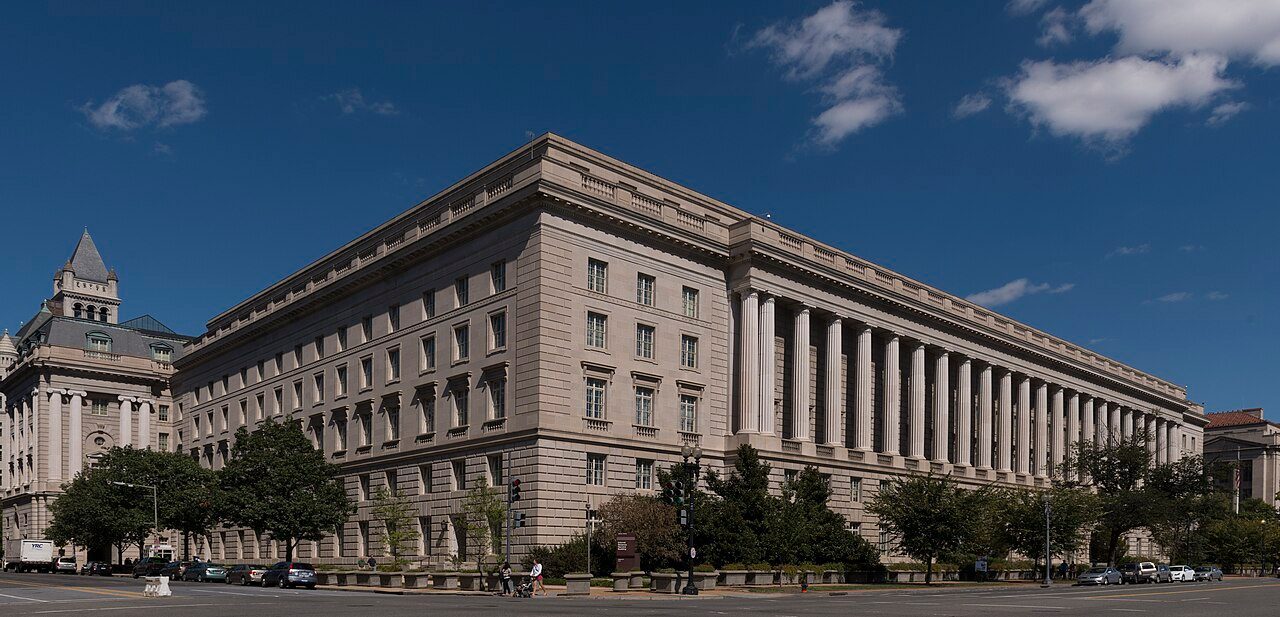
Image: Carol M. Highsmith, Public Domain (Wikimedia Commons / Library of Congress)