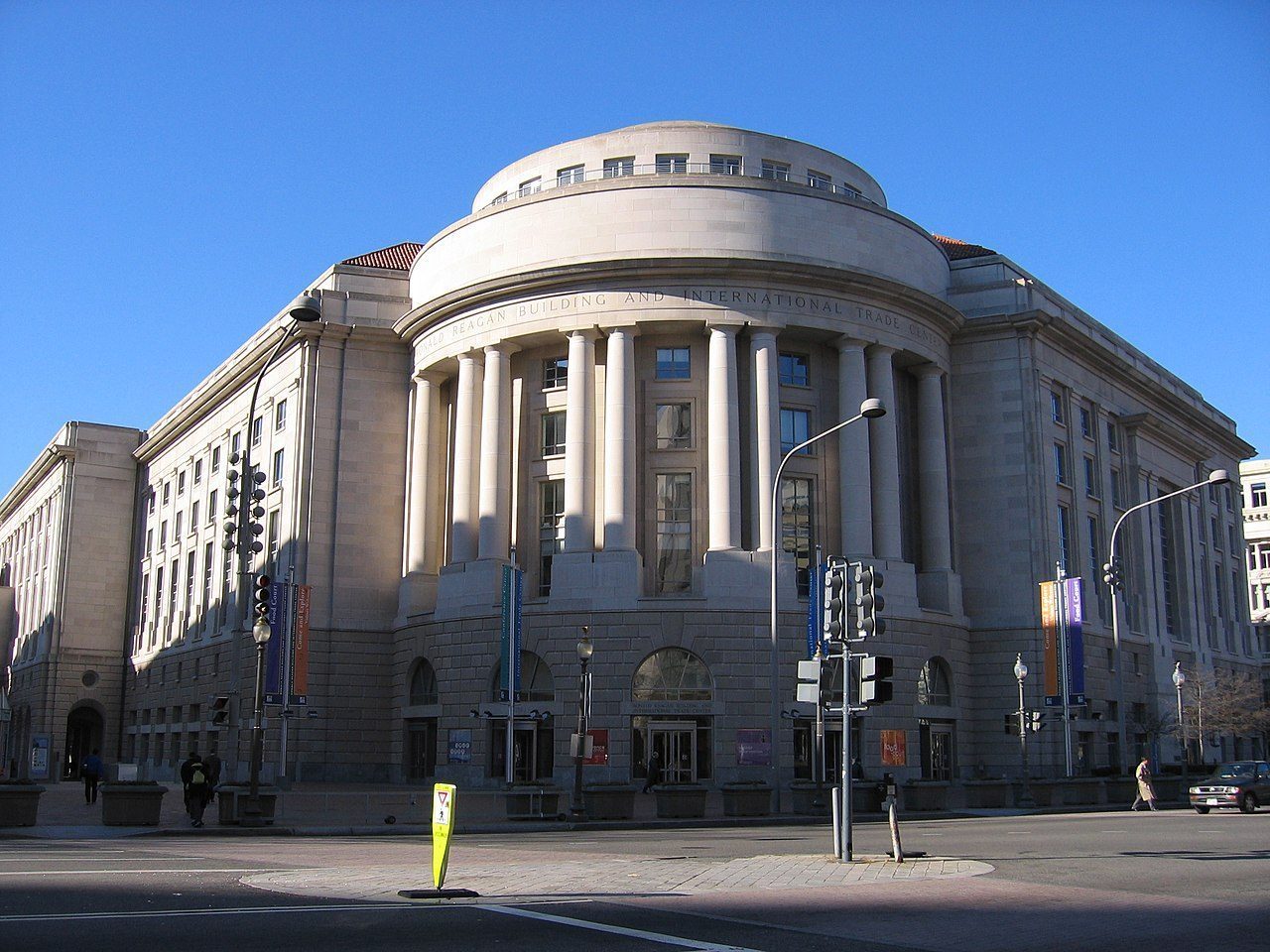
USAID shut down; aid cuts tied to 9.4M projected deaths
The US eliminated its development agency, which had provided aid in more than 100 countries.
Key facts
- 83% of programs (5,200 contracts) cancelled by March 2025
- Agency officially closed July 1, 2025
- Lancet (Feb 2026) projects 9.4M additional deaths by 2030 from US and other donors' aid cuts
Summary
Executive Order 14169 (January 20, 2025) imposed a 90-day pause on foreign aid. Secretary Rubio enforced stop-work orders on January 24. By March 10, 2025, 83% of USAID programs (5,200 contracts) were cancelled. On July 1, 2025, USAID was officially closed and its remaining programs absorbed by the State Department; the agency, which previously employed some 10,000 people, transferred a few hundred remaining employees to State.
What happened
The rapid dismantlement halted HIV/AIDS treatment programs (PEPFAR), famine response, malaria prevention, vaccine delivery, and Ebola containment operations in more than 100 countries. Programs credited with preventing millions of deaths annually were shuttered within weeks of the pause order. A Lancet study published February 2026 projected that global aid cuts - by the US and other donors including the UK, Germany and Canada - could lead to at least 9.4 million additional deaths by 2030. The US global health and development presence, built since 1961, was largely eliminated.
Impact on the United States
Loss of USAID reduces US soft power and its ability to counter adversary influence (China, Russia) in developing regions. PEPFAR's disruption risks global resurgence of HIV strains that could eventually reach the US. Refugee and humanitarian crises exacerbated by aid collapse generate migration pressures and regional instability affecting US security interests. Domestically, thousands of US contractors and NGO workers lost employment.
Global ripple effects
Global health and stability crises caused by the aid collapse create conditions for disease resurgence, increased refugee flows, and expanded adversary influence - all of which return harm to US security and economic interests.
Documented effects
Projected cost to Americans
Cumulative cost if current policy holds: direct federal cost plus the broader economic burden. A conservative, lower-bound estimate (medium confidence).
- So far
- $6.00B
- By 2035
- $6.00B
- By 2040
- $6.00B
How this is calculated: USAID's closure is a substantially resolved one-time episode, so 10yr = 15yr = the booked closeout cost. The only published figure is a State Department draft assessment (June 2025, obtained by Bloomberg Government) putting closure costs at more than $6B, including $344M for litigation; the Bloomberg reporter told Federal News Network the DOGE memo framed it as $6B a year for an undetermined period, which we do not extrapolate (conservative: booked once). The earlier ~$300M overhead saving and the residual litigation tail were our own unsourced derivations and are removed; eliminating USAID's ~$2B/yr operating budget does save money, but part of the work moved to State and no source nets the two, so no saving is booked. Foreign-aid program cuts and the USAID pocket rescission are budget-authority reductions that are not booked in this file (see decisions). broader_cost_10yr_usd = 0 by methodology: the Lancet analysis (Feb. 2026) projects at least 9.4 million additional deaths by 2030 from global aid cuts by the US and other donors, but these fall on populations abroad and are not monetized as a US cost.
Why this is rated critical
Eliminated the US development agency and cancelled 83% of its programs; a Lancet study projects that global aid cuts, by the US and other donors, could lead to at least 9.4 million additional deaths by 2030.
Corrections & updates [8]
Every change to a fact on this page after publication is logged here, newest first.
- CorrectedSummary
The entry said USAID's workforce was reduced from 10,000 to 294 staff before closure. The 294 figure was a February 2025 plan for essential staff, not the headcount at closure. At the July 1, 2025 closure, a few hundred remaining employees moved to the State Department (NPR); USAID had previously employed some 10,000 people (BBC, citing CRS). The effect on program cancellations and closure also cited a February 2025 article that predates both events.[3][4][5]
- CorrectedFigure
The entry said programs were halted "across 120 countries." CBS News reports USAID provided aid to more than 100 countries; no source for 120 was found.[3]
- ClarifiedSummary
The Lancet study (February 2026) projects deaths from global aid cuts by the US and other donors, including the UK, Germany and Canada, not from the USAID closure alone. Wording made precise.[2]
- ClarifiedHeadline
Clarified that the Lancet projection of at least 9.4 million additional deaths by 2030 covers global aid cuts by the US and other donors (including the UK, Germany and Canada), not the USAID closure alone, as the entry's text already says.[2]
- CorrectedSeverity rationale
The severity rationale attributed projected deaths to the USAID closure alone and asserted a 'major loss of US strategic influence'; per the record, the Lancet projection covers aid cuts by the US and other donors. Severity unchanged.[2]
+ Show previous and current text- Hide previous and current text
- Previously
- Eliminated the entire US development agency with peer-reviewed projections of millions of preventable deaths and major loss of US strategic influence.
- Now
- Eliminated the US development agency and cancelled 83% of its programs; a Lancet study projects that global aid cuts, by the US and other donors, could lead to at least 9.4 million additional deaths by 2030.
- ClarifiedDisplay copy
The summary's characterization ('eliminating decades of US soft-power infrastructure') was replaced with the documented closure date.
+ Show previous and current text- Hide previous and current text
- Previously
- A 90-day foreign-aid pause escalated to full cancellation within months. PEPFAR, malaria prevention, and Ebola containment were among programs shuttered, eliminating decades of US soft-power infrastructure.
- Now
- A 90-day foreign-aid pause escalated to cancellation of 83% of USAID programs by March 2025, halting programs including HIV/AIDS treatment, malaria prevention and Ebola containment; USAID officially closed July 1, 2025.
- ClarifiedSource labels
Source tier labels brought in line with the site's tier rule (specialist and trade publications are Tier 3; general news organizations are Tier 2): Foreign Policy (Tier 2 to 3). No claim in the entry changed.
- CorrectedCost estimate
USAID's closure cost stays at the State Department's internal estimate of more than $6B (reported by Bloomberg Government). The $300M overhead saving we had subtracted and the small future tail were our own unsourced estimates and are removed.
- Previously
- $5.7B net ($6B cost, $0.3B saved); $6.0B 10yr; $6.2B 15yr
- Now
- $6.0B net ($6B cost, $0 saved); $6.0B 10yr; $6.0B 15yr
Sources [5]
- T3Foreign Policy - Trump, Musk's USAID Shutdown, Explained · Feb 5, 2025 ↗
- T2CNN - One year on from dismantling of USAID, study projects that global aid cuts could lead to 9.4 million deaths by 2030 · Feb 4, 2026 ↗
- T2CBS News - Secretary of state says 83% of USAID programs are being canceled · Mar 10, 2025 ↗
- T2NPR - USAID officially shuts down and merges remaining operations with State Department · Jul 1, 2025 ↗
- T2BBC - USAID officially closes, attracting condemnation from Obama and Bush · Jul 2, 2025 ↗
Image: Jaakko H., CC BY-SA 3.0 (Wikimedia Commons)